
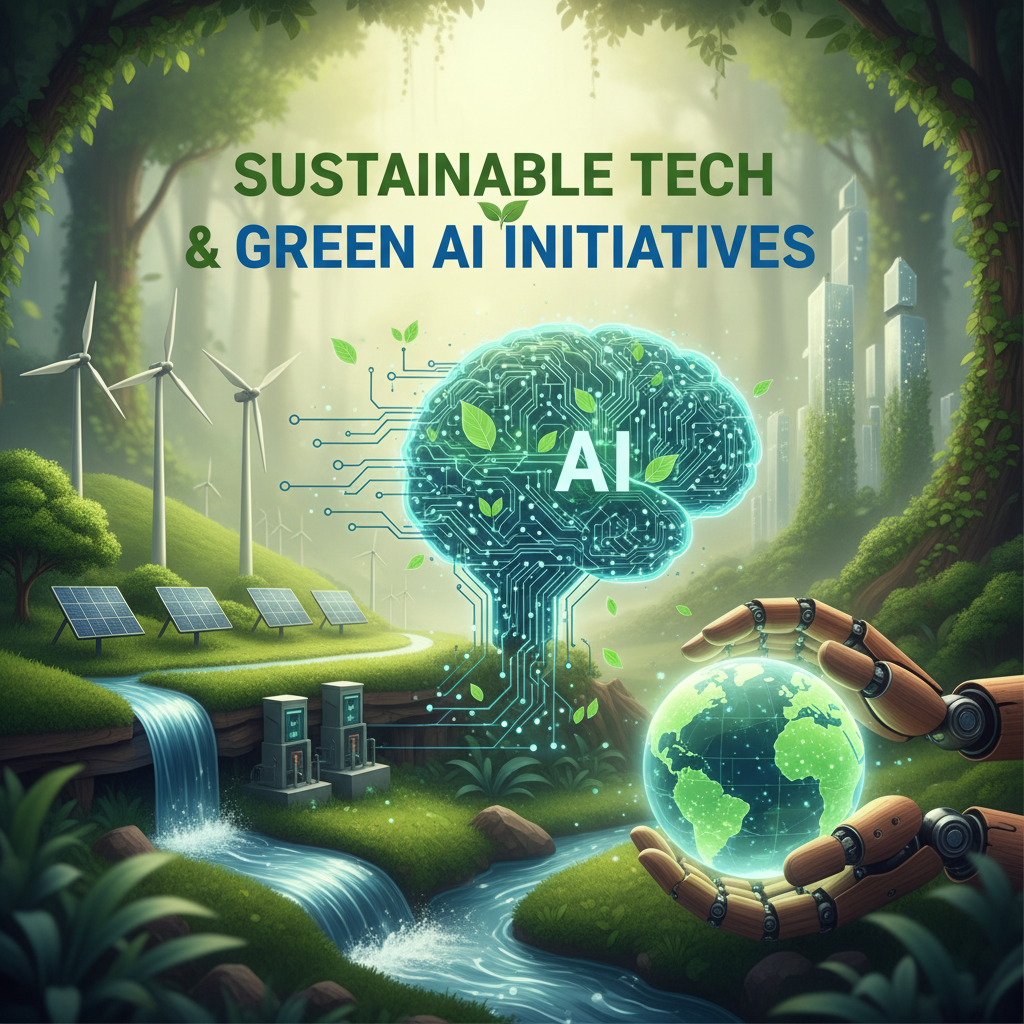
Sustainable Tech: AI’s Role in a Greener World
In an era increasingly defined by technology, our digital innovations have brought unprecedented convenience and progress. However, this advancement isn’t without its environmental cost. From energy-hungry data centers to the mountains of e-waste, the tech industry has a significant ecological footprint. But what if technology, particularly Artificial Intelligence, could be a powerful force for good, actively driving sustainability?
The Environmental Footprint of Technology
Let’s face it: our digital world consumes a lot of energy. Training complex AI models, powering countless servers in data centers, and manufacturing new devices all contribute to carbon emissions. The rapid pace of technological change also leads to vast amounts of electronic waste, often containing hazardous materials. Understanding this impact is the first step towards building a more responsible future.
What is Green AI?
This is where “Green AI” comes into play. It’s an initiative focused on making Artificial Intelligence more environmentally friendly in two key ways:
- Making AI Greener: Developing AI systems that are more energy-efficient, require less computational power, and are designed with sustainability in mind from conception to deployment. This includes optimizing algorithms, using smaller models, and implementing efficient hardware.
- Using AI for Green: Leveraging AI’s analytical power to solve environmental challenges. This means applying AI to areas like climate modeling, optimizing renewable energy grids, managing waste, and improving resource efficiency across industries.
Innovations Driving Sustainability
The synergy between sustainable tech and Green AI is already yielding incredible innovations:
- Smart Data Centers: AI is being used to optimize cooling systems, power usage, and server allocation in data centers, significantly reducing their energy consumption.
- Renewable Energy Management: AI helps predict weather patterns to forecast renewable energy generation (solar, wind) and optimize its integration into power grids, making them more stable and efficient.
- Sustainable Supply Chains: AI algorithms can analyze vast datasets to optimize logistics, reduce waste in manufacturing, and identify greener sourcing options, leading to lower emissions.
- Climate Modeling and Prediction: Advanced AI models are crucial for understanding complex climate systems, predicting extreme weather events, and informing adaptation strategies.
- Precision Agriculture: AI-powered drones and sensors help farmers use water, fertilizers, and pesticides more efficiently, reducing environmental impact and improving yields.
Challenges and the Road Ahead
While the potential is immense, challenges remain. The sheer computational power required to train some cutting-edge AI models can still result in significant carbon emissions. Measuring the true environmental impact of AI and developing universal green standards are ongoing efforts. However, with growing awareness and dedicated research, the industry is moving towards more efficient algorithms, specialized hardware, and a stronger focus on the entire lifecycle of AI systems.
Join the Green Tech Movement
Sustainable Tech and Green AI are not just buzzwords; they represent a critical shift towards a more responsible and resilient future. As developers, businesses, and consumers, we all have a role to play. By supporting green initiatives, demanding sustainable practices, and innovating with the planet in mind, we can ensure that our technological progress goes hand-in-hand with environmental stewardship. Let’s build a smarter, greener world together!
“`



Leave a Reply