
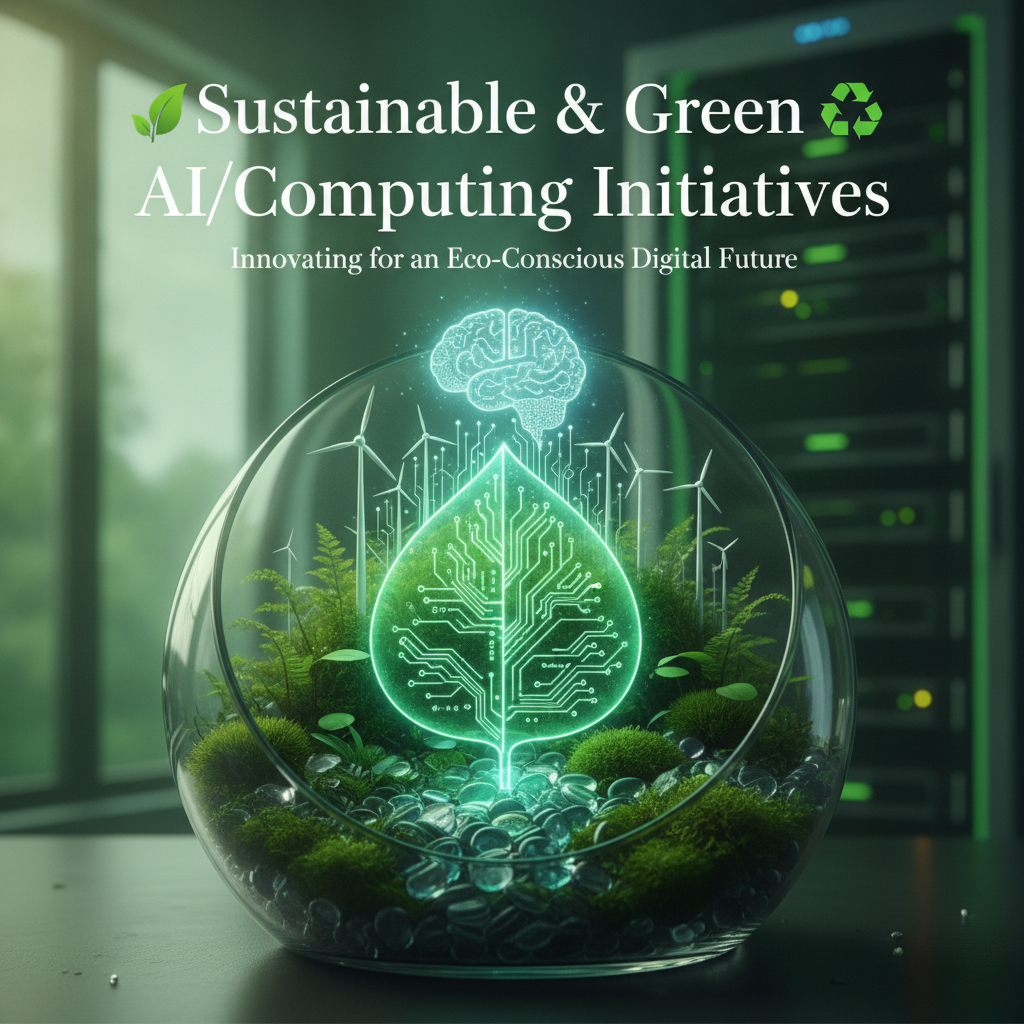
Greening AI: Computing for a Sustainable Future
In today’s rapidly evolving digital landscape, Artificial Intelligence (AI) and advanced computing are transforming industries and daily life. From powering self-driving cars to analyzing complex data, their potential seems limitless. However, this incredible progress comes with a growing environmental footprint. The good news? A powerful movement is underway: Sustainable and Green AI/Computing initiatives.
What is Sustainable and Green AI/Computing?
At its core, Sustainable and Green AI/Computing is about minimizing the environmental impact of our digital infrastructure and processes. It’s not just about making AI “smart,” but making it “responsible.” This encompasses everything from the hardware that runs our algorithms to the energy sources powering data centers, and even the efficiency of the algorithms themselves. It’s a holistic approach to ensure our technological advancements don’t come at the planet’s expense.
Why Green AI Matters More Than Ever
The sheer scale of modern computing demands significant resources. Training large AI models can consume as much energy as several homes use in a year, and data centers globally account for a substantial percentage of the world’s electricity consumption. This energy often comes from fossil fuels, contributing to carbon emissions. Beyond energy, there’s the issue of electronic waste (e-waste) and the consumption of rare earth minerals for hardware. Adopting green practices isn’t just an ethical choice; it’s a critical step towards mitigating climate change and ensuring resource longevity.
Key Pillars of Sustainable Computing
Achieving truly green AI requires a multi-faceted approach. Here are some key areas where initiatives are making a real difference:
1. Energy-Efficient Hardware and Infrastructure
Innovations in chip design are creating more powerful yet less energy-intensive processors. Furthermore, data centers are becoming incredibly efficient, employing advanced cooling systems, optimizing server usage, and even exploring liquid immersion cooling to reduce energy waste. Companies are investing heavily in research to push these boundaries.
2. Algorithmic Optimization and “Lean AI”
It’s not just the hardware; the software also matters. Researchers are developing “leaner” AI models that achieve similar results with less computational power and data. This includes techniques like model compression, efficient training methods, and using smaller, purpose-built models instead of massive general-purpose ones when appropriate. The goal is to maximize output while minimizing the computational “cost.”
3. Powering with Renewable Energy
Many tech giants are making significant strides towards powering their data centers entirely with renewable energy sources like solar, wind, and hydro. Investing in and purchasing clean energy directly from grids helps decarbonize the entire operation and supports the transition to a greener energy infrastructure globally.
4. Lifecycle Management and Circular Economy
Addressing e-waste is crucial. Initiatives focus on extending the lifespan of hardware, encouraging recycling programs, and designing components that are easier to repair and reuse. Embracing a circular economy model minimizes waste, reduces demand for new raw materials, and maximizes resource utilization.
5. Transparency and Measurement
You can’t manage what you don’t measure. Tools and standards are emerging to help organizations accurately track the carbon footprint and energy consumption of their AI models and computing infrastructure. This transparency drives accountability, enables benchmarking, and fosters continuous improvement across the industry.
The Benefits Beyond Environmental Impact
While the primary driver is environmental stewardship, adopting sustainable AI and computing practices offers numerous other advantages. Companies can achieve significant cost savings through reduced energy consumption, enhance their brand reputation, attract environmentally conscious talent, and even foster innovation in new green technologies. It’s a win-win for the planet and the bottom line, proving that sustainability can also be smart business.
The Path Forward: A Collective Effort
The journey towards truly sustainable AI and computing is ongoing and requires collaboration across industries, academia, and government. As developers, users, and consumers of technology, we all have a role to play. By supporting greener initiatives, demanding transparency, and advocating for responsible tech development, we can ensure that AI continues to advance humanity without compromising our planet’s future.
Let’s build a future where innovation and sustainability go hand-in-hand!



Leave a Reply