
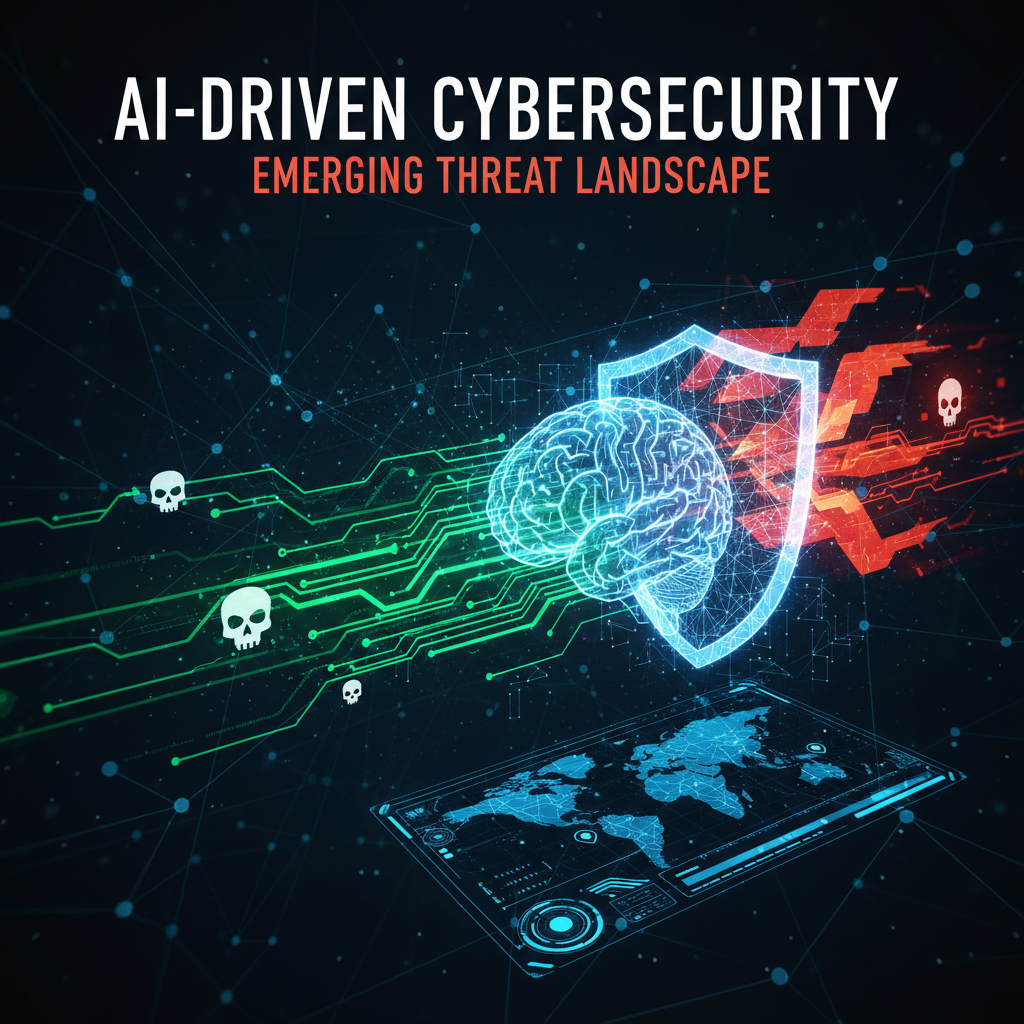
The AI Frontier: Reshaping Cyber Defense & Attack
In our increasingly interconnected digital world, cyber threats are not just growing in number but also in sophistication. As the stakes get higher, Artificial Intelligence (AI) has emerged as a pivotal force in cybersecurity – both as a powerful shield for defenders and, increasingly, as a potent sword for attackers. Let’s delve into how AI is fundamentally reshaping the emerging threat landscape.
AI: A Powerful Ally in Cyber Defense
AI’s ability to process and analyze vast quantities of data at lightning speed makes it an invaluable asset for protecting our digital assets. It can identify patterns and anomalies that human analysts might miss, often in real-time.
- Automated Threat Detection: AI-powered systems can swiftly detect and respond to a wide array of threats, including malware, ransomware, and zero-day exploits, often before they cause significant damage.
- Behavioral Analytics: By learning “normal” user and system behaviors, AI can flag deviations that signal potential insider threats, compromised accounts, or sophisticated phishing attempts.
- Predictive Security: AI can analyze historical threat data to anticipate future attack vectors and vulnerabilities, allowing organizations to proactively bolster their defenses.
- Vulnerability Management: AI tools can scan code and network configurations to identify weaknesses and misconfigurations, helping to patch security gaps before attackers can exploit them.
The Rise of AI-Powered Attacks: A Double-Edged Sword
Unfortunately, the same intelligence capabilities that empower defenders are also being leveraged by adversaries. This creates an escalating “AI arms race” where attack techniques become increasingly sophisticated.
- Sophisticated Phishing & Social Engineering: AI can generate highly personalized and convincing phishing emails, known as spear-phishing, making them incredibly difficult to discern from legitimate communications. Deepfake technology is also being used to create realistic voice and video impersonations for CEO fraud and other scams.
- AI-Driven Malware: We’re seeing the emergence of malware that can learn, adapt, and dynamically change its signatures or behavior to evade detection by traditional security systems.
- Autonomous Attack Campaigns: Imagine attack tools that can independently scout for vulnerabilities, plan multi-stage attacks, and execute them with minimal human intervention, making them faster and harder to stop.
Navigating the Emerging Threat Landscape
The convergence of AI with traditional cyber threats introduces new challenges:
- Deepfake Exploitation: Beyond visuals, deepfakes for voice cloning are becoming a significant risk in Business Email Compromise (BEC) scams, where malicious actors impersonate executives to authorize fraudulent transfers.
- Supply Chain Vulnerabilities: AI can assist attackers in identifying and exploiting weak links in complex supply chains, leading to widespread breaches originating from a single compromised entity.
- AI Model Poisoning & Evasion: Adversaries might attempt to “poison” AI security models with malicious data to manipulate their learning, causing them to misclassify threats or ignore actual attacks.
The Indispensable Human Element
While AI is a revolutionary tool, it’s crucial to remember it’s not a silver bullet. Human expertise remains absolutely essential. Security professionals are needed for strategy, ethical oversight, interpreting complex AI alerts, and handling novel threats that AI hasn’t been trained on. AI empowers security teams; it doesn’t replace them. A synergistic approach, combining human ingenuity with AI’s analytical power, is key to robust defense.
Conclusion: A Future of Adaptive Defense
The battle between AI defenders and AI attackers will only intensify. Cybersecurity professionals and organizations must continuously adapt, staying informed about the latest AI advancements, leveraging its strengths, and understanding its limitations. Implementing multi-layered security, fostering a strong culture of cybersecurity awareness, and investing in continuous training are more critical than ever in this rapidly evolving threat landscape.
The future of cybersecurity is intrinsically linked with AI, demanding constant vigilance and innovation from all of us.



Leave a Reply