
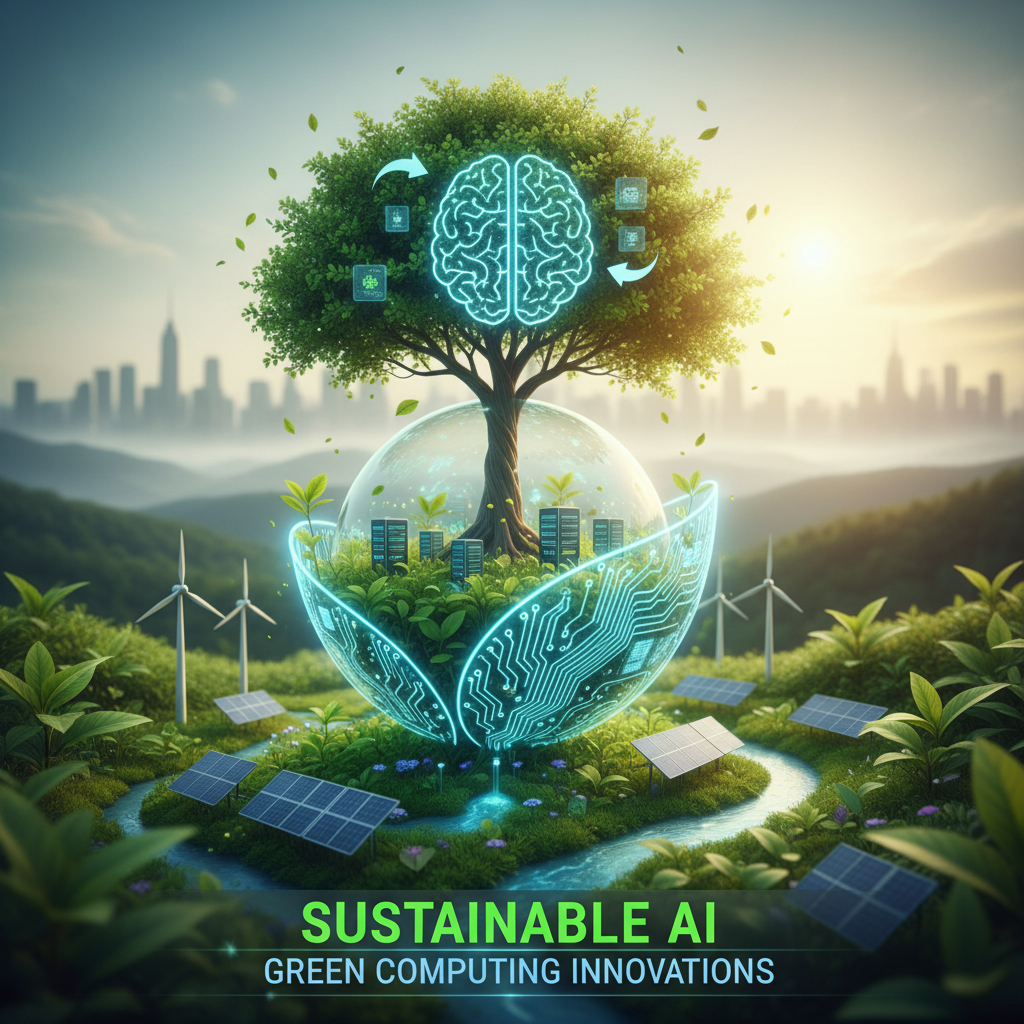
AI’s Green Revolution: Sustainable Computing Innovations
Artificial Intelligence is transforming our world at an unprecedented pace, from revolutionizing healthcare to optimizing supply chains. Yet, this incredible power comes with a growing environmental footprint. The energy demands of training complex AI models and powering vast data centers are substantial, prompting a critical question: how can we harness AI’s potential responsibly? The answer lies in Sustainable AI and Green Computing Innovations.
Understanding AI’s Environmental Impact
The journey to smarter machines is often energy-intensive. Training a single large AI model can consume as much energy as several homes in a year, emitting significant amounts of carbon. Data centers, the backbone of modern AI, are constantly expanding, demanding colossal amounts of electricity, much of which still comes from fossil fuels. Beyond energy, these facilities also require vast quantities of water for cooling and contribute to electronic waste.
This growing energy footprint isn’t just an environmental concern; it also presents economic and ethical challenges. As AI becomes more pervasive, the imperative to make it sustainable becomes more urgent, pushing innovators to find greener solutions.
Paving the Way: Innovations for Green AI
The good news is that the tech community is actively responding with groundbreaking innovations:
Hardware Advancements:
Manufacturers are developing more energy-efficient processors and specialized AI chips (ASICs) designed to perform complex computations with significantly less power. Innovations like neuromorphic computing, which mimics the human brain’s ultra-low energy processing, hold immense promise for the future. Furthermore, data centers are adopting advanced cooling techniques, from liquid immersion cooling to leveraging colder climates and free-air cooling, drastically cutting energy used for temperature regulation.
Software & Algorithmic Optimizations:
It’s not just about the hardware; smart software design is crucial. Researchers are developing more efficient AI algorithms that require less data and fewer computational cycles to train. Techniques like model compression, pruning, and quantization allow large models to be “shrunk” for deployment, consuming less power during inference. The rise of “TinyML” is enabling powerful AI to run on low-power edge devices, reducing the need to send all data to energy-hungry cloud servers.
Renewable Energy Integration:
A significant shift is the increasing adoption of renewable energy sources for data centers. Tech giants are investing heavily in solar, wind, and geothermal power to offset their carbon emissions, making their operations not just energy-efficient but also clean-energy powered. This commitment transforms energy sourcing from a major liability into a sustainable asset.
The Future is Green: A Collaborative Vision
The transition to Sustainable AI and Green Computing isn’t a singular effort but a collective journey. It requires collaboration across academia, industry, and government to develop new standards, foster open-source innovation, and create supportive policies. Companies that prioritize sustainable practices will not only reduce their environmental impact but also gain a competitive edge by lowering operational costs and appealing to environmentally conscious consumers and investors.
By integrating sustainability into every stage of AI development—from design and training to deployment and operation—we can ensure that AI continues to drive progress without compromising our planet. The vision for AI is not just intelligent, but also inherently green.
“`



Leave a Reply