
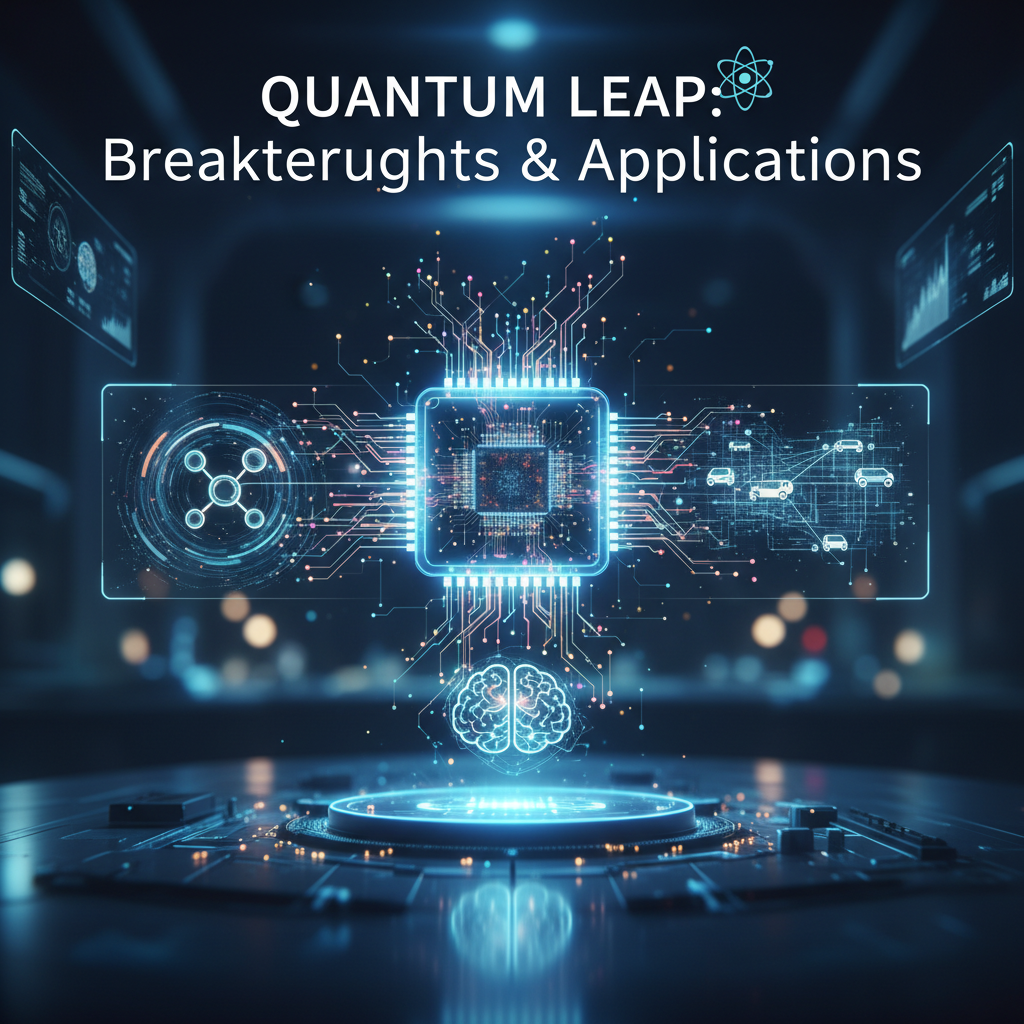
Quantum Leaps: From Lab to Real-World Impact
Welcome, fellow technology enthusiasts, to an exploration of one of the most exciting and potentially transformative fields of our time: quantum computing! For years, it’s felt like a distant dream, confined to the pages of sci-fi novels and academic papers. But today, we’re witnessing remarkable breakthroughs that are rapidly bringing quantum computing from the theoretical lab into the realm of practical applications. Let’s dive into what’s happening and what it means for our future.
The Dawn of a New Computing Era
At its core, quantum computing leverages the mind-bending principles of quantum mechanics – like superposition (a bit can be 0 and 1 simultaneously) and entanglement (two bits are linked, no matter the distance) – to process information in fundamentally new ways. This allows quantum computers to tackle problems that are simply impossible for even the most powerful classical supercomputers to solve, opening doors to solutions that were previously unimaginable.
Recent Strides in Quantum Technology
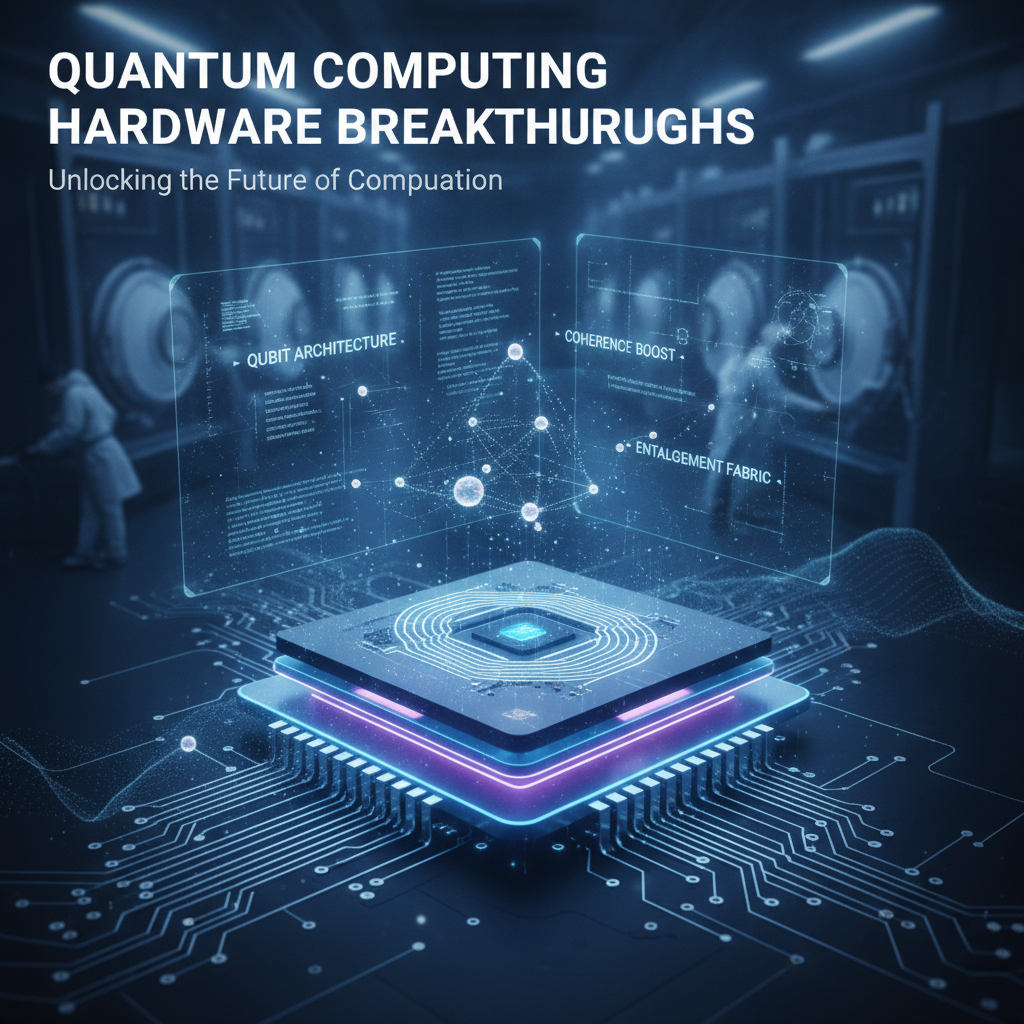
The past few years have been incredibly dynamic for quantum computing. We’ve seen significant advancements in building more stable qubits (the quantum equivalent of classical bits) and increasing their coherence times, which is crucial for reliable computation. Major players in the tech world, along with innovative startups, are pushing the boundaries, announcing new quantum processors with increasing qubit counts and improved error rates. While we’re still in the “noisy intermediate-scale quantum” (NISQ) era, these milestones are laying the groundwork for fault-tolerant quantum computers that promise to unlock its full potential.
Revolutionizing Drug Discovery and Materials Science
Imagine designing new drugs or materials at the molecular level with unprecedented precision. Quantum computers excel at simulating complex molecular interactions, which is a monumental task for classical computers. This capability could dramatically accelerate the discovery of new medicines, lead to more efficient catalysts, and engineer materials with tailored properties for everything from batteries to aerospace components. The implications for healthcare, energy, and manufacturing are profound.
Transforming Financial Modeling and Optimization
The financial sector deals with vast amounts of data and complex optimization problems, from portfolio management and risk assessment to fraud detection and market prediction. Quantum algorithms are showing promise in solving these intricate challenges faster and with greater accuracy. They could optimize trading strategies, detect subtle patterns that signify risk or opportunity, and improve overall financial stability through more robust modeling.
Advancing Cybersecurity and Data Protection
Quantum computing presents both a challenge and an opportunity for cybersecurity. On one hand, Shor’s algorithm, a quantum algorithm, could theoretically break many of the encryption methods widely used today (like RSA). This necessitates the development of “quantum-safe” or “post-quantum” cryptography, which is a significant area of research. On the other hand, quantum cryptography itself offers new ways to ensure perfectly secure communication, leveraging quantum mechanics to detect any eavesdropping attempts instantly.
Supercharging Artificial Intelligence and Machine Learning
AI and machine learning are already transforming industries, but quantum computing could take them to the next level. Quantum machine learning algorithms have the potential to process vast datasets more efficiently, identify complex patterns that are currently hidden, and train AI models faster. This could lead to breakthroughs in areas like image recognition, natural language processing, and personalized recommendations, creating more intelligent and intuitive AI systems.
Navigating the Quantum Frontier: Challenges Ahead
While the future is bright, it’s important to acknowledge that significant challenges remain. Building and maintaining quantum computers is incredibly difficult, requiring extreme temperatures and isolation to keep qubits stable. Error correction, scaling to larger qubit counts, and developing accessible programming tools are all active areas of research. Furthermore, nurturing a skilled workforce capable of operating and programming these machines will be crucial for widespread adoption.
The Road Ahead: A Quantum Future Beckons
Quantum computing is no longer just a theoretical concept; it’s a burgeoning field with real-world impact on the horizon. From healthcare to finance, and from cybersecurity to artificial intelligence, the potential applications are vast and diverse. As researchers continue to make incredible strides and the technology matures, we are stepping into an era where problems once deemed unsolvable may soon yield to the power of quantum mechanics. It’s an exciting journey, and we’re just getting started!


Leave a Reply