
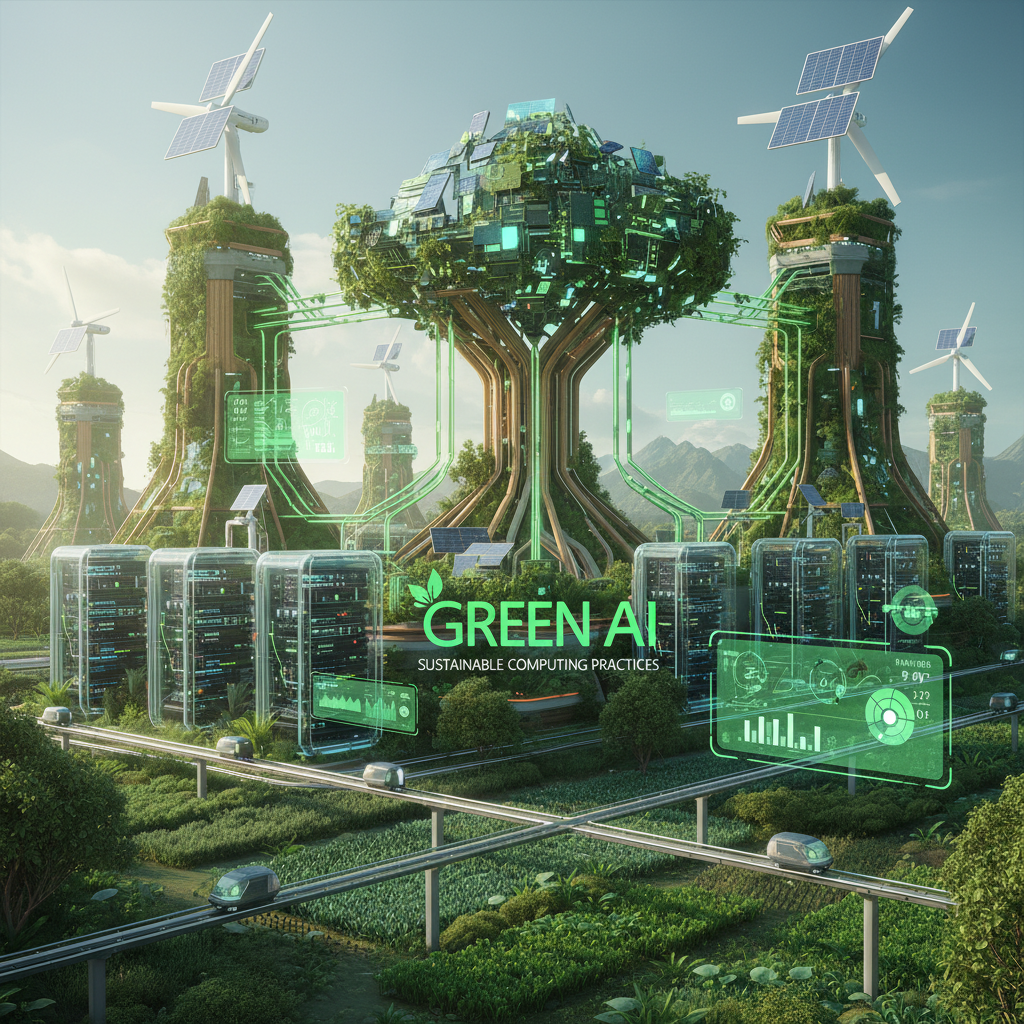
Powering a Greener Tomorrow: The Rise of Green AI and Sustainable Computing
Artificial Intelligence (AI) is rapidly transforming our world, from powering smart assistants to revolutionizing scientific discovery. Its potential seems limitless, yet this incredible technological advancement comes with a growing challenge: its environmental footprint. As AI models become more complex and computing demands skyrocket, so does the energy consumption and carbon emissions. But what if we could harness the power of AI while also protecting our planet? Enter Green AI and Sustainable Computing Practices!
The Computing Carbon Footprint: A Growing Concern
You might not immediately connect your daily tech use with environmental impact, but the reality is that the digital world has a substantial physical footprint. Data centers, which house the powerful servers driving our internet and AI applications, consume enormous amounts of electricity—often equivalent to small cities. Training a single large AI model can emit as much carbon as several cars over their lifetime, and the hardware itself requires significant resources and contributes to e-waste. This burgeoning energy demand and resource intensity are simply not sustainable in the long run.
What Exactly is Green AI?
Green AI isn’t just a buzzword; it’s a paradigm shift in how we approach the development and deployment of artificial intelligence. At its core, Green AI focuses on creating AI models that are computationally efficient, requiring less energy and fewer resources to train and operate. This involves:
- Algorithm Optimization: Developing smarter, leaner algorithms that achieve desired outcomes with fewer computations.
- Model Compression: Techniques to reduce the size of AI models without significant loss in performance.
- Data Efficiency: Using smaller, more relevant datasets for training, reducing the need for massive computational power.
- Lifecycle Thinking: Considering the environmental impact from an AI system’s design and training to its deployment and eventual decommissioning.
It’s about doing more with less, ensuring that our AI innovations don’t come at the planet’s expense.
Pillars of Sustainable Computing Practices
Beyond Green AI, the broader field of sustainable computing encompasses strategies to reduce the environmental impact of all computing activities. These practices are crucial for building a truly eco-friendly digital future:
Energy-Efficient Hardware and Infrastructure
Choosing hardware designed for lower power consumption, from processors and GPUs to entire server racks, is fundamental. Furthermore, optimizing data center design for efficient cooling, using natural ventilation, and employing smart energy management systems can dramatically cut energy use.
Cloud Sustainability and Optimization
Many organizations rely on cloud computing. Opting for cloud providers that power their data centers with renewable energy sources (like solar or wind) and actively managing cloud resources to avoid idle or over-provisioned services are key steps. Using serverless computing or auto-scaling can ensure you only consume resources when actively needed.
Responsible Data Management
Simply storing data consumes energy. Adopting practices like data deduplication, intelligent data tiering (moving less frequently accessed data to colder, less energy-intensive storage), and regularly deleting unnecessary data can reduce storage and processing overheads.
Embracing Renewable Energy
Ultimately, powering data centers and computing infrastructure with renewable energy sources is the holy grail. Many tech giants are already committed to 100% renewable energy, setting a vital example for the industry.
Benefits Beyond the Environment
The beauty of Green AI and sustainable computing is that their benefits extend far beyond just environmental protection. Embracing these practices can lead to:
- Cost Savings: Lower energy consumption translates directly into reduced operational costs for businesses.
- Enhanced Innovation: The challenge of efficiency drives research into novel algorithms, hardware, and methodologies.
- Improved Reputation: Companies committed to sustainability often attract more talent, customers, and investors who value ethical and responsible practices.
- Regulatory Compliance: As environmental regulations tighten, sustainable practices help organizations stay ahead of the curve.
The future of technology doesn’t have to come at the expense of our planet. By thoughtfully integrating Green AI principles and adopting sustainable computing practices, we can build a future that is both intelligently advanced and environmentally responsible. It’s a collective journey, and every step towards efficiency and sustainability brings us closer to a healthier planet for all.
“`



Leave a Reply