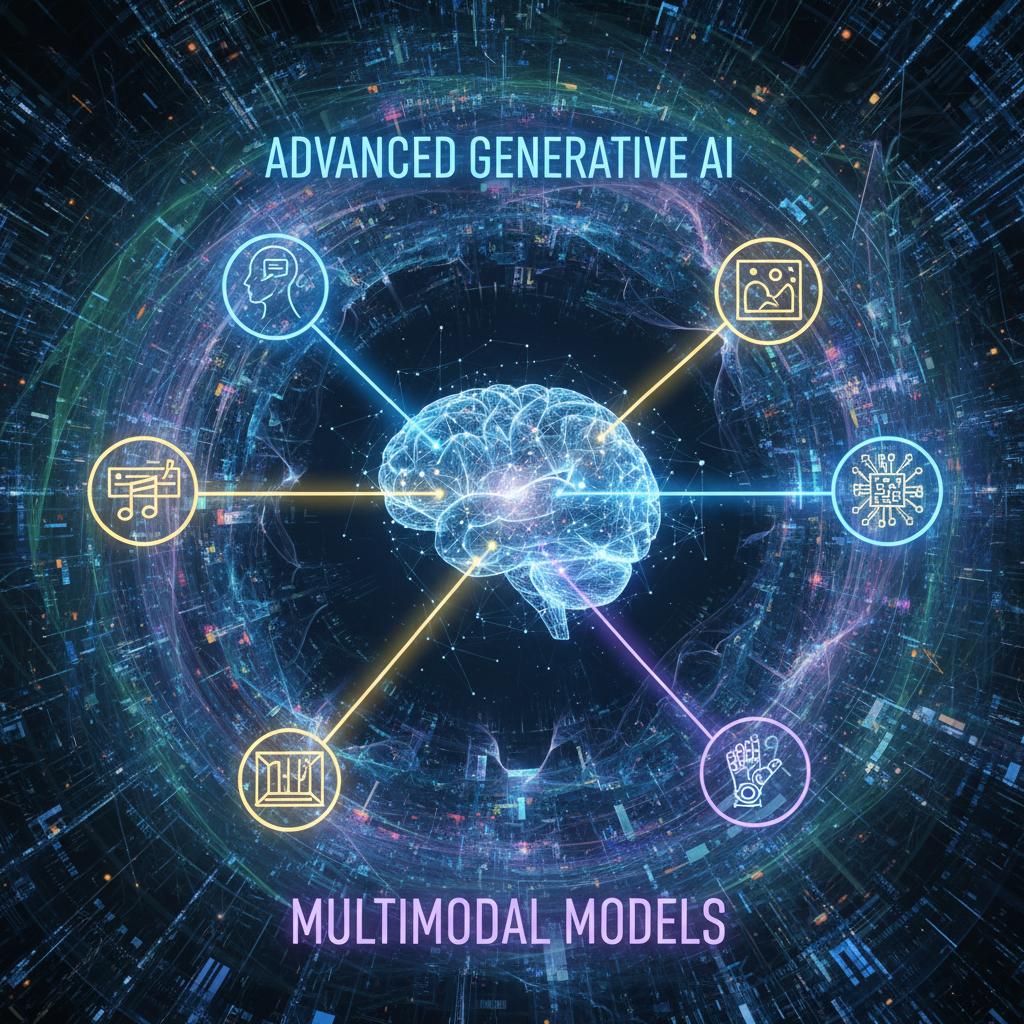
The world of Artificial Intelligence is evolving at an incredible pace, constantly pushing the boundaries of what machines can create and understand. We’re moving beyond simple chatbots to sophisticated systems that can generate entire worlds, compose symphonies, and even hold nuanced conversations across different types of information. Welcome to the fascinating realm of Advanced Generative AI and Multimodal Models!
What is Advanced Generative AI?
At its core, Generative AI refers to algorithms that can produce novel content. Think beyond just analyzing data; these AIs create brand new data. “Advanced” here implies a leap in sophistication – models that generate incredibly realistic images, coherent narratives, complex code, or original music with remarkable quality and creativity. These aren’t just stitching together existing pieces; they’re learning underlying patterns and structures to output truly unique and often astonishing results. Large Language Models (LLMs) are a prime example, generating human-quality text that can range from poetry to programming documentation.
The Rise of Multimodal Models
While advanced generative AI is powerful, a significant breakthrough comes with “multimodal” capabilities. Imagine an AI that doesn’t just understand text, but also images, audio, and even video – and can relate them to each other. Multimodal models are designed to process and generate information across these different “modalities” simultaneously. This means an AI could take a text prompt (“a cheerful robot painting a sunset”) and generate an image, or analyze a video to describe its events in text, or even synthesize speech from written words and a desired emotion.
Why Multimodality Matters
Why is this such a big deal? Because our human experience is inherently multimodal! We don’t just process text; we see, hear, feel, and interpret our environment holistically. Multimodal AI brings machines closer to understanding the world in a more human-like way, leading to richer interactions and more robust applications. It allows AI to bridge gaps between different data types, enabling it to solve more complex problems that require a comprehensive understanding of various inputs.
Real-World Applications Are Exploding
The implications of advanced generative AI and multimodal models are truly mind-bending. Here are just a few exciting areas:
- Creative Content Generation: From AI-generated art and music to sophisticated video scripts and interactive stories, these models are becoming powerful tools for artists and creators.
- Enhanced Accessibility: Imagine an AI describing complex images or videos to visually impaired users, or translating sign language in real-time to spoken text.
- Smarter Human-Computer Interaction: Virtual assistants that can understand not just your spoken words but also the context of an image you’re pointing at or the tone of your voice.
- Advanced Robotics: Robots that can better perceive their environment, understand nuanced commands, and interact more naturally based on visual, auditory, and textual input.
- Personalized Education & Healthcare: Creating bespoke learning materials that adapt to a student’s preferred modality (visual, textual), or assisting doctors in diagnostics by correlating patient notes with medical images.
Challenges and the Path Forward
While the potential is immense, there are also significant challenges. Ethical considerations around bias in generated content, the massive computational resources required, ensuring factual accuracy in AI outputs, and navigating intellectual property are all critical discussions. However, ongoing research is rapidly addressing these issues, striving for more responsible, efficient, and equitable AI systems.
The journey with Advanced Generative AI and Multimodal Models is just beginning. It promises a future where human creativity is amplified, complex problems are more readily solved, and our interaction with technology becomes more intuitive and natural than ever before. It’s an exciting time to be part of the AI revolution!
“`


Leave a Reply