AI’s Next Frontier: Multimodal Generative Power
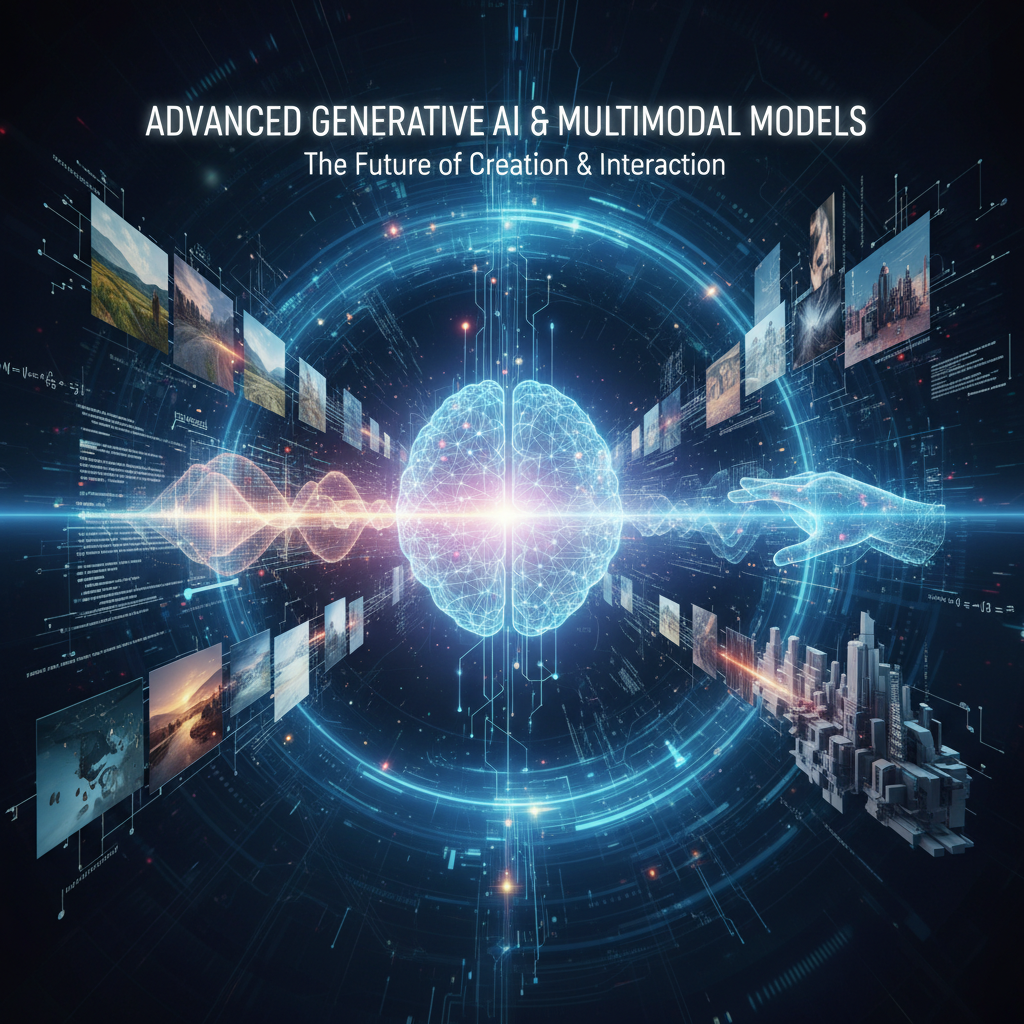
Welcome to the cutting edge of artificial intelligence! While large language models (LLMs) have captured headlines with their remarkable text generation abilities, the field of generative AI is rapidly evolving far beyond just words. We’re now entering an exciting era where AI doesn’t just “think” in text, but can perceive, understand, and generate across multiple forms of data simultaneously. Get ready to explore the fascinating world of Advanced Generative AI and Multimodal Models!
Beyond Text: Understanding Advanced Generative AI
Advanced generative AI refers to models that can produce novel, high-quality, and diverse outputs that often mimic human creativity. This goes beyond simple pattern recognition or data retrieval. Think sophisticated models capable of writing complex code, designing intricate images, composing original music, or even creating realistic video sequences from a simple prompt. These models learn deep representations of data, allowing them to synthesize entirely new content rather than just assembling existing pieces.
The Dawn of Multimodal Models: Seeing, Hearing, Creating
The real game-changer is the integration of multimodality. Humans naturally process information from various senses simultaneously – we see a cat, hear it purr, and feel its fur. Traditional AI models often specialize in a single data type: text, images, or audio. Multimodal models, however, are designed to understand and generate information across *multiple* modalities. This means an AI can now interpret an image *and* a text description, then generate a new image, a corresponding caption, or even an accompanying audio clip. It’s about building a more holistic understanding of the world, much like we do.
Bridging Modalities: How They Work
How do these sophisticated systems achieve such feats? At their core, multimodal models often employ complex neural network architectures that learn to map different data types (text, image, audio) into a common, shared representational space. Imagine a universal language where concepts from various forms can be understood and translated. Encoders process each modality (e.g., an image encoder for images, a text encoder for text), and then decoders translate these unified representations back into the desired output modality. This allows for tasks like image captioning, text-to-image generation, video summarization, and even audio-visual synthesis.
Transformative Applications Across Industries
The potential applications of advanced generative AI and multimodal models are truly vast and impactful:
- Creative Content Generation: From generating stunning artwork and realistic product designs to composing unique musical scores and dynamic video content, these models are empowering creators and redefining possibilities in media and entertainment.
- Enhanced Accessibility: Multimodal AI can translate complex visual information into descriptive audio for the visually impaired, or convert spoken language into sign language animations, bridging communication gaps.
- Robotics and Autonomous Systems: Enabling robots to better understand their environment through combined visual and auditory cues, leading to more intelligent and adaptive machines.
- Scientific Discovery: Accelerating research by generating novel molecular structures, predicting material properties, or synthesizing complex experimental data.
The Road Ahead: Challenges and Opportunities
While the future looks bright, there are significant challenges to address. Training these models requires immense computational power and vast, diverse datasets. Ethical considerations around bias, misinformation, and intellectual property are paramount. However, the ongoing research into more efficient architectures, robust ethical guidelines, and innovative applications promises to unlock even greater potential. The journey towards truly intelligent, multimodal AI that can interact with and understand our world in profoundly human-like ways has only just begun.
The fusion of advanced generative capabilities with multimodal understanding marks a pivotal moment in AI development. As these technologies mature, they promise to reshape industries, empower individuals, and fundamentally change how we interact with information and creativity. The future is multimodal, and it’s incredibly exciting!
“`
Leave a Reply