
Beyond Text: Multimodal AI & Generative Power
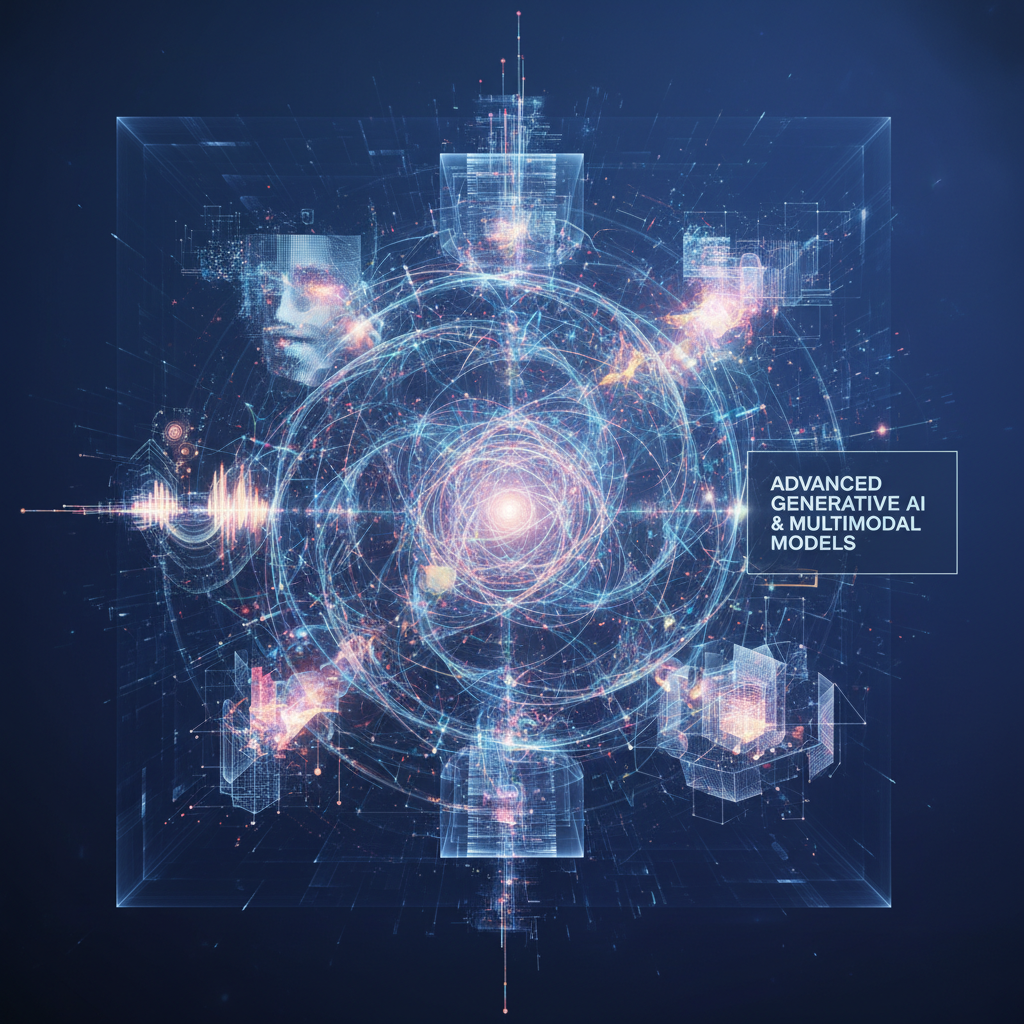
Welcome back to the cutting edge of artificial intelligence! Today, we’re diving into a topic that’s rapidly transforming how we interact with technology and create content: Advanced Generative AI and the incredible world of Multimodal Models. Get ready to explore how AI is learning to see, hear, and understand the world in a much richer, more human-like way.
Generative AI: A Quick Refresher and Its Evolution
You’re likely already familiar with Generative AI through popular tools like ChatGPT, which can produce highly coherent and creative text. At its core, Generative AI creates new content (text, images, audio, video) that resembles real-world data it was trained on. Early models often focused on a single modality, like generating text from text prompts (Large Language Models, LLMs) or images from image datasets.
However, the “advanced” part comes from a significant leap: moving beyond mere mimicry to genuinely understanding context and intent across various data types. This evolution sets the stage for something even more exciting… multimodality!
Embracing Multimodality: The Next Frontier
What exactly are multimodal models? Simply put, they are AI systems capable of processing and generating content using more than one type of data (or “modality”). Think about how humans perceive the world: we don’t just read; we also see, hear, and feel. Multimodal AI aims to replicate this holistic understanding.
Instead of just understanding text, a multimodal model can understand text and images, or text and audio, or even all three simultaneously. This allows for a much deeper comprehension of context and a more nuanced ability to generate diverse outputs. It’s like equipping AI with multiple senses!
How Multimodal Models Work Their Magic
Building a multimodal model involves complex architectures. Typically, these models use separate “encoders” for each modality (e.g., one for text, one for images) to transform the raw data into a common, abstract representation. This shared representation is where the magic happens – the model learns to correlate concepts across different data types. For instance, it learns that the text “cat” corresponds to images of felines.
Then, “decoders” can generate output in one or more modalities based on this unified understanding. This is how models like DALL-E, Midjourney, or Stable Diffusion can create stunning images from a text description, or how other models can describe an image in natural language. They bridge the gap between different sensory inputs and outputs.
Real-World Applications and Future Potential
The implications of advanced generative AI and multimodal models are truly vast and exciting.
Creative Content Generation: From generating stunning artwork and realistic product designs based on simple text prompts to creating entire video sequences, these models are revolutionizing creative industries.
Enhanced User Interfaces: Imagine conversational agents that don’t just respond to your voice but also analyze your facial expressions or react to objects in your environment, leading to more natural and intuitive interactions.
Education and Accessibility: Multimodal AI can create personalized learning experiences, automatically generate descriptive audio for visually impaired users, or translate complex diagrams into understandable text explanations.
Healthcare and Science: Assisting in medical imaging analysis by correlating visual data with patient records, or even helping design new molecules based on textual research papers and structural data.
The future promises even more integrated AI systems that can seamlessly switch between understanding and generating across text, image, audio, and video, leading to truly intelligent assistants and immersive digital experiences.
The Journey Continues!
Advanced Generative AI and Multimodal Models are not just buzzwords; they represent a fundamental shift in how AI perceives and interacts with the world. As these technologies mature, they will unlock unprecedented levels of creativity, efficiency, and understanding across nearly every sector. It’s an incredibly exciting time to be witnessing and contributing to the evolution of artificial intelligence! What applications are you most excited to see?
“`
Leave a Reply