Generative AI’s Multimodal Revolution
Welcome to the bleeding edge of artificial intelligence! For a while now, we’ve been captivated by advanced generative AI models, especially those excelling at understanding and creating text. But what happens when these incredibly intelligent systems learn to see, hear, and even feel the world beyond words? That’s where advanced generative AI meets multimodal models, opening up a universe of unprecedented possibilities!
The Next Frontier in AI Creativity
Generative AI has already reshaped how we think about content creation, problem-solving, and even art. From writing compelling articles to generating unique code snippets, these models have proven their ability to understand complex prompts and produce creative, coherent outputs. But imagine an AI that not only understands your textual request for a “sunset over a cyberpunk city” but can then *create* that image, complete with the right aesthetic, colors, and mood. This is the power of extending generative capabilities into multiple data types.
Beyond Text: What Are Multimodal Models?
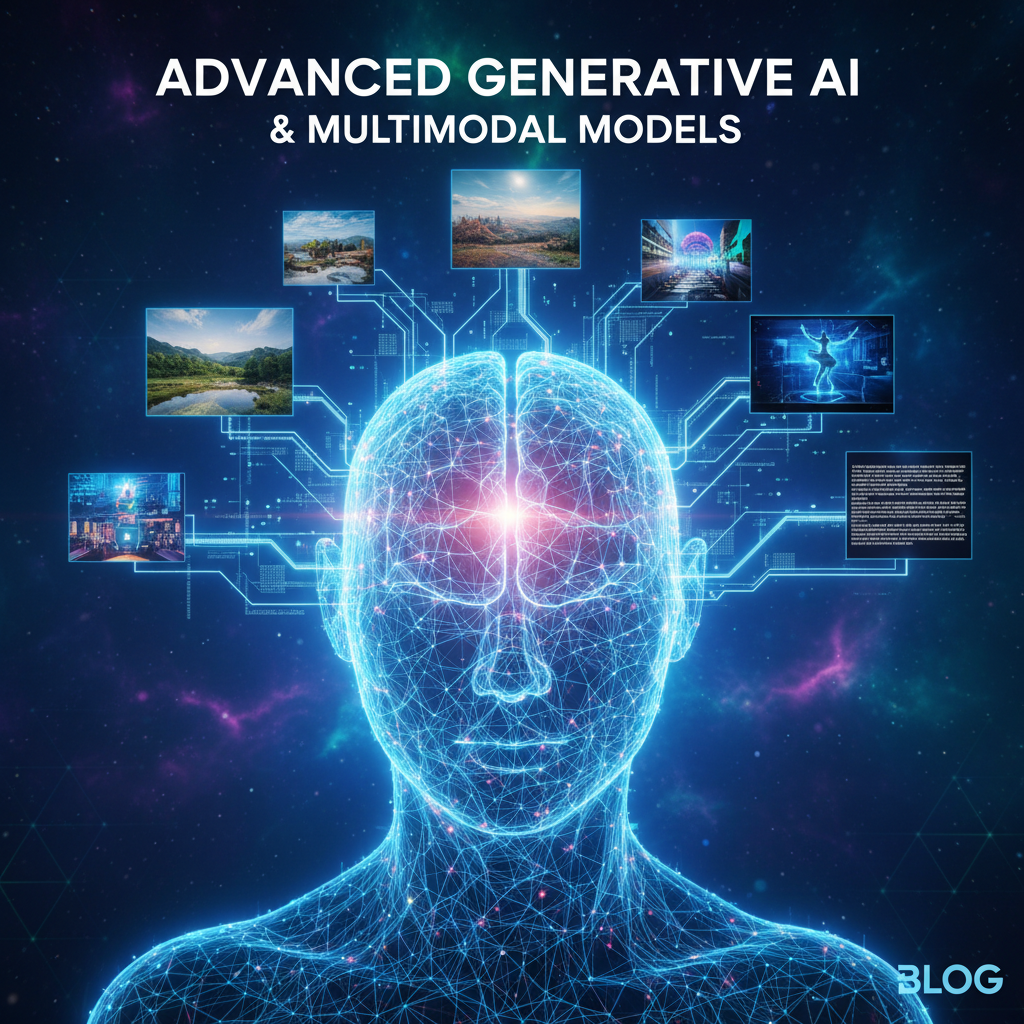
At its core, “multimodal” simply means interacting with or processing multiple types of data, or “modalities.” While traditional generative AI might focus on just text (like Large Language Models, LLMs), multimodal models are designed to understand and generate content across different data types simultaneously. This includes combinations like:
- Text and Images: Generating images from text descriptions, or describing images with text.
- Text and Audio: Creating speech from text, or generating music based on textual prompts.
- Text and Video: Synthesizing videos from scripts or generating video descriptions.
- And even more complex combinations involving sensor data, 3D models, and more!
These models learn to find connections and relationships between different forms of information, allowing for a much richer and more nuanced understanding of the world.
How Do These Models “See,” “Hear,” and “Understand”?
The magic behind multimodal models often involves sophisticated neural network architectures, particularly advanced transformer models. They learn to create a shared, abstract representation space where different modalities can be “understood” in relation to each other. For example, the concept of “cat” has a specific textual representation, a visual representation (an image of a cat), and an auditory representation (the sound of a cat meowing). Multimodal models learn to link these disparate representations, enabling them to translate ideas seamlessly between modalities.
This cross-modal understanding allows for truly groundbreaking capabilities. You can give a model a picture of a dog and ask it to describe it in a poem, or provide a sound clip and have it generate an image that visually represents that sound.
Unlocking New Possibilities: Real-World Applications
The implications of advanced generative AI and multimodal models are vast and transformative:
- Content Creation: Revolutionizing advertising, marketing, and entertainment by generating entire campaigns (text, images, video, audio) from a single prompt.
- Enhanced Accessibility: Automatically generating detailed visual descriptions for visually impaired users or creating sign language interpretations of spoken conversations.
- Education & Training: Creating interactive learning experiences with dynamic visuals and audio based on textual lesson plans.
- Robotics & Autonomous Systems: Enabling robots to better understand their environment by combining visual input with spoken commands and contextual text.
- Creative Arts: Empowering artists and designers with tools to rapidly prototype ideas across different media.
The Road Ahead: Challenges and Ethical Considerations
While incredibly exciting, the development of advanced multimodal models also brings significant challenges. Training these models requires immense computational power and vast datasets that are carefully curated and ethically sourced. Concerns about bias, misinformation, and the responsible use of such powerful generative capabilities become even more pronounced when AI can create hyper-realistic content across multiple mediums.
As these models become more sophisticated, ensuring transparency, accountability, and developing robust ethical guidelines will be paramount to harnessing their potential for good.
Join the Multimodal Journey!
Advanced generative AI and multimodal models are not just a technological leap; they represent a fundamental shift in how we interact with and create digital information. From simplifying complex creative tasks to enhancing human-computer interaction, their potential is truly boundless. The future of AI is vibrant, dynamic, and definitely multimodal. Are you ready to explore it?


Leave a Reply