
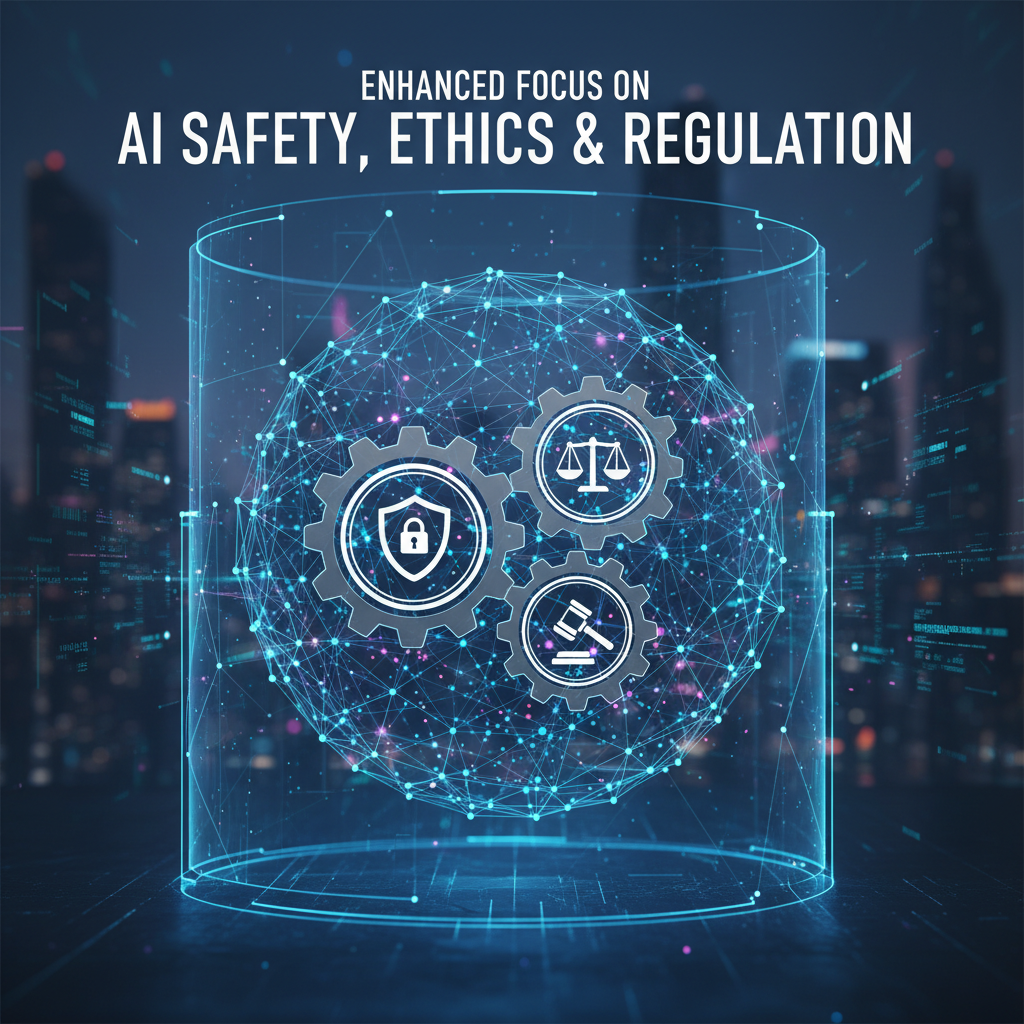
Enhanced Focus on AI Safety, Ethics, and Regulation
Artificial Intelligence continues to reshape our world at an astonishing pace, promising innovations across every sector from healthcare to education. While the potential benefits are immense, the conversation around AI is maturing, and there’s a vital, growing consensus: we must intensify our focus on AI safety, ethics, and regulation. This isn’t just a technical challenge; it’s a societal imperative to ensure AI serves humanity responsibly.
Why the Heightened Focus Now?
The urgency behind this enhanced focus stems from several factors. AI systems are no longer confined to research labs; they are increasingly integrated into critical infrastructure, decision-making processes, and our daily lives. As AI capabilities advance – particularly with large language models and generative AI – so do the potential risks. These range from algorithmic bias perpetuating societal inequalities, to concerns about job displacement, the spread of misinformation, and even more profound questions about control and existential safety. It’s clear that proactive measures are far more effective than reactive ones.
The Pillars of Responsible AI: Safety & Ethics
At the heart of responsible AI development are two interconnected concepts: safety and ethics.
AI Safety refers to the practice of designing, developing, and deploying AI systems in a way that minimizes unintended harm, ensures reliability, robustness, and prevents misuse. This includes preventing catastrophic failures, ensuring AI systems align with human intent, and being able to predict and control their behavior in complex environments.
AI Ethics, on the other hand, deals with the moral principles that should guide AI development and use. Key ethical considerations include fairness (avoiding discrimination), transparency (understanding how AI makes decisions), accountability (who is responsible when things go wrong), privacy (protecting personal data), and human autonomy (ensuring AI augments, rather than diminishes, human control and dignity). Crafting these ethical guidelines requires diverse perspectives, ensuring they reflect global values and societal nuances.
The Role of Regulation and Governance
While industry standards and self-regulation are important, they alone are often insufficient to address the broad societal impact of AI. This is where effective regulation and governance come into play. Governments worldwide are grappling with how to create frameworks that foster innovation while mitigating risks. The challenge lies in developing regulations that are flexible enough to adapt to rapidly evolving technology, yet robust enough to provide genuine oversight and protection.
From the European Union’s pioneering AI Act to ongoing discussions and proposals in the United States, UK, and beyond, the goal is to establish clear rules of the road. This includes defining risk categories, mandating impact assessments, requiring human oversight, and setting standards for data governance. International cooperation is also crucial, as AI’s impact transcends national borders, requiring global coordination to prevent a fragmented and potentially dangerous regulatory landscape.
Our Collective Responsibility
The journey towards safe, ethical, and well-regulated AI is a collective one. It requires ongoing dialogue and collaboration among AI developers, researchers, policymakers, legal experts, ethicists, civil society organizations, and the public. By prioritizing these crucial elements now, we can ensure that AI truly becomes a force for good, augmenting human capabilities and addressing some of the world’s most pressing challenges, without compromising our shared values or future well-being. Let’s build an AI future we can all trust.
“`



Leave a Reply