
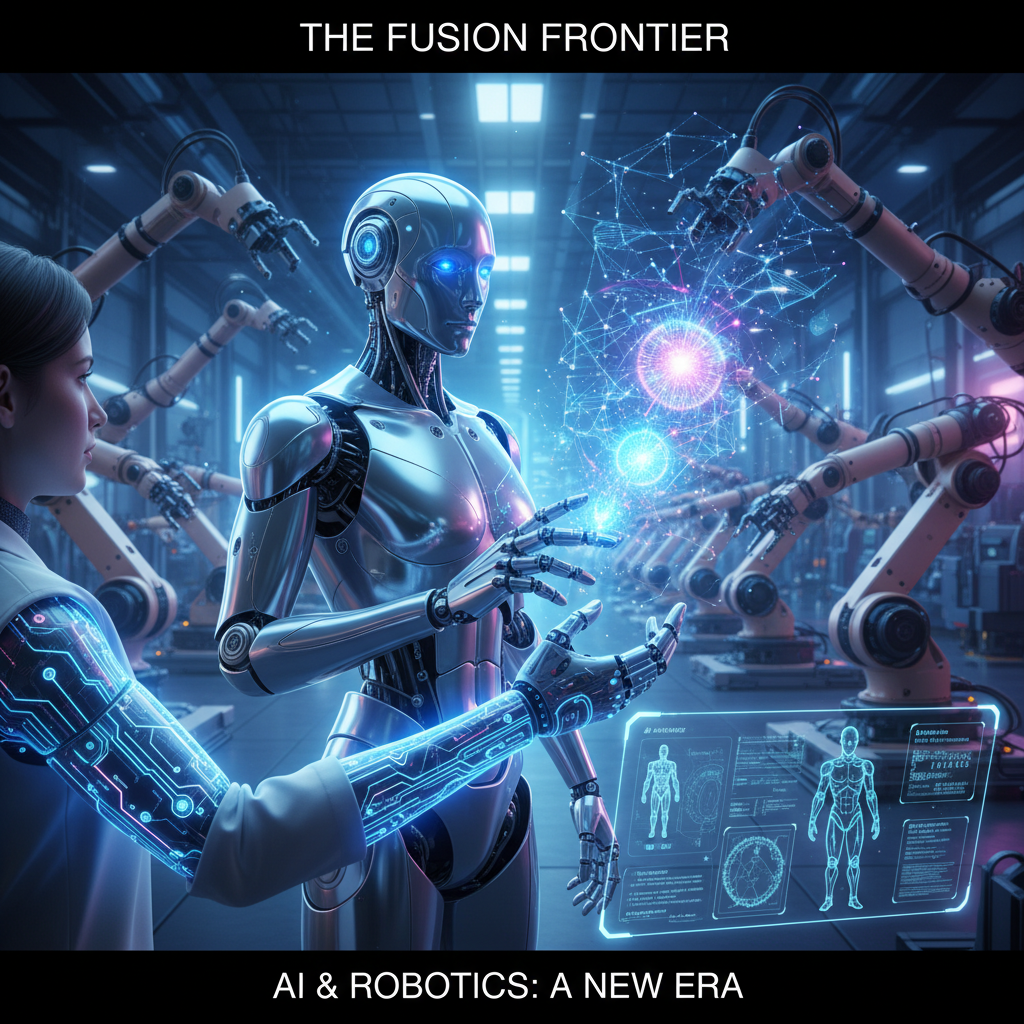
The AI-Robotics Revolution: Humanoids & Beyond
Imagine a future where intelligent machines seamlessly integrate into our daily lives, assisting us, learning from us, and even looking like us. This isn’t just science fiction anymore; it’s the exciting reality unfolding as Artificial Intelligence (AI) and advanced robotics converge. From highly specialized industrial automation to sophisticated humanoids, this powerful synergy is redefining what’s possible and shaping the world as we know it.
What Exactly is This Convergence?
At its heart, the convergence of AI and robotics is about giving robots brains. Traditionally, robots were programmed to perform repetitive tasks with precision. AI changes the game by endowing them with the ability to perceive, reason, learn, and make decisions autonomously. Think of AI as the sophisticated operating system and processing power, while robotics provides the physical body and means to interact with the real world. Together, they create machines that are not just mechanical, but truly intelligent and adaptive.
The Dawn of Humanoids: More Than Just Machines
Perhaps the most captivating aspect of this convergence is the rise of humanoids. These robots, designed to resemble and sometimes even mimic human behaviors, are no longer confined to labs. Powered by advanced AI, humanoids are learning to navigate complex environments, perform intricate tasks, and even engage in basic social interactions. Imagine humanoids assisting in healthcare, performing dangerous exploration missions, or even providing companionship. While still in early stages, their potential to augment human capabilities and fill critical roles is immense, pushing us to rethink our interactions with technology.
Intelligent Automation: Beyond the Assembly Line
Beyond humanoids, AI is supercharging automation across every industry. It’s moving far beyond predictable factory assembly lines. We’re now seeing robots capable of complex logistics in warehouses, autonomous vehicles navigating our cities, and smart systems managing infrastructure. AI-driven automation means robots can adapt to changing conditions, optimize processes in real-time, and even learn from their experiences, making them incredibly efficient and flexible. This isn’t just about replacing human labor; it’s about creating entirely new levels of productivity and safety in environments too dangerous or tedious for humans.
Shaping Our World: Opportunities and Challenges
The implications of this convergence are profound. On one hand, it promises unprecedented advancements in manufacturing, healthcare, exploration, and daily living. It can free humans from dangerous or monotonous tasks, enhance our quality of life, and open doors to innovations we can barely conceive. On the other hand, it presents significant societal questions about job displacement, ethical considerations regarding autonomous decision-making, and the need for robust regulatory frameworks. Ensuring responsible development and equitable access will be key to harnessing its full potential for good.
The convergence of AI and advanced robotics is not a distant future; it’s happening now. As we witness the continuous evolution of humanoids and increasingly intelligent automation, one thing is clear: we are on the cusp of a technological revolution that will reshape our society in exciting, and sometimes challenging, ways. Embracing this future with thoughtful planning and innovation will be crucial for all of us.



Leave a Reply