
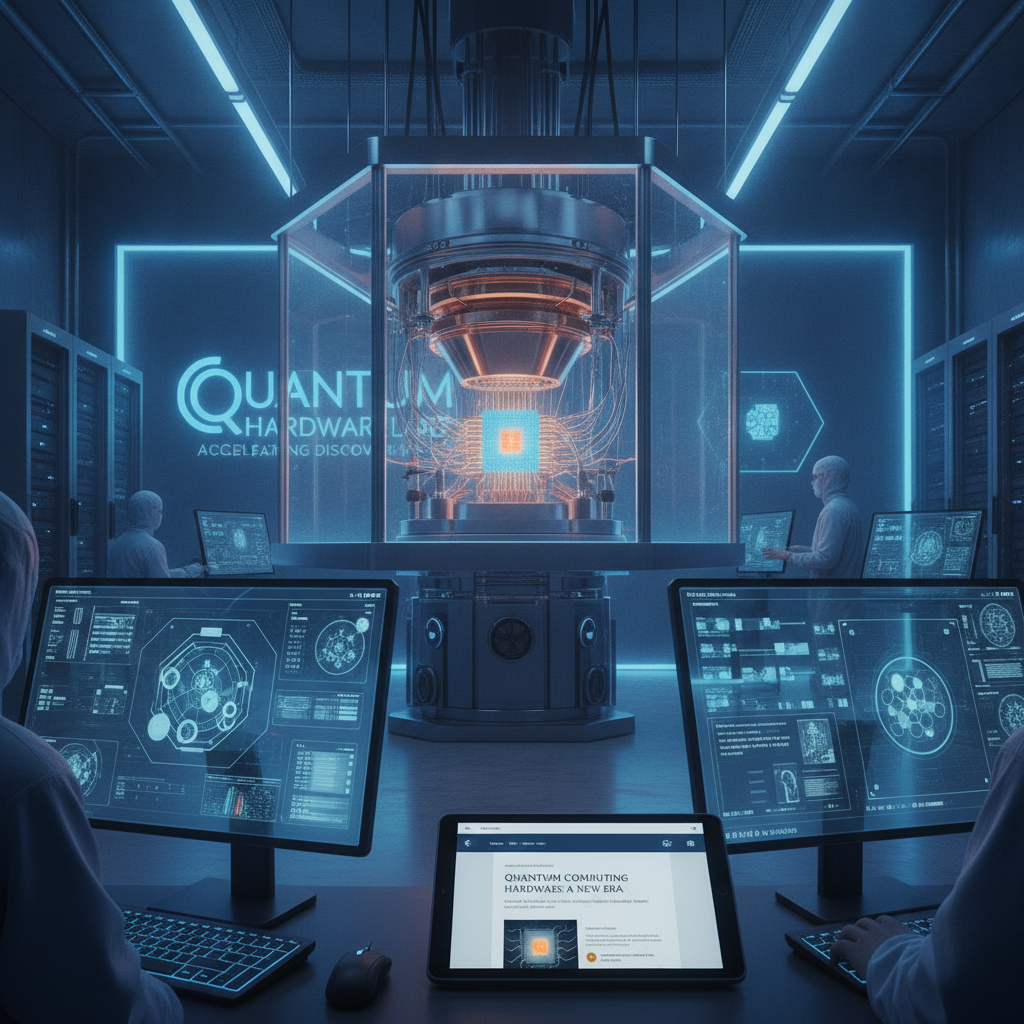
Quantum Computing Hardware: Unlocking Tomorrow’s Potential
Quantum computing is rapidly moving from theoretical concepts to tangible reality, thanks to incredible advancements in hardware. While the algorithms and software are crucial, it’s the physical construction of stable, powerful qubits that truly drives the field forward. Join us as we dive into the exciting progress being made in building these revolutionary machines!
Superconducting Qubits: The Frontrunners
This technology, championed by giants like IBM and Google, utilizes superconducting circuits cooled to near absolute zero. Recent milestones include significant increases in qubit counts (e.g., IBM’s latest processors) and improvements in coherence times. The ongoing challenge lies in scaling up these systems while maintaining high fidelity and managing the complex cryogenic infrastructure required.
Trapped Ions: Precision and Coherence
Ion traps, a competing approach, use electromagnetic fields to suspend individual atoms (ions), which serve as qubits. Companies like IonQ and Quantinuum (formed from Honeywell Quantum Solutions and Cambridge Quantum Computing) have demonstrated impressive results in qubit connectivity and remarkably low error rates. Their strengths include high-fidelity operations and all-to-all qubit interaction, though scaling to very large numbers of qubits presents unique engineering hurdles.
Silicon-based Qubits: Leveraging Established Tech
Imagine building quantum computers using the same foundational material as your smartphone’s processor – silicon! Spin qubits in silicon are gaining traction due to their potential for scalability and inherent compatibility with existing semiconductor manufacturing techniques. Researchers are making significant strides in controlling and entangling these qubits, opening a path towards more cost-effective and integrated quantum solutions that could eventually operate at slightly warmer temperatures.
Beyond the Mainstream: Diverse Approaches Flourish
The quantum hardware landscape is rich with innovation beyond the main contenders. Photonic qubits, utilizing particles of light, offer great potential for communication and room-temperature operation. Neutral atoms, similar to trapped ions but without the charge, are showing promise for large-scale qubit arrays. Even more exotic concepts like topological qubits aim for inherent error correction. This diversity ensures multiple avenues for breakthroughs and increases the chances of finding the optimal path forward.
The Road Ahead: Overcoming Quantum Hurdles
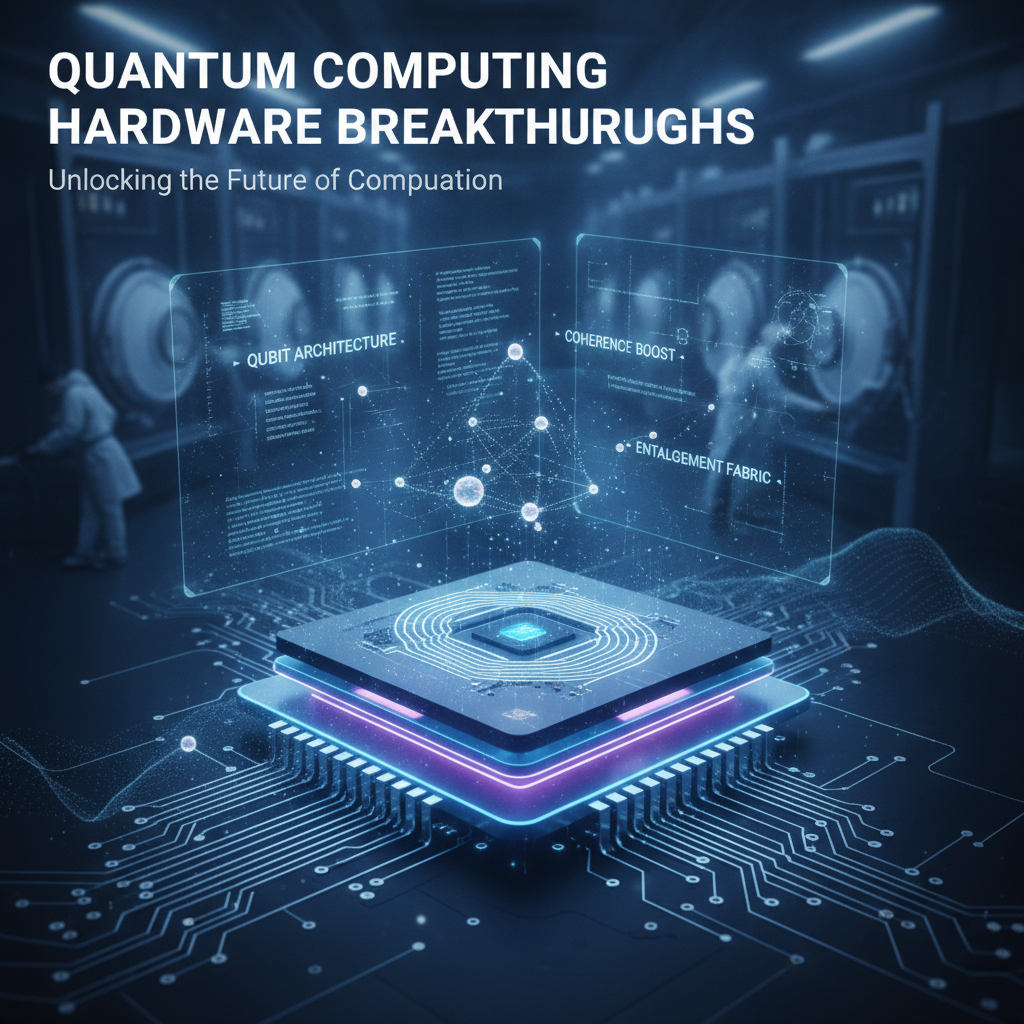
Despite the rapid progress, significant challenges remain on the path to practical, fault-tolerant quantum computing. Achieving this goal requires vastly more stable qubits than currently available, along with robust error correction mechanisms to compensate for their inherent fragility. Maintaining qubit coherence – their ability to hold quantum information without being disturbed – is a continuous battle. However, the collaborative efforts across academia and industry are pushing these boundaries faster than ever, driven by incredible ingenuity and investment.
The journey to practical, large-scale quantum computers is a marathon, not a sprint. Yet, the pace of hardware development is nothing short of astonishing. Each breakthrough brings us closer to a future where quantum machines can tackle problems currently beyond our reach, promising revolutions in medicine, materials science, and artificial intelligence. Keep an eye on this space – the next quantum leap is just around the corner!


Leave a Reply