
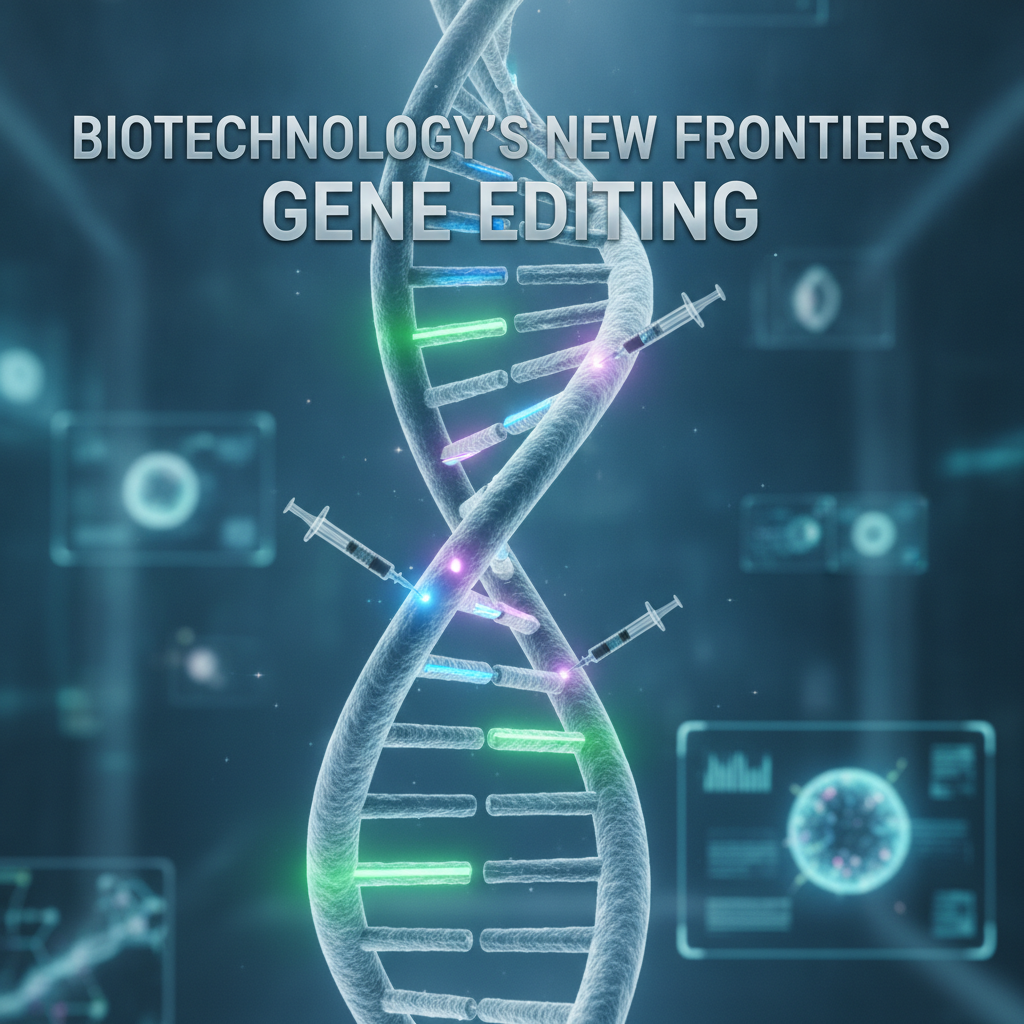
Gene Editing: Crafting a Healthier Tomorrow
Hello, curious minds! Welcome to the cutting edge of biotechnology, where science fiction is rapidly becoming scientific fact. Today, we’re diving into one of the most exciting and transformative fields: gene editing. This isn’t just about understanding life; it’s about responsibly rewriting its very code to unlock incredible possibilities for health, agriculture, and beyond.
What Exactly is Gene Editing?
At its heart, gene editing is a set of technologies that allow scientists to change an organism’s DNA. Think of DNA as the instruction manual for life. Gene editing lets us precisely “cut,” “paste,” or “replace” specific sections of this manual. This means we can fix errors, add beneficial instructions, or even remove unwanted ones. It’s like having a highly advanced word processor for the genetic code itself!
CRISPR-Cas9: The Game Changer
While gene editing has been around in various forms for a while, the discovery of CRISPR-Cas9 (Clustered Regularly Interspaced Short Palindromic Repeats and CRISPR-associated protein 9) truly revolutionized the field. Imagine a pair of molecular scissors that can be programmed to find and cut any specific piece of DNA with incredible accuracy. That’s essentially what CRISPR-Cas9 is! It’s much faster, cheaper, and more precise than previous methods, making genetic manipulation accessible to more researchers and accelerating discovery at an unprecedented pace.
Beyond Disease: Diverse Applications
The potential applications of gene editing are truly vast and awe-inspiring. In human health, it holds immense promise for treating genetic diseases like cystic fibrosis, Huntington’s disease, and sickle cell anemia by correcting the underlying genetic mutations. Scientists are also exploring its use in developing new cancer therapies, combating viral infections like HIV, and even preventing heart disease.
But the impact isn’t limited to medicine! In agriculture, gene editing can create crops that are more resistant to pests and diseases, tolerant to harsh climates, or even more nutritious. Imagine drought-resistant staple crops or allergy-free peanuts! It also offers new avenues for sustainable biofuel production and even conservation efforts for endangered species.
Navigating the Ethical Landscape
With such powerful technology comes significant responsibility. As we push the boundaries of what’s possible, ethical considerations are paramount. Discussions around safety, accessibility, unintended consequences, and the line between therapy and enhancement are ongoing and crucial. Responsible innovation, transparency, and broad societal engagement are key to ensuring that gene editing is used wisely and for the greater good of all.
The Road Ahead: A Future Unfolding
Biotechnology’s new frontiers in gene editing represent a monumental leap forward in our ability to understand and interact with the fundamental building blocks of life. While challenges and ethical debates will undoubtedly continue, the promise of a future where genetic diseases are curable, crops are more resilient, and our understanding of biology is profoundly deepened, is incredibly exciting. Stay tuned, because the gene editing revolution is just getting started, and its impact will shape the future for generations to come!
“`


Leave a Reply