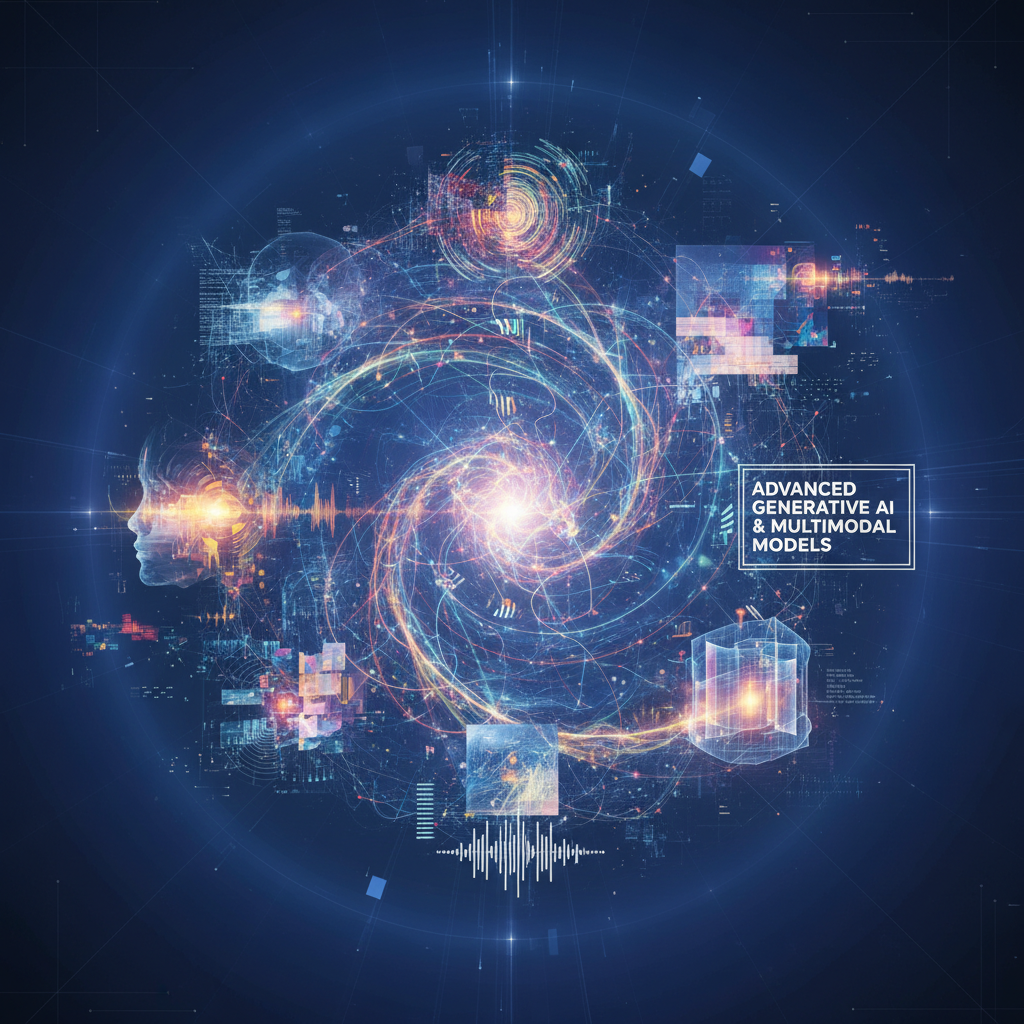
In the rapidly evolving landscape of artificial intelligence, buzzwords come and go. But some advancements are truly transformative, pushing the boundaries of what machines can achieve. Today, we’re diving into two such areas: Advanced Generative AI and Multimodal Models. Far from mere theoretical concepts, these technologies are reshaping industries, sparking creativity, and fundamentally changing how we interact with digital information.
What Exactly is “Advanced Generative AI”?
You’re likely familiar with generative AI through tools that write text, create images, or even compose music based on simple prompts. But “advanced” generative AI goes several steps further. It’s not just about producing content; it’s about generating novel, high-quality, and contextually rich outputs that often defy simple rule-based programming.
These models, typically large and complex neural networks, excel at understanding intricate patterns, nuances, and relationships within vast datasets. They can perform sophisticated tasks like coding complex software, designing novel molecules, generating realistic human speech with emotion, or crafting detailed narratives that reflect deep comprehension. It’s about moving from mimicry to genuine creation and problem-solving, making AI a true collaborative partner.
The Power of Multimodal Models
Imagine being able to understand a story by reading its text, seeing its illustrations, and hearing its narration all at once. That’s essentially what multimodal models aim to do – but for AI. Traditional AI models often specialize in one type of data: text, images, or audio. Multimodal models, however, are designed to process, interpret, and generate information across multiple input and output modalities simultaneously.
This means an AI can understand a query that combines text and an image, then respond with a generated image, a piece of text, or even a synthesized voice. For example, you could show a model a picture of a sunset and ask, “Describe the emotions this evokes, and then generate a short poem about it.” The model processes visual information, understands your text query, and generates a poetic text response, truly bridging sensory gaps.
The Synergy: Advanced Generative Meets Multimodal
Where these two concepts truly shine is in their intersection. Many of the most exciting AI breakthroughs today are a result of advanced generative capabilities applied within a multimodal framework. Think of models like DALL-E, Midjourney, or Stable Diffusion – they take a text prompt (one modality) and generate a unique image (another modality). This isn’t just about simple translation; it involves a deep, generative understanding of the prompt’s intent, artistic style, and potential visual representations.
This synergy unlocks incredible possibilities: creating detailed 3D models from text descriptions, generating interactive virtual environments from a few spoken words, or even building dynamic educational content that adapts visually, audibly, and textually to a student’s learning style. It’s about AI starting to perceive and interact with the world in a more holistic, human-like manner.
Real-World Impact and Future Horizons
The applications for advanced generative AI and multimodal models are already vast and rapidly expanding:
- Creative Arts: Generating stunning artwork, composing unique musical pieces, writing screenplays, and even designing video game assets.
- Science & Research: Accelerating drug discovery, designing new materials, and simulating complex systems with unprecedented accuracy.
- Healthcare: Assisting in diagnosis, personalizing treatment plans, and generating synthetic data for medical research.
- Education: Creating personalized learning experiences, generating interactive teaching materials, and improving accessibility.
- Accessibility: Describing complex visual scenes for the visually impaired, translating sign language to speech, and more.
Looking ahead, we can anticipate more intelligent virtual assistants, truly immersive virtual and augmented realities, and AI systems capable of understanding and interacting with our complex world in ways we’re only beginning to imagine.
Navigating the Path Forward: Challenges and Ethics
As with any powerful technology, advanced generative AI and multimodal models come with their share of challenges and ethical considerations. Issues like data bias, the potential for misuse (e.g., deepfakes), intellectual property rights, and the sheer computational cost of training these massive models require careful attention. Ensuring responsible development, transparency, and robust ethical guidelines will be crucial for these technologies to benefit society truly.
The journey into advanced generative AI and multimodal models is incredibly exciting. They represent a significant leap forward in our quest to build more intelligent, creative, and intuitive AI systems. By understanding their potential and proactively addressing their challenges, we can harness these powerful tools to unlock unprecedented innovation and reshape our world for the better. The future, it seems, is not just intelligent, but also remarkably creative and wonderfully multimodal!
“`



Leave a Reply