Unlocking the Future with Multimodal AI
The Dawn of Advanced Generative AI
We’ve all been amazed by the rapid advancements in generative AI, from crafting compelling text to generating stunning images from simple prompts. But what if AI could go beyond specializing in just one type of data? Enter the exciting world of advanced generative AI, where models are becoming increasingly sophisticated, pushing the boundaries of creativity and capability.
What Are Multimodal Models?
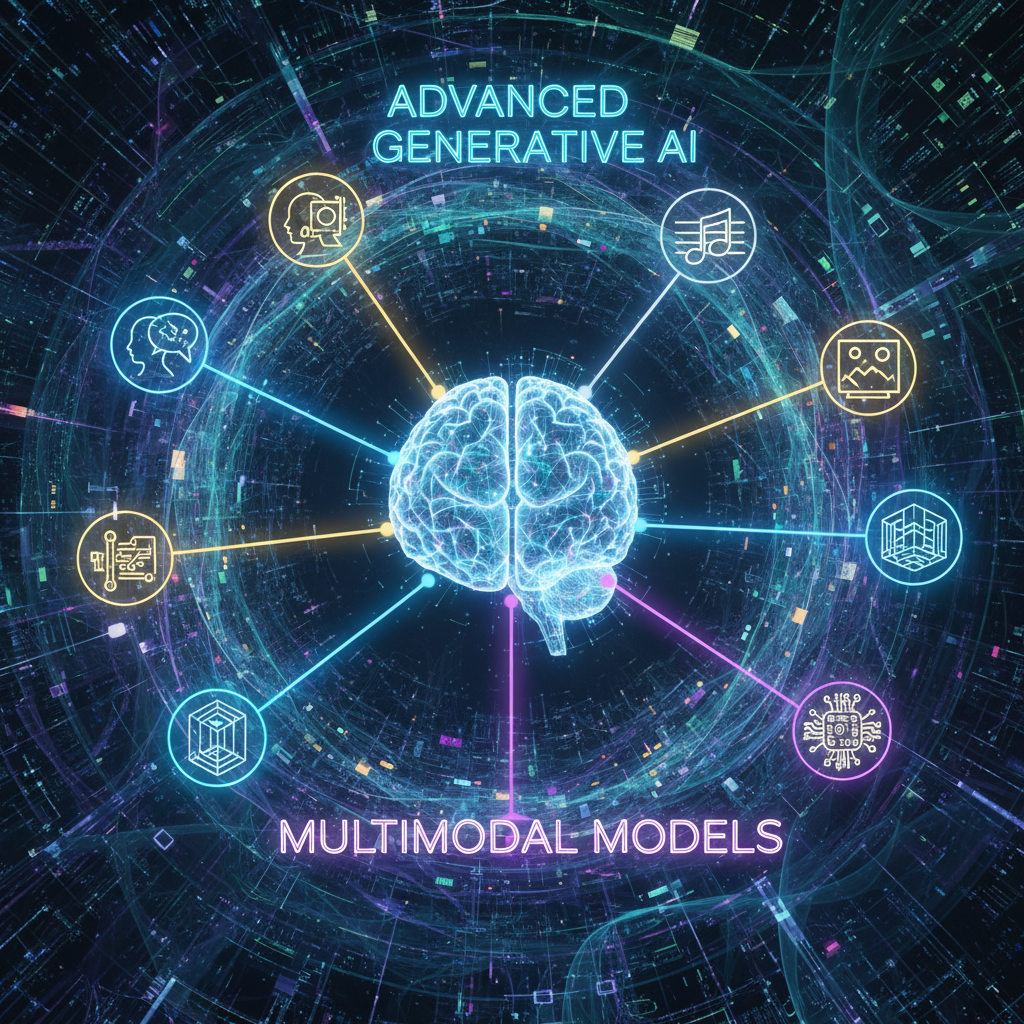
Imagine an AI that doesn’t just understand words, but also images, sounds, and even video – and can generate content seamlessly across all of them. That’s the essence of multimodal models. Unlike previous AI systems that often focused on a single data type (like text-only or image-only), multimodal AI is designed to process, interpret, and generate information from multiple modalities simultaneously. Think text-to-image, image-to-text, audio-to-video, or even generating a full story with accompanying visuals and soundscapes.
How They Work: A Glimpse Behind the Magic
At their core, multimodal models learn to find common representations or “understandings” across different types of data. They create shared embedding spaces where, for example, the concept of a “sunset” looks similar whether it’s described in text or depicted in an image. This enables them to translate information from one modality to another, or even fuse information from several inputs to create a rich, coherent output that transcends the capabilities of single-modality models.
Transformative Applications and Impact
The potential applications of multimodal generative AI are truly vast and revolutionary:
Content Creation: Imagine designers generating entire visual scenes from textual descriptions, or marketers creating dynamic ad campaigns with integrated copy, images, and music instantly.
Enhanced User Experience: AI assistants could not only respond to your voice but also understand your visual environment or even interpret your emotions based on facial expressions, providing truly personalized and intuitive interactions.
Accessibility: These models can power advanced assistive technologies, translating complex visual information into spoken descriptions or converting sign language into text and vice-versa in real-time.
Scientific Discovery: Researchers could analyze complex datasets combining sensor data, images, and text to uncover novel insights in medicine, material science, and climate research.
Challenges and the Road Ahead
While the capabilities are astounding, multimodal AI still faces significant challenges. Training these models requires immense computational resources and vast, diverse datasets. Ethical considerations around bias, responsible content generation, and potential misuse are paramount. Ensuring accuracy, reducing “hallucinations” (where the AI generates plausible but incorrect information), and developing robust safety mechanisms are ongoing areas of research.
Looking ahead, we can expect multimodal models to become even more integrated into our daily lives, leading to more natural human-computer interaction, highly personalized experiences, and groundbreaking innovations across industries. The journey towards truly intelligent and creative AI that seamlessly bridges all forms of information is just beginning.
Join the Multimodal Revolution!
Advanced generative AI and multimodal models are not just a technological leap; they represent a fundamental shift in how we interact with and create digital content. As these models evolve, they promise to unlock unprecedented levels of creativity and efficiency, redefining industries and shaping our future. The possibilities are truly boundless, and it’s an incredibly exciting time to be exploring this frontier!
“`

Leave a Reply