Generative AI’s Next Frontier: Multimodal Magic
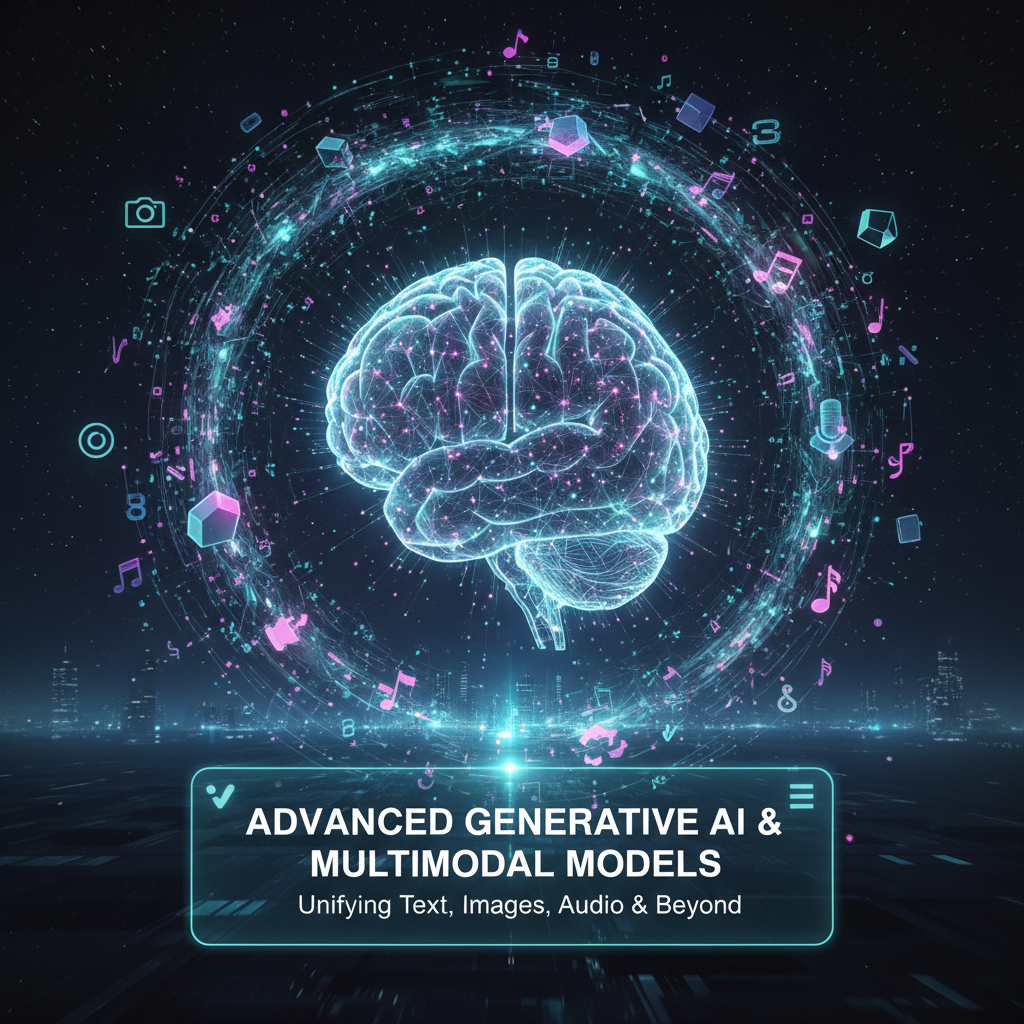
Generative AI has captivated the world with its ability to create human-like text, stunning images, and even compelling audio. But what if these incredible capabilities could be seamlessly integrated, allowing AI to understand and generate across different types of data – like text, images, and sound – all at once? Welcome to the exciting realm of Advanced Generative AI and Multimodal Models, where the future of intelligent creation is taking shape.
Beyond Single-Sense Generation
Traditional generative AI models often specialize in one domain: a Large Language Model (LLM) for text, a Diffusion Model for images, or an audio synthesis model for sound. While powerful on their own, the real world is inherently multimodal. We perceive and interact with information through a combination of senses. Advanced generative AI seeks to mirror this holistic understanding.
What Are Multimodal Models?
Multimodal models are a revolutionary class of AI that can process, understand, and generate content across multiple modalities simultaneously. Imagine an AI that can take a text description (“a cat playing piano in a whimsical style”), generate an image and an accompanying melody, or even a short video clip, all from a single prompt. This isn’t just stitching together outputs from separate models; it’s about deep, integrated comprehension and creation across data types.
How Do They Work Their Magic?
At their core, multimodal models learn to find common representations, or ’embeddings,’ that capture the meaning of information regardless of its original modality. This allows the AI to translate concepts between text, images, audio, and even video. They can infer relationships and generate new content by drawing upon a richer, more integrated understanding of the world. Techniques often involve sophisticated neural network architectures designed to fuse information from diverse input streams.
Real-World Applications & Impact
The potential applications of advanced generative multimodal AI are vast and transformative. In content creation, they can revolutionize everything from marketing campaigns (generating visuals and copy from a single brief) to interactive storytelling and game development. Designers could describe a product, and the AI could generate 3D models, textures, and even animated prototypes.
Education and accessibility stand to gain immensely. Imagine AI creating personalized learning materials that combine text explanations, illustrative diagrams, and spoken narratives tailored to a student’s learning style. For individuals with disabilities, multimodal AI could translate visual information into audio descriptions or text into sign language animations, bridging communication gaps.
The Road Ahead: Challenges & Opportunities
While incredibly promising, the development of robust multimodal models presents significant challenges. Training these models requires massive, diverse, and carefully curated datasets that integrate different modalities, which are much harder to acquire than single-modality datasets. Ensuring ethical AI use, mitigating biases, and refining the coherence and quality of generated multimodal outputs are ongoing areas of research. However, the rapid pace of innovation suggests a future where AI’s creative potential knows no bounds.
Advanced Generative AI and Multimodal Models are pushing the boundaries of what’s possible, moving us closer to AI systems that perceive and interact with the world in a more human-like, holistic manner. As these technologies mature, they promise to unlock unprecedented levels of creativity, efficiency, and accessibility across countless industries. The future is not just about generating; it’s about understanding, integrating, and creating in symphony.
“`


Leave a Reply