Unlocking Creativity: Advanced Multimodal AI
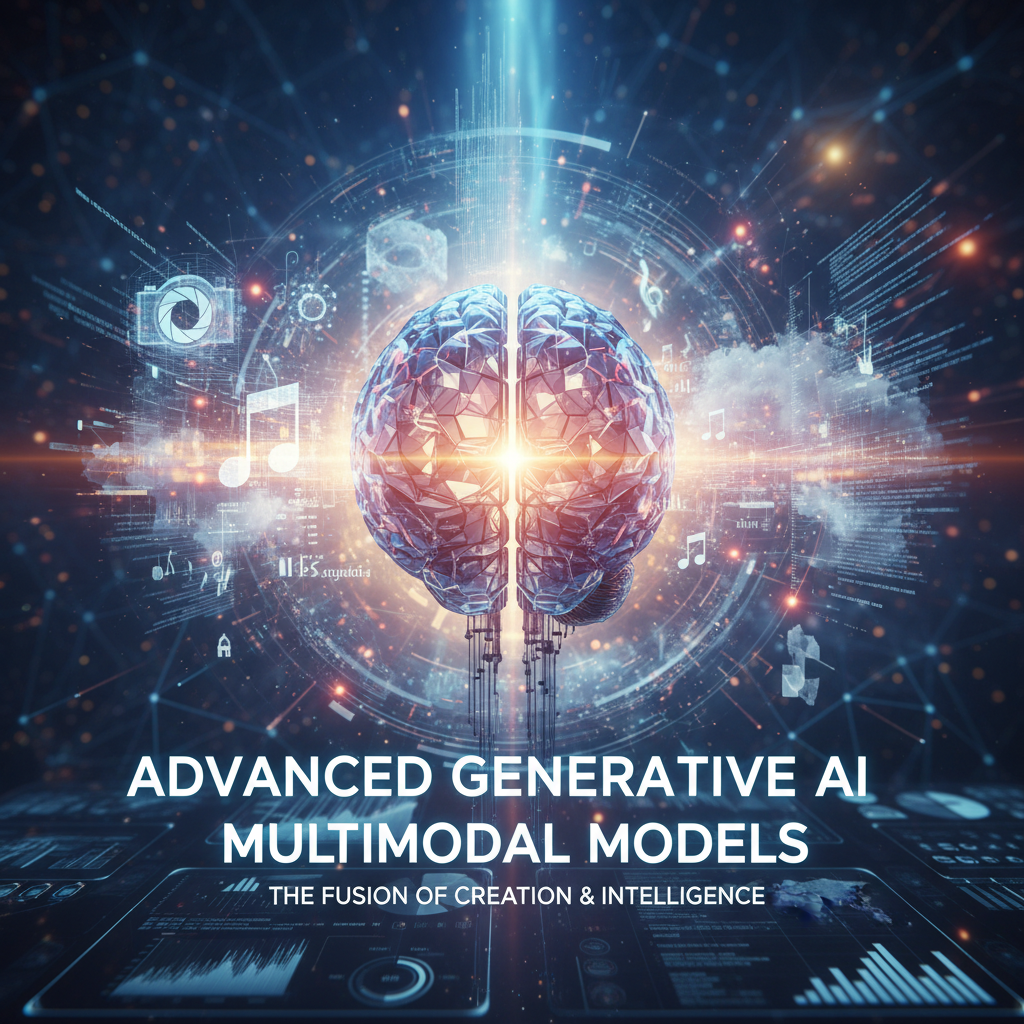
Welcome back to the blog! Today, we’re diving headfirst into one of the most exciting and rapidly evolving areas in artificial intelligence: Advanced Generative AI and Multimodal Models. Forget simple text-to-text generation; we’re now talking about systems that can understand, synthesize, and create across a symphony of data types.
What are Generative AI and Multimodal Models?
At its core, Generative AI refers to algorithms that can produce new content—be it text, images, audio, or even code—that is original, realistic, and often indistinguishable from human-created work. Think Stable Diffusion for images, or ChatGPT for text.
Now, add “Multimodal” to the mix. A multimodal model is one that can process and synthesize information from multiple modalities simultaneously. Instead of just understanding text, it can grasp the nuances of an image, the tone of an audio clip, or the motion in a video, and then generate outputs that integrate these different forms. This means it doesn’t just “see” an image; it “understands” the objects, context, and potential stories within it, often in conjunction with a text prompt.
The Power of Multimodality: Beyond Single Senses
Why is this such a big deal? Because the real world isn’t unimodal. We perceive and interact with the world using all our senses. A multimodal AI model gets closer to this holistic understanding. Imagine describing a complex scene with text, and having the AI not only generate the image but also compose a fitting soundtrack and narrate a story, all based on that initial prompt. This integrated understanding leads to richer context, more coherent outputs, and a deeper level of human-like intelligence.
This capability allows for more sophisticated tasks: translating visual concepts into textual descriptions, generating images from text descriptions while considering the emotional tone of the text, or even creating entire animated scenes from a simple script. The possibilities for creativity and problem-solving are immense.
Applications Across Industries
The impact of advanced generative AI and multimodal models is already being felt across various sectors:
Creative Arts & Design: Artists and designers can rapidly prototype ideas, generate unique visuals, music, and narratives, pushing the boundaries of creative expression.
Healthcare: Multimodal models can analyze medical images (X-rays, MRIs), patient notes, and genomic data simultaneously to aid in diagnosis, drug discovery, and personalized treatment plans.
Education: Creating interactive learning materials, generating personalized explanations with visuals and audio, or even simulating historical events to enhance understanding.
Entertainment & Gaming: Automating the generation of game assets, character animations, environmental details, or even full story arcs and dialogue, speeding up development cycles.
Robotics & Autonomous Systems: Enabling robots to better understand their environment by integrating visual, auditory, and tactile sensor data, leading to more robust and intelligent interactions.
The Road Ahead: Challenges and Ethical Considerations
While the potential is thrilling, challenges remain. Training these complex models requires vast amounts of diverse, high-quality data and significant computational resources. Ensuring the fairness, transparency, and ethical use of these models is paramount. We must guard against biases present in training data and ensure that these powerful tools are used responsibly and for the benefit of all.
The field is moving at an incredible pace, and we’re only just beginning to scratch the surface of what advanced generative AI and multimodal models can achieve. They promise to revolutionize how we interact with technology, create content, and solve complex problems.
What are your thoughts on the future of multimodal AI? Share your insights in the comments below!

Leave a Reply