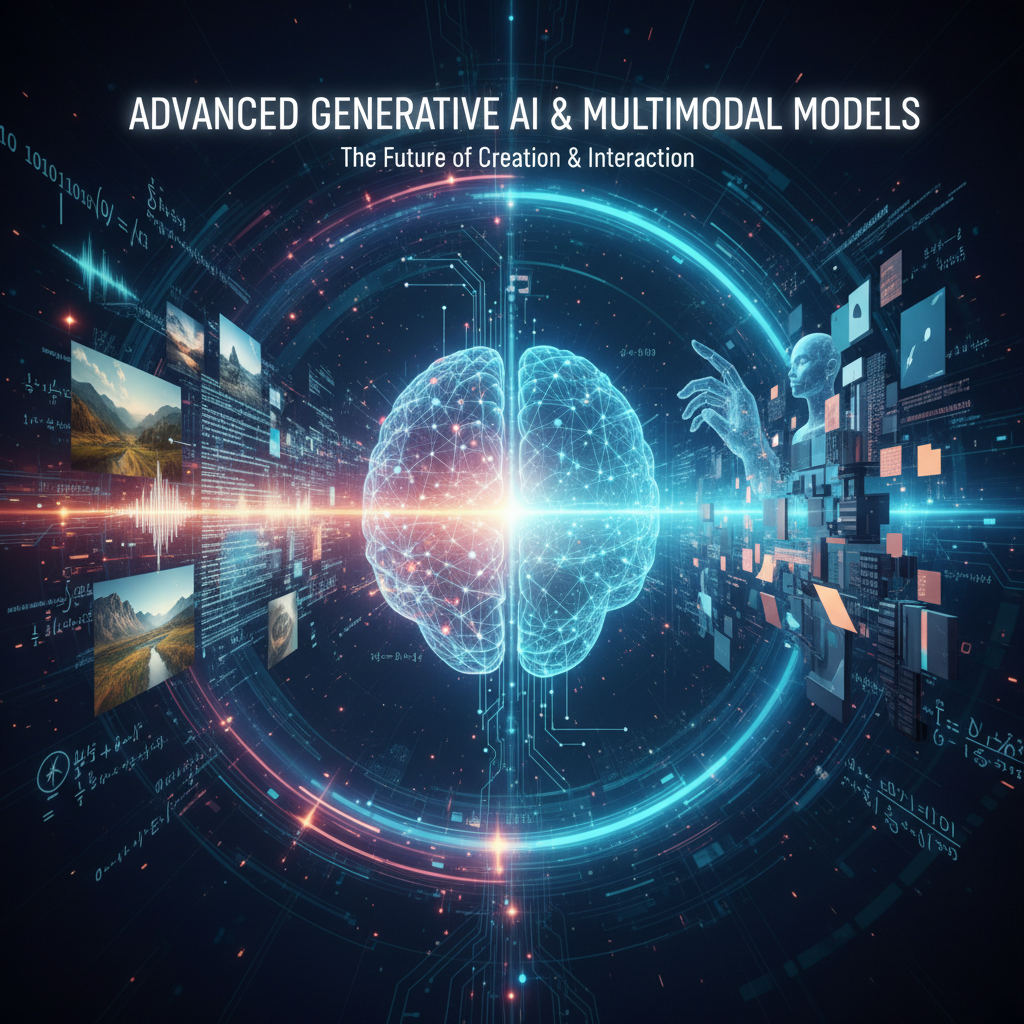
Next-Gen AI: Generative & Multimodal Models
Welcome, fellow tech enthusiasts! Today, we’re diving headfirst into one of the most exciting and rapidly evolving areas of artificial intelligence: Advanced Generative AI and Multimodal Models. If you’ve been amazed by what AI can do with text or images, get ready – because the future is even more integrated and imaginative!
What is Advanced Generative AI?
You’re probably familiar with generative AI’s ability to create novel content, whether it’s crafting compelling text, stunning images, or even music. But what makes it “advanced”? It’s about moving beyond simple pattern replication to truly understanding context, nuance, and intent.
Advanced generative models are characterized by their massive scale, sophisticated architectures (like advanced transformer networks and diffusion models), and their remarkable ability to produce incredibly coherent, high-quality, and diverse outputs. They can follow complex instructions, adapt to specific styles, and even “reason” in more human-like ways to generate content that’s virtually indistinguishable from human-created work.
The Magic of Multimodal Models
Here’s where things get really fascinating! Traditionally, AI models specialized in one type of data: text models for text, image models for images, etc. Multimodal models break down these barriers by learning from and generating across multiple data types simultaneously – think text, images, audio, and even video.
Imagine an AI that doesn’t just describe a picture, but understands the emotion conveyed within it and can then generate a fitting piece of music. Or an AI that can take a simple text prompt and create a vivid image, complete with specific textures and lighting. That’s the power of multimodality! By combining different “senses,” these models gain a richer, more holistic understanding of the world, leading to more intelligent and versatile creative outputs.
Real-World Applications and Impact
The implications of these advanced models are truly transformative across countless industries:
- Content Creation: From marketing campaigns and personalized design to storytelling and virtual world building, artists and creators are finding powerful new tools.
- Healthcare: Assisting in diagnostics by analyzing medical images and patient notes, or even helping design new proteins for drug discovery.
- Education: Generating personalized learning materials, interactive simulations, and making complex topics more accessible.
- Robotics & Automation: Enabling robots to understand more complex natural language instructions and interact with their environment in more intuitive ways.
- Accessibility: Creating descriptive audio for visually impaired users or translating sign language to text/speech in real-time.
The ability to fluidly move between different forms of information opens up unprecedented possibilities for innovation.
Challenges and the Path Forward
While the potential is immense, it’s also important to acknowledge the challenges. These models require vast computational resources and enormous datasets. Ethical considerations, such as bias in training data, the potential for misuse (e.g., deepfakes), and intellectual property rights, are paramount and require careful navigation.
The journey ahead involves making these models more robust, efficient, transparent, and aligned with human values. Researchers are actively working on improving controllability, reducing computational costs, and developing stronger ethical guidelines to ensure responsible deployment.
Join the Multimodal Revolution!
Advanced Generative AI and Multimodal Models are not just buzzwords; they represent a fundamental shift in how we interact with and create through technology. They are pushing the boundaries of what’s possible, promising a future where AI acts as an even more powerful co-creator and problem-solver.
What excites you most about this evolving field? Share your thoughts below!

Leave a Reply