
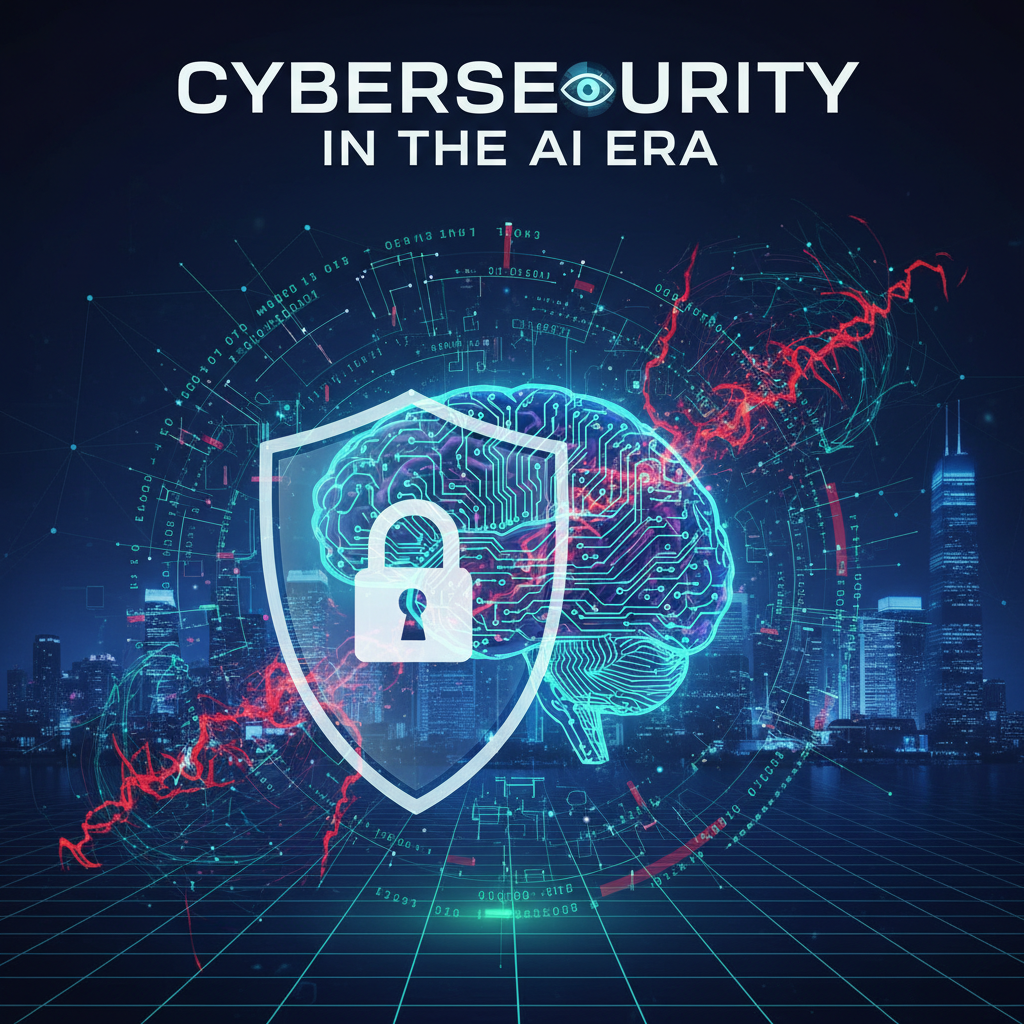
Securing Tomorrow: Cybersecurity in the AI Age
Artificial Intelligence (AI) is rapidly reshaping our world, from how we work and communicate to how we innovate and solve complex problems. While AI promises incredible advancements, it also ushers in a new era of challenges, particularly for cybersecurity. The synergy between AI and cybersecurity is a double-edged sword, offering both powerful defensive capabilities and novel attack vectors. Let’s dive into this fascinating and critical landscape!
The Double-Edged Sword: AI in Cybersecurity
On one hand, AI is becoming an indispensable ally for cybersecurity professionals. Its ability to process vast amounts of data at incredible speeds allows for the detection of subtle anomalies, prediction of emerging threats, and automation of incident response. AI-powered systems can identify sophisticated malware, pinpoint phishing attempts, and flag unusual network behavior far more effectively than traditional methods alone. This capability significantly enhances our ability to defend digital assets.
However, the same power that strengthens our defenses can also be weaponized by malicious actors. Cybercriminals are increasingly leveraging AI to craft more sophisticated and evasive attacks. We’re seeing the rise of AI-powered malware that can adapt and learn, highly personalized deepfake phishing scams, and autonomous hacking tools that can probe vulnerabilities with unprecedented speed and scale. This escalation means the battlefield is constantly evolving, requiring us to be more vigilant and adaptive than ever before.
Key Cybersecurity Challenges in the AI Era
The integration of AI introduces several unique cybersecurity challenges that demand our attention:
- Securing AI Models and Data: AI models are only as good as the data they’re trained on. Attacks like “model poisoning” can inject malicious data to corrupt an AI’s learning, leading to flawed decisions. “Evasion attacks” can trick a trained AI into misclassifying malicious input as benign. Ensuring the integrity and confidentiality of training data and the models themselves is paramount.
- Complexity and Opacity: Many advanced AI models, especially deep learning networks, are “black boxes.” Understanding why an AI made a particular decision or detecting if it has been subtly compromised can be incredibly difficult. This lack of transparency complicates forensic analysis and incident response.
- Scalability of AI-Powered Attacks: Malicious AI can launch attacks with an unparalleled level of automation and speed. This could overwhelm traditional human-led defenses, making proactive, AI-driven countermeasures essential.
- Ethical and Privacy Concerns: The extensive data collection required for AI training raises significant privacy concerns. Ensuring AI systems are developed and used ethically, without introducing biases or compromising personal data, is a complex challenge.
Strategies for a Secure AI Future
Navigating this new frontier requires a proactive and multi-faceted approach. We can’t just react; we must anticipate and innovate:
- AI for Good: Continue investing in and developing AI-driven cybersecurity tools. This includes advanced threat intelligence platforms, behavioral analytics, and automated response systems that can counter AI-powered threats effectively.
- Human-AI Collaboration: AI should augment human intelligence, not replace it. Security professionals need to learn how to work with AI tools, interpret their findings, and make strategic decisions. The human element remains crucial for ethical oversight, complex problem-solving, and adapting to novel threats.
- Secure by Design: Cybersecurity must be integrated into the entire AI development lifecycle, from data collection and model training to deployment and maintenance. This includes robust data governance, secure MLOps (Machine Learning Operations), and continuous monitoring of AI systems for vulnerabilities.
- Regulatory Frameworks and Collaboration: Governments, industries, and academia must collaborate to establish ethical guidelines and regulatory frameworks for AI development and deployment. Sharing threat intelligence and best practices across organizations will be vital.
The AI era presents both exhilarating opportunities and formidable cybersecurity challenges. By embracing AI responsibly, fostering human-AI collaboration, and committing to “security by design,” we can build a more resilient and secure digital future. The journey ahead is complex, but with foresight and innovation, we can harness the power of AI to protect our interconnected world.
“`



Leave a Reply