
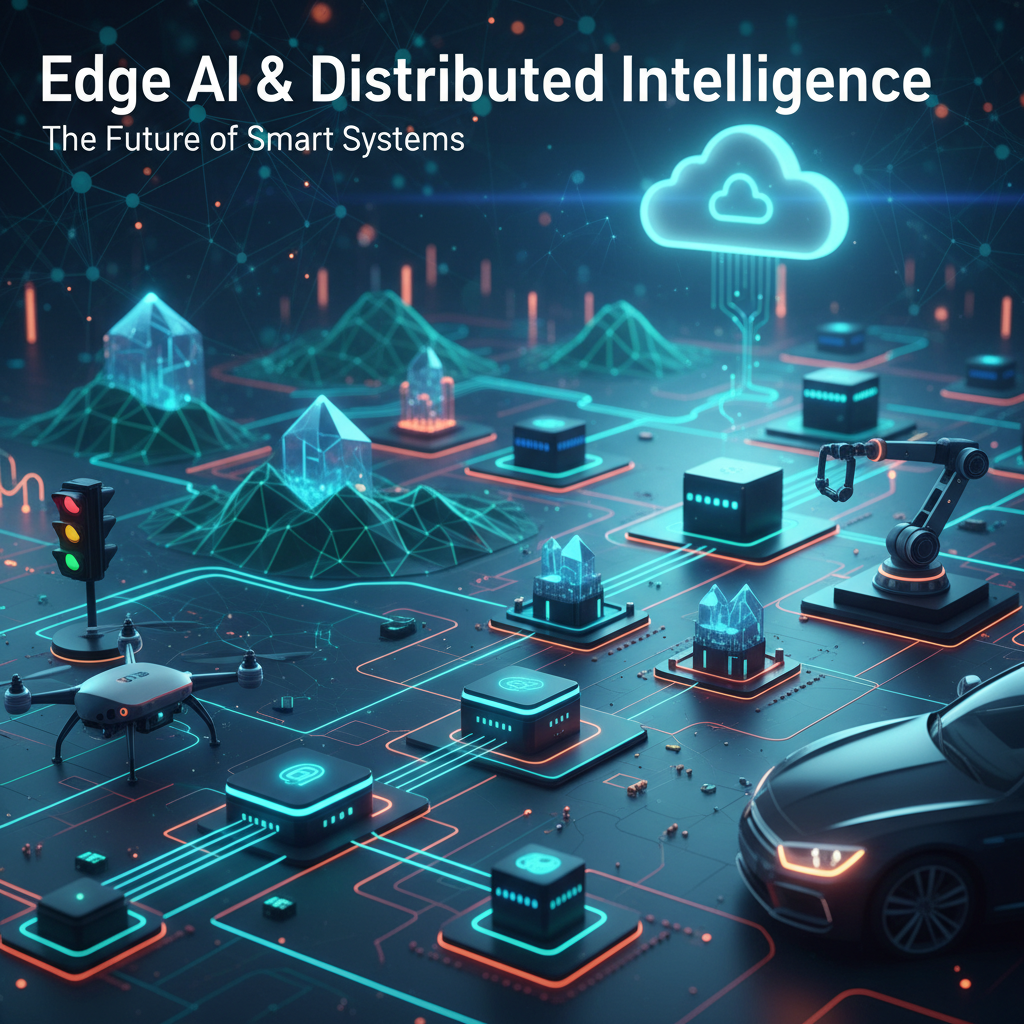
Edge AI & Distributed Intelligence: Smarter, Faster, Everywhere
Hey tech enthusiasts! Ever wondered what happens when artificial intelligence leaves the massive data centers and comes to where the action is? Welcome to the exciting world of Edge AI and Distributed Intelligence – a paradigm shift that’s making our devices, systems, and even entire cities incredibly smarter and more responsive.
What Exactly is Edge AI?
Traditionally, AI processing happened in powerful cloud data centers. You’d send your data up to the cloud, it would be analyzed, and then the results would come back. Edge AI flips this model. It’s about bringing AI capabilities – like machine learning models – closer to the source of the data, right on the “edge” of the network. Think of your smartphone, a smart camera, an industrial sensor, or even a self-driving car. Instead of sending all its raw data to the cloud for processing, these devices can now perform AI tasks locally, in real-time.
The Rise of Distributed Intelligence
Now, combine Edge AI with the concept of Distributed Intelligence. This isn’t just about one device being smart; it’s about multiple intelligent edge devices working together, often collaboratively, to achieve a larger goal. They can share insights, coordinate actions, and collectively make decisions without constant reliance on a central server. Imagine a network of smart traffic lights optimizing flow across an entire city, or a swarm of drones inspecting infrastructure and autonomously identifying issues.
Why Now? The Game-Changing Advantages
So, why are Edge AI and Distributed Intelligence gaining so much traction? The benefits are compelling:
- Reduced Latency: Real-time decisions are crucial for applications like autonomous vehicles or critical industrial processes. Processing data locally eliminates the round-trip delay to the cloud.
- Enhanced Privacy & Security: Less sensitive data needs to leave the device or local network, significantly boosting data privacy and reducing the risk of breaches.
- Lower Bandwidth Costs: Sending only processed insights, rather than raw, bulky data, saves massive amounts of network bandwidth and associated costs.
- Greater Reliability: Systems can continue to function and make intelligent decisions even if cloud connectivity is intermittent or lost.
Real-World Impact & Applications
The potential applications of Edge AI and Distributed Intelligence are vast and transformative:
- Smart Cities: Intelligent traffic management, predictive maintenance for public infrastructure, and enhanced public safety through smart surveillance.
- Manufacturing & Industry 4.0: Predictive maintenance on factory floors, real-time quality control, and autonomous robots optimizing production lines.
- Healthcare: Wearable devices providing immediate health insights, AI-powered diagnostic tools in remote clinics, and smart hospitals optimizing patient care.
- Autonomous Vehicles: Cars processing sensor data locally for immediate navigation and safety decisions, collaborating with other vehicles and road infrastructure.
Looking Ahead: Challenges and Opportunities
While the future is bright, there are challenges to address, such as ensuring robust security for distributed edge devices, managing and updating AI models across a vast network, and standardizing interoperability. However, the opportunities for innovation are even greater. We’re moving towards a world where intelligence isn’t confined to a central brain but is woven into the very fabric of our environment, making systems more resilient, efficient, and responsive.
Edge AI and Distributed Intelligence aren’t just buzzwords; they represent a fundamental shift in how we deploy and interact with artificial intelligence. Get ready for a smarter, more connected, and truly intelligent future!
“`


Leave a Reply