
Beyond Text: Unlocking the Multimodal Future of Generative AI
Remember when AI was primarily about processing text? While large language models (LLMs) have indeed revolutionized how we interact with information, the world of Generative AI is rapidly evolving far beyond just words. We’re now entering an incredibly exciting era: the age of Generative AI and Multimodal Advancements. This isn’t just about reading and writing anymore; it’s about seeing, hearing, and creating across all forms of data!
What Exactly is Multimodal AI?
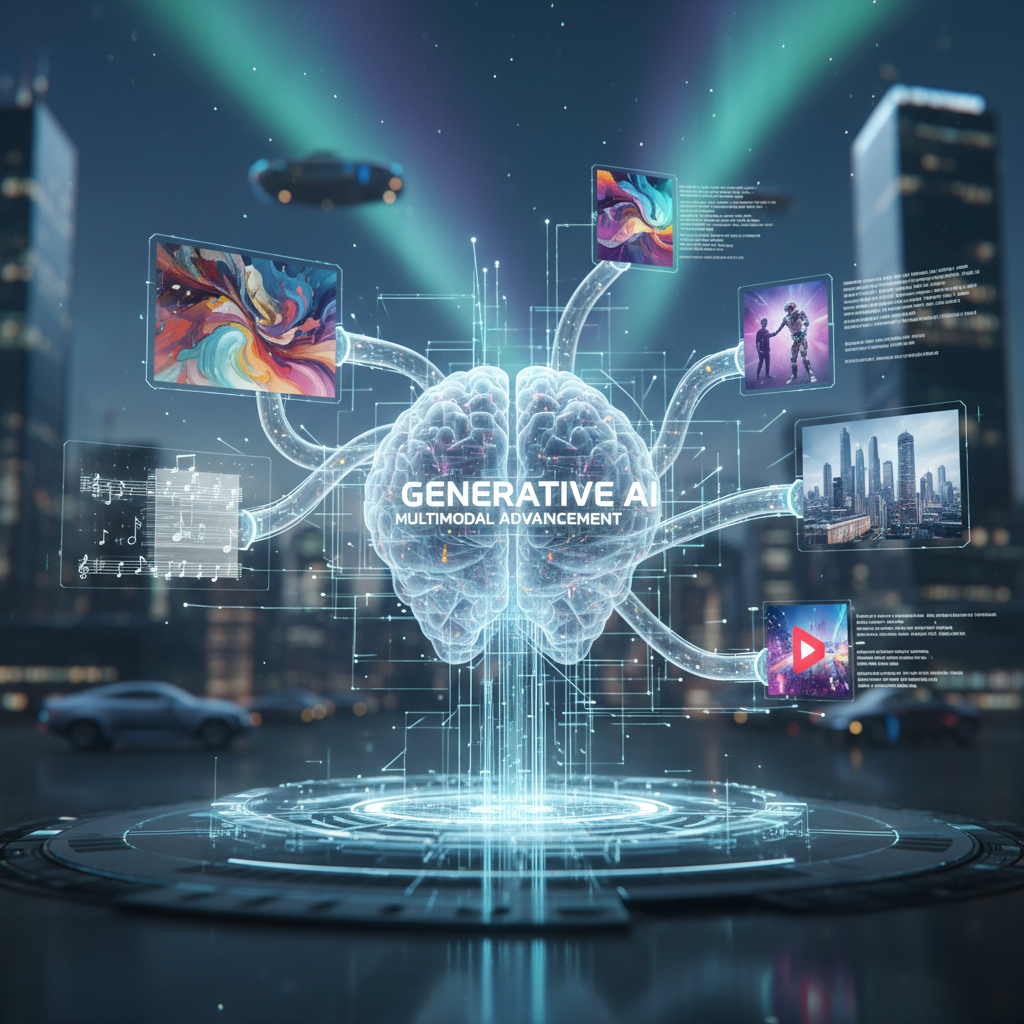
Simply put, multimodal AI refers to artificial intelligence systems that can process, understand, and generate information from multiple types of data simultaneously. Think about how humans experience the world – we see, hear, touch, and speak, integrating all these senses to form a complete understanding. Multimodal AI aims to emulate this by combining different ‘modalities’ like text, images, audio, video, and even 3D models.
Instead of a model that only understands text, a multimodal model might take an image, analyze its content, and then generate a descriptive caption, or even converse about the image’s context. It’s about breaking down the silos between different data types to create a more holistic and intelligent system.
Why Multimodal Matters: A Richer Understanding
The leap to multimodal capabilities isn’t just a technical flex; it’s fundamental to developing AI that truly understands and interacts with our complex world. Here’s why it’s so important:
- Deeper Context: Many concepts are difficult to fully grasp with text alone. An image of a cat sleeping on a keyboard paired with the text “my coworker” conveys a humor and context that pure text would struggle to capture.
- More Human-like Interaction: Our conversations often involve pointing, gesturing, and reacting to visual cues. Multimodal AI can bring us closer to natural, intuitive interactions with technology.
- Novel Applications: It opens up a whole new world of possibilities, from generating personalized video content to aiding in scientific discovery by correlating diverse datasets.
Exciting Advancements and Examples in Generative AI
The progress in multimodal generative AI has been nothing short of breathtaking. Here are a few ways we’re seeing these advancements unfold:
- Text-to-Image Generation: Tools like DALL-E, Midjourney, and Stable Diffusion allow users to type a text prompt and generate stunning, original images. This has revolutionized art, design, and even advertising.
- Image Captioning and Visual Question Answering: Models can now accurately describe the content of an image or answer specific questions about elements within it (e.g., “What kind of dog is this?”).
- Text-to-Video/Audio: Emerging technologies are enabling the creation of short video clips or realistic audio segments from simple text descriptions, hinting at a future where entire scenes can be conjured on demand.
- Integrated Large Multimodal Models (LMMs): Newer models like GPT-4V (vision) and Google’s Gemini are designed from the ground up to handle and generate content across modalities, allowing for complex reasoning that integrates various forms of input.
The Future is Integrated and Intelligent
The journey into Generative AI and Multimodal Advancements is just beginning. As these models become more sophisticated, we can anticipate a future where AI assistants don’t just chat with us but can analyze our environment through cameras, understand our emotions from our tone of voice, and generate truly creative and contextually relevant responses across any medium.
Of course, with great power comes great responsibility. Ethical considerations around deepfakes, bias in training data, and the societal impact of such advanced AI are crucial conversations we must continue to have as this technology evolves.
The future of AI is not just about intelligence, but about comprehensive, integrated intelligence. Generative AI is no longer confined to the textual realm; it’s learning to see, hear, and create in ways we’re only just beginning to imagine. It’s a thrilling time to be alive, witnessing the dawn of truly multimodal artificial intelligence!
“`


Leave a Reply