Gen AI’s Leap: Multimodal & Agentic Future
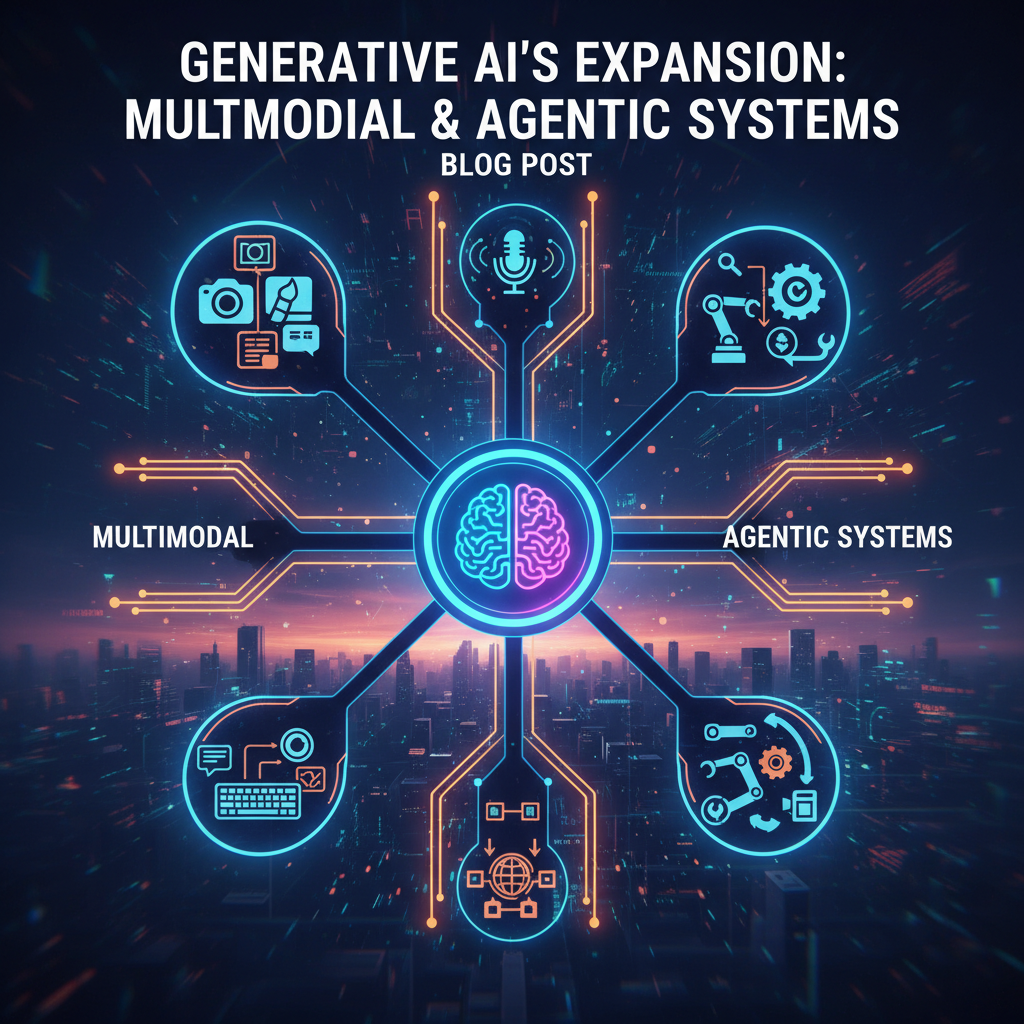
Generative AI has captivated our imaginations, transforming how we create text, images, and even code. From crafting compelling stories to designing stunning visuals, its capabilities have grown at an astonishing pace. But the AI revolution isn’t slowing down – we’re now witnessing a profound evolution as Generative AI expands into multimodal and agentic systems, promising an even more integrated and intelligent future.
Beyond Text: Embracing Multimodality for Richer Understanding
Initially, many generative AI models focused on a single modality, like text (Large Language Models) or images (text-to-image models). Multimodal AI represents a significant leap, enabling models to process, understand, and generate information across multiple types of data simultaneously. Imagine an AI that can not only read a medical report but also analyze accompanying X-rays and listen to a patient’s symptoms, synthesizing insights from all sources.
This means Generative AI can now “see,” “hear,” and “read” the world more comprehensively. Examples include models that generate video from text descriptions, create detailed images based on text *and* other images, or even compose music with accompanying visuals. This deeper, richer understanding leads to more nuanced outputs and a more natural human-AI interaction.
The Rise of Agentic AI: From Responses to Actions
While multimodal AI enhances perception, agentic AI takes intelligence a step further by focusing on action. Agentic AI systems are designed to not just respond to prompts but to plan, execute, and self-correct complex tasks autonomously. Think of them as intelligent “agents” that can break down a problem, utilize various tools, interact with external environments (like websites or software APIs), and monitor their progress to achieve a specific goal.
Instead of just answering your query about booking a trip, an agentic AI might, after understanding your preferences, search for flights, compare hotel prices, make reservations, and even send you a detailed itinerary – all while learning from potential roadblocks and adapting its approach. These systems represent a shift from reactive models to proactive problem-solvers, capable of navigating real-world complexities with a degree of independence.
Why This Matters: Unlocking Unprecedented Possibilities
The convergence of multimodal and agentic capabilities is truly transformative. It allows for:
- More Natural Interactions: AI that understands context across senses and can proactively assist feels more intuitive and human-like.
- Automation of Complex Workflows: Tasks requiring diverse data interpretation and multi-step execution can be streamlined, freeing up human potential.
- Enhanced Creativity and Discovery: Multimodal AI can inspire new forms of art, design, and scientific research by bridging different domains of information.
- Solving Grand Challenges: From personalized education to advanced medical diagnostics and climate modeling, these systems can tackle problems requiring broad understanding and intelligent action.
Looking Ahead: Opportunities and Considerations
As Generative AI continues its expansion, the potential for innovation is immense. We’re moving towards AI systems that are not just intelligent content creators, but perceptive, proactive, and truly helpful collaborators. However, with great power comes great responsibility. Ensuring ethical development, transparency, safety, and equitable access will be paramount as these sophisticated systems become more integrated into our lives.
The journey from text-only models to multimodal, agentic systems is an exciting testament to human ingenuity. Get ready for an era where AI doesn’t just generate content, but actively understands, reasons, and acts in the world in profoundly new ways. The future is interactive, intelligent, and incredibly promising!

Leave a Reply