
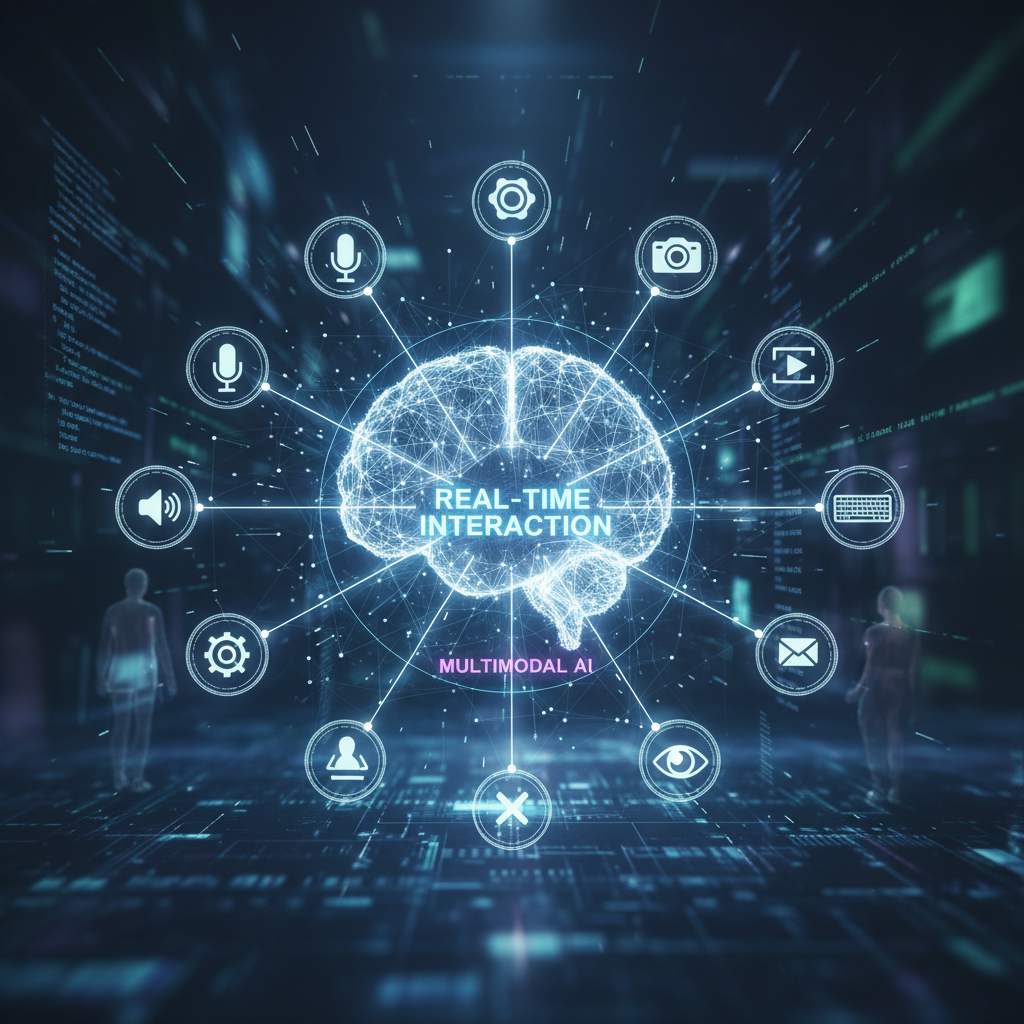
Multimodal AI: Instant Insights, Rich Interactions
In the rapidly evolving world of artificial intelligence, we’re moving beyond simple text-based interactions. Imagine an AI that not only understands what you say but also how you say it, what you show it, and even what’s happening around it, all in the blink of an eye. This is the promise of Multimodal AI combined with real-time interaction, and it’s truly transformative!
What Exactly is Multimodal AI?
Simply put, Multimodal AI is a type of artificial intelligence that can process and understand information from multiple modalities (or types of data) simultaneously. Think of it like giving AI senses: it can “see” (images, video), “hear” (audio, speech), and “read” (text). Instead of just analyzing text from an email, a multimodal AI could also analyze the tone of voice in a related call, the expressions in a video conference, or objects in an image. It paints a much richer, more comprehensive picture.
The Power of Real-time Interaction
Now, add “real-time” to the mix, and things get truly exciting. Real-time interaction means the AI processes these diverse inputs and responds instantly, just like a human would in a conversation or dynamic environment. This immediate feedback loop is crucial for applications that require fluid, natural, and highly responsive communication. No more waiting for processing; decisions and responses happen in the moment.
Where We’re Seeing It (and Where We Will!)
The implications of Multimodal AI with real-time interaction are vast and are already shaping various sectors:
- Enhanced Customer Service: Imagine a chatbot that not only reads your text but also analyzes your tone of voice during a call, or even understands images you upload to diagnose a product issue instantly.
- Advanced Robotics & Autonomous Systems: Robots can navigate complex environments by simultaneously processing visual data (what they see), auditory cues (sounds around them), and tactile feedback, making real-time adjustments.
- Interactive Education & Training: AI tutors could adapt learning materials based on a student’s facial expressions (indicating confusion), their verbal responses, and even their body language, offering personalized support in real time.
- Healthcare Monitoring: AI systems could monitor patients, analyzing vital signs, vocal patterns, and video feeds to detect distress or abnormalities instantly and alert caregivers.
- Virtual Assistants that Truly Understand: Future assistants won’t just follow voice commands; they’ll interpret context from your environment, your gestures, and even your emotional state to offer more relevant and helpful interactions.
The Road Ahead: Challenges and Opportunities
While the potential is immense, there are challenges. Developing AI models that can seamlessly integrate and interpret disparate data types at lightning speed requires significant computational power and sophisticated algorithms. Ensuring data privacy, addressing biases in diverse datasets, and developing robust error handling are also crucial.
However, the opportunities far outweigh the hurdles. Multimodal AI, especially when paired with real-time capabilities, promises to make our interactions with technology more natural, intuitive, and genuinely intelligent. It’s about building systems that don’t just process data but truly understand the world around us in a holistic and immediate way.
The future of AI is interactive, perceptive, and remarkably human-like. Get ready to experience technology that understands you better than ever before!
“`



Leave a Reply