
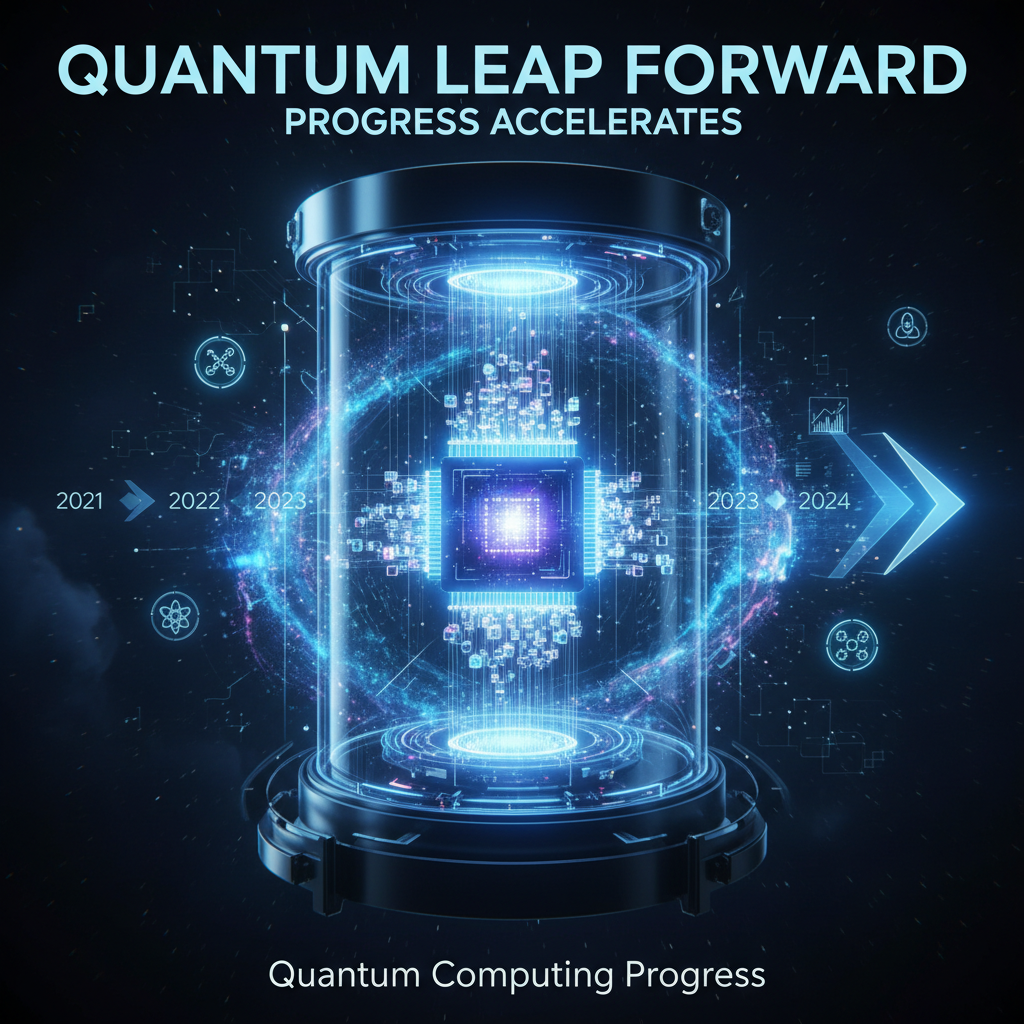
Quantum Computing: The Future Is Accelerating!
The world of computing is on the cusp of a revolution, and it’s happening at the quantum level! Quantum computing, once a theoretical concept confined to advanced physics labs, is now making tangible progress at an astonishing pace. Far beyond the binary ‘0s’ and ‘1s’ of classical computers, quantum machines leverage the bizarre and wonderful laws of quantum mechanics to tackle problems that are simply impossible for even the most powerful supercomputers today. It’s an exhilarating time to watch this field evolve!
Recent Breakthroughs and Milestones
In just the past few years, we’ve witnessed significant leaps forward. Qubit counts, the fundamental building blocks of quantum computers, are steadily increasing, pushing systems towards greater complexity and computational power. Major players like IBM, Google, and a host of startups are continually unveiling new processors with more qubits and improved coherence times – meaning they can maintain their delicate quantum states for longer, crucial for complex calculations.
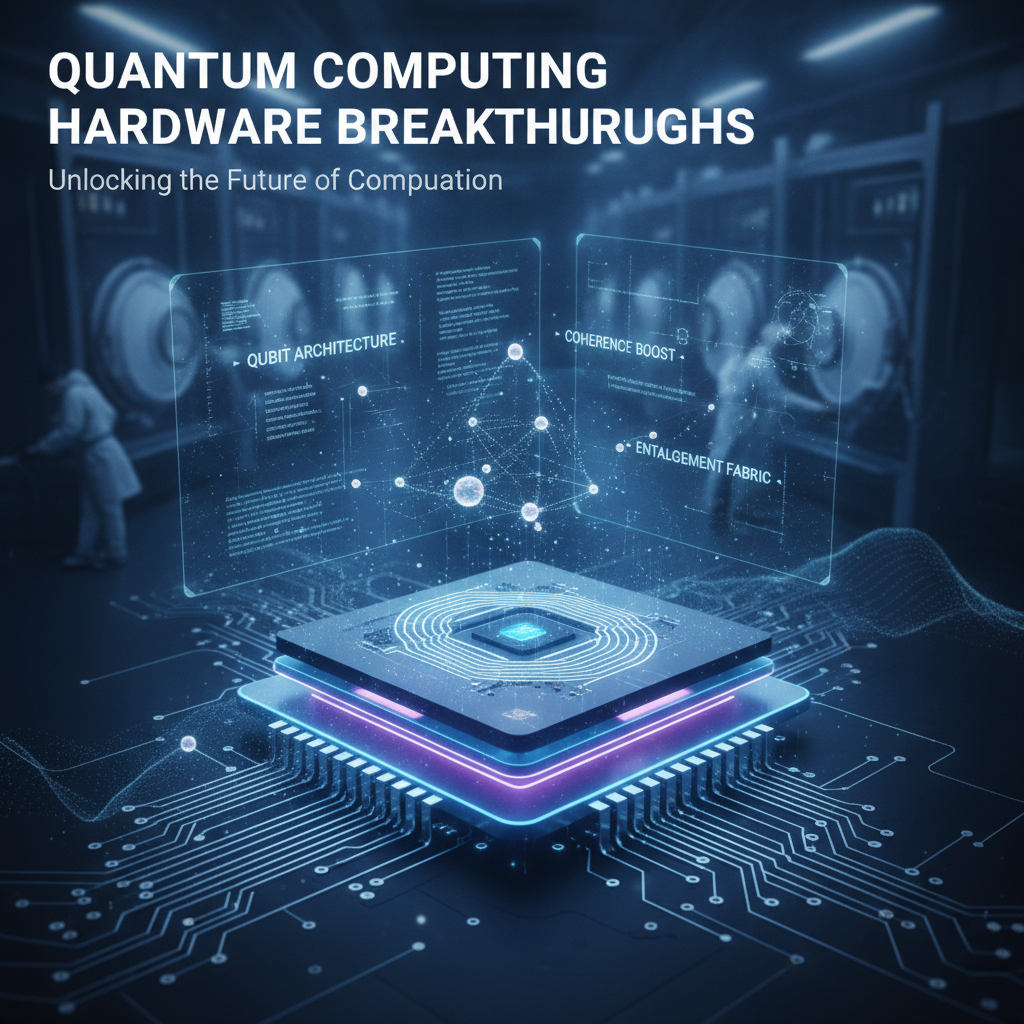
Beyond raw qubit numbers, improvements in error correction techniques are paramount. Quantum systems are inherently fragile, and errors can quickly accumulate. Researchers are making strides in developing more robust quantum error correction protocols, moving us closer to fault-tolerant quantum computers that can perform reliable, long computations. We’re also seeing diversification in hardware, with advancements in superconducting qubits, trapped ions, photonic systems, and topological qubits, each offering unique advantages and contributing to a rich landscape of innovation.
Bridging the Gap to Real-World Applications
While fully fault-tolerant quantum computers are still some years away, the current “Noisy Intermediate-Scale Quantum” (NISQ) devices are already proving valuable. Scientists are actively exploring early-stage applications in areas like quantum chemistry, simulating molecular interactions to accelerate drug discovery and material science. Optimization problems, critical in logistics, finance, and manufacturing, are also a fertile ground for quantum exploration.
The challenges are still immense – decoherence, scalability, and maintaining control over complex quantum systems are significant hurdles. However, dedicated research and growing industry investment are steadily addressing these issues. Major corporations are now investing heavily, not just in building quantum hardware, but also in developing quantum algorithms and software, preparing for a future where quantum computing plays a pivotal role across various sectors.
What This Means for Tomorrow
The long-term potential of quantum computing is nothing short of transformative. Imagine designing new materials with properties currently beyond our imagination, creating highly personalized medicines by precisely simulating drug interactions, or developing unbreakable encryption methods – and breaking existing ones! Quantum AI could revolutionize machine learning, leading to smarter, more efficient artificial intelligence.
The journey is just beginning, and while Hollywood often oversimplifies its immediate impact, the sustained progress in quantum computing suggests that these futuristic scenarios are slowly but surely moving from science fiction to scientific reality. It’s a field brimming with potential, promising to redefine what’s computable and reshape our technological landscape for generations to come.


Leave a Reply