
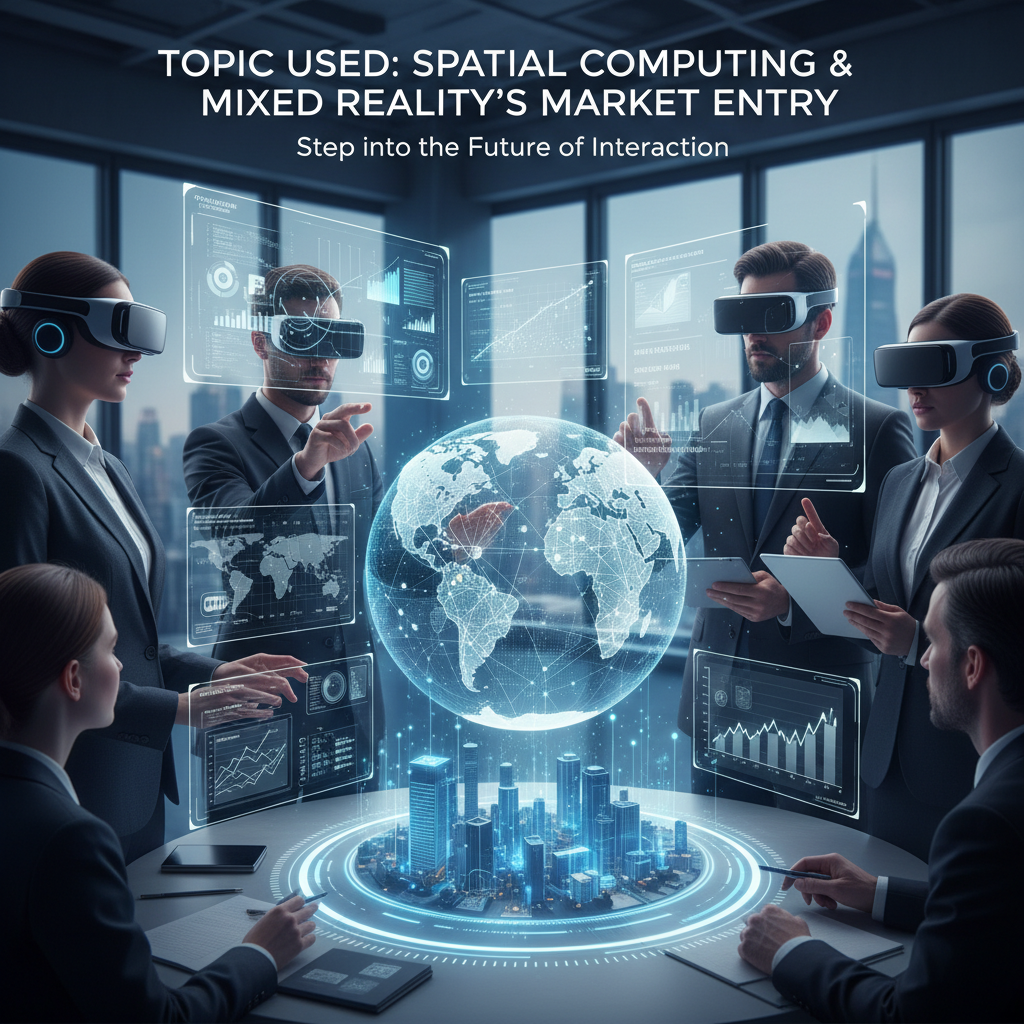
Spatial Computing & MR: Ready for Prime Time?
For years, we’ve heard whispers and seen glimpses of a future where digital and physical worlds seamlessly merge. That future is no longer a distant dream; Spatial Computing and Mixed Reality (MR) are making their grand entrance into the market, promising to reshape how we work, learn, and play. It’s an exciting time, but what exactly does this mean for us, and are these transformative technologies truly ready for prime time?
Demystifying Spatial Computing and Mixed Reality
Before diving into market entry, let’s quickly clarify. Spatial Computing is the broad concept of computers understanding and interacting with our physical environment. Think of it as giving technology a sense of space. Mixed Reality (MR) is a key application of spatial computing, blending real and virtual worlds to create new environments and visualizations where physical and digital objects co-exist and interact in real time. Unlike virtual reality (VR), which fully immerses you, or augmented reality (AR), which overlays digital content, MR aims for a truly integrated experience.
The Perfect Storm: What’s Driving Market Entry?
Several factors are converging to push Spatial Computing and MR into the mainstream. We’re witnessing significant advancements in hardware, with sleeker, more powerful, and increasingly comfortable headsets becoming available. Processing power, once a major bottleneck, is now capable of rendering complex 3D environments with remarkable fidelity. Furthermore, sophisticated AI algorithms are improving spatial mapping and object recognition, making interactions more intuitive and realistic. The development of robust developer tools and platforms also plays a crucial role, empowering creators to build compelling experiences across various industries.
Early Adopters and Impactful Use Cases
While consumer adoption is still budding, enterprises are already reaping the benefits. In manufacturing, MR allows engineers to overlay digital schematics onto physical machinery for assembly guidance or maintenance, drastically improving efficiency and reducing errors. Healthcare professionals are using it for surgical planning, remote assistance, and immersive training. Education is being transformed by interactive 3D models and virtual field trips. Even in retail, customers can virtually try on clothes or visualize furniture in their homes before purchasing. The initial market entry is heavily enterprise-focused, proving MR’s value where productivity gains and cost savings are paramount.
Navigating the Path Ahead: Challenges and Opportunities
The journey to widespread adoption isn’t without its hurdles. Cost remains a significant barrier for many, though prices are steadily decreasing. The “comfort factor” of wearing headsets for extended periods is still being refined. Content creation, while improving, requires specialized skills and resources. Privacy concerns surrounding spatial data collection also need careful consideration and robust solutions. However, these challenges are dwarfed by the immense opportunities: entirely new industries emerging, enhanced productivity across sectors, richer social interactions, and unprecedented levels of immersive entertainment. The potential for innovation is truly limitless.
The Future is Spatially Aware
Spatial Computing and Mixed Reality are no longer just buzzwords; they represent a fundamental shift in how we interact with technology and the world around us. Their market entry signals the beginning of a new era where our digital lives will become increasingly intertwined with our physical environments. While we’re still in the early innings, the trajectory is clear: prepare for a future that is not just connected, but spatially aware. It’s an exciting journey, and we’re just getting started!


Leave a Reply