
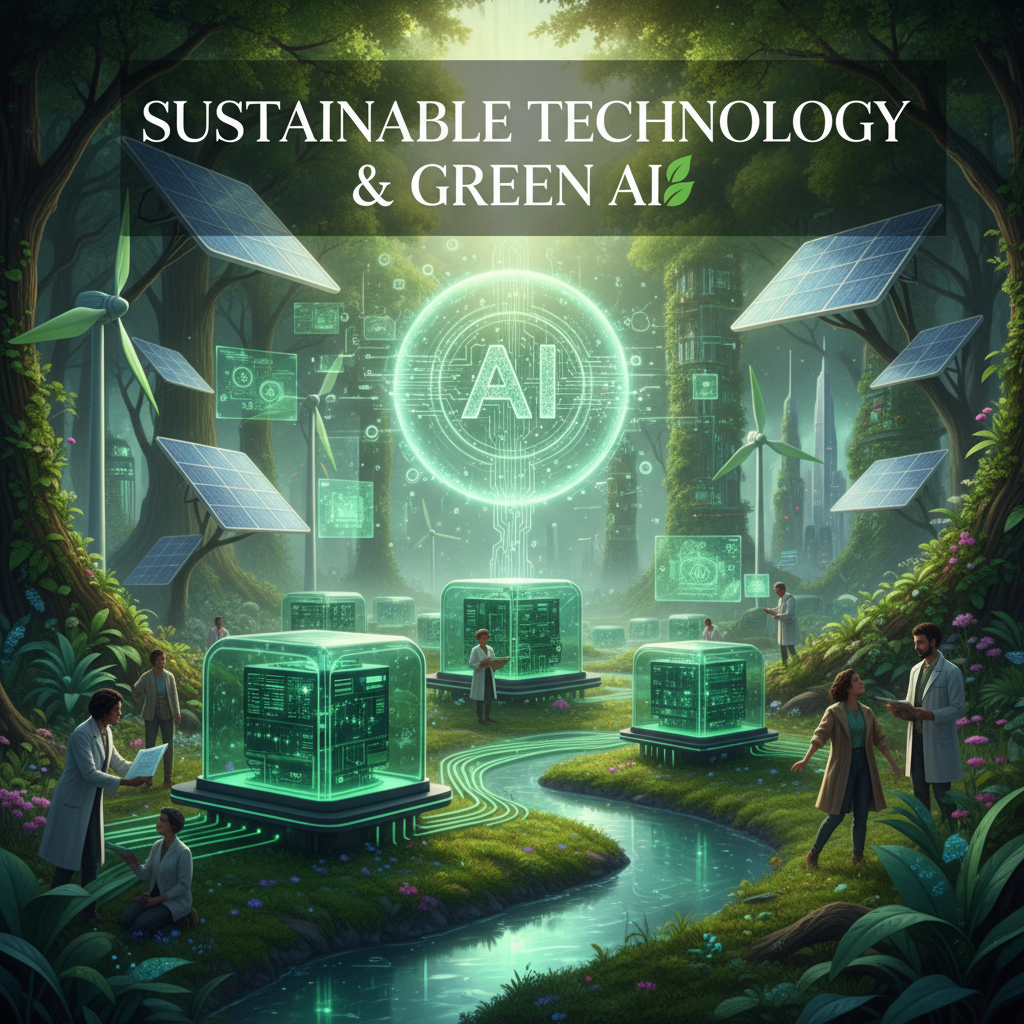
Green AI: Powering Tech’s Sustainable Future
The digital age has brought incredible advancements, but it’s also spurred a crucial question: What’s the environmental cost? As we push the boundaries of technology, the imperative for sustainability has never been clearer. Enter Sustainable Technology and Green AI – a powerful duo poised to redefine our relationship with the planet.
What is Sustainable Technology?
At its core, sustainable technology encompasses innovations designed, produced, and used in a way that minimizes environmental harm and conserves natural resources. It’s about creating tech that’s energy-efficient, reduces waste, promotes circularity, and considers its entire lifecycle footprint. Think renewable energy tech, efficient data centers, and eco-friendly manufacturing processes.
The Rise of Green AI
Green AI takes this a step further by focusing specifically on artificial intelligence. It has two main facets:
1. Making AI Green: Developing AI models and systems that are inherently more energy-efficient, require less computational power for training and inference, and utilize optimized algorithms and hardware.
2. Using AI for Green: Leveraging AI’s analytical power to solve environmental challenges, from climate modeling to resource management.
How AI Drives Sustainability
The applications are vast and transformative:
- Energy Optimization: AI can manage smart grids, predict energy demand, and optimize the use of renewable sources, drastically cutting down on waste.
- Resource Management: In agriculture, AI-powered systems can enable precision farming, minimizing water and pesticide use. In manufacturing, AI can optimize supply chains to reduce waste and emissions.
- Predictive Maintenance: AI algorithms can predict equipment failures, extending the lifespan of machinery and reducing the need for new production, thus conserving resources.
- Climate Modeling & Monitoring: AI helps scientists analyze complex climate data, predict environmental changes, and monitor biodiversity, providing critical insights for conservation efforts.
- Waste Reduction: AI can optimize recycling processes, identify recyclable materials, and even help design products for easier disassembly and reuse.
Challenges and the Path Forward
While the potential is immense, we can’t ignore the energy demands of AI, especially large language models. Training these models can consume vast amounts of energy, generating a significant carbon footprint. The path forward requires:
- Efficient Algorithms: Research and development into more energy-efficient AI architectures and training methods.
- Sustainable Hardware: Innovations in chip design and cooling systems for data centers.
- Responsible Deployment: Prioritizing AI applications that offer significant environmental benefits, ensuring the ‘green’ impact outweighs the computational cost.
- Transparency: Greater transparency in reporting the energy consumption of AI models.
A Greener, Smarter Future
Sustainable Technology and Green AI aren’t just buzzwords; they represent a vital paradigm shift. By embedding environmental consciousness into the heart of technological innovation, we can harness AI’s incredible power not just for progress, but for the preservation of our planet. Let’s work together to build a future where innovation and sustainability go hand in hand, creating a greener, smarter world for generations to come.
“`



Leave a Reply