
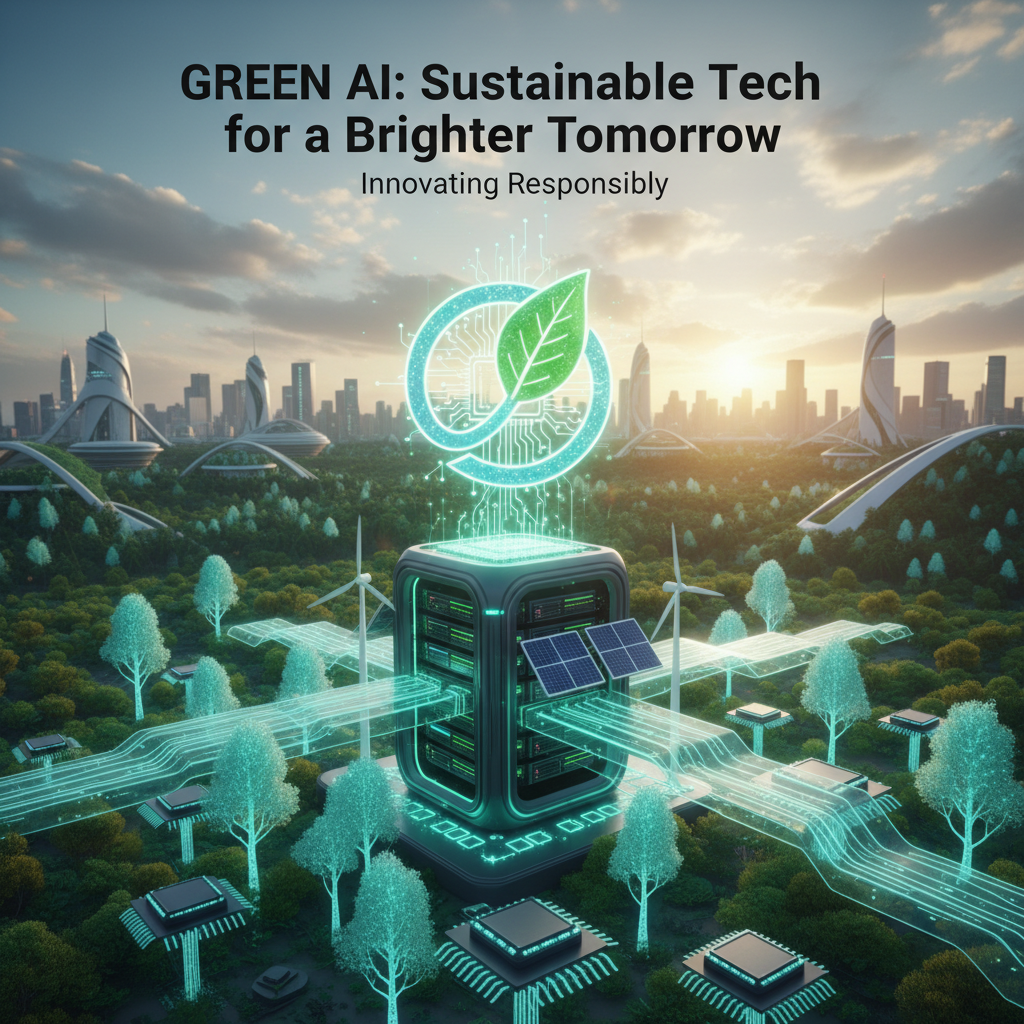
Green Tech & AI: Powering a Sustainable Future
In an era defined by rapid technological advancement, there’s a growing imperative to ensure our innovations don’t come at the Earth’s expense. The good news? Technology itself holds incredible promise for solving some of our most pressing environmental challenges. Welcome to the exciting intersection of sustainable technology and Green AI – a field dedicated to building a greener, more resilient planet.
What Exactly is Sustainable Technology?
At its core, sustainable technology refers to solutions designed, developed, and utilized with minimal environmental impact, aiming to meet the needs of the present without compromising the ability of future generations to meet their own needs. This encompasses a vast array of innovations, from renewable energy systems to energy-efficient devices and smart infrastructure.
Think about solar panels converting sunlight into electricity, wind turbines harnessing nature’s power, or even advanced recycling processes that turn waste into valuable resources. These technologies are crucial for reducing our reliance on fossil fuels, conserving natural resources, and minimizing pollution.
Diving into Green AI Initiatives
Artificial Intelligence (AI) offers unparalleled capabilities for complex problem-solving, but its rapid growth has also raised concerns about its environmental footprint. Training large AI models can consume significant amounts of energy, contributing to carbon emissions. This is where Green AI steps in.
Green AI is a critical movement focused on developing, deploying, and utilizing AI systems in an environmentally responsible manner. It involves creating more energy-efficient algorithms, optimizing hardware for lower power consumption, and designing AI models that are smaller yet equally effective. The goal is twofold: make AI itself more sustainable, and leverage AI to drive sustainability across other sectors.
For instance, researchers are exploring “TinyML,” which enables AI to run on low-power, small devices, and developing algorithms that require less data and fewer computational cycles to learn, significantly reducing their energy demands.
Real-World Impact and Future Vision
The synergy between sustainable technology and Green AI is already yielding impressive results. AI is being used to optimize smart grids, predicting energy demand and supply to integrate renewable sources more efficiently. It helps monitor and protect biodiversity, track deforestation, and even manage waste more effectively through advanced sorting and recycling systems.
Beyond environmental benefits, these initiatives often lead to economic advantages by reducing operational costs and fostering innovation. Imagine AI-powered systems that optimize agricultural practices, reducing water usage and pesticide application, or smart city platforms that minimize traffic congestion and energy consumption in buildings. The future vision is one where technology acts as a powerful ally in our fight against climate change and resource depletion.
How You Can Contribute to a Greener Tech Future
While much of this work happens at an institutional level, every one of us can play a part. Being aware of the environmental impact of our own tech consumption, supporting companies committed to green initiatives, and advocating for sustainable practices are all vital steps.
Choose energy-efficient devices, learn about the lifecycle of your electronics, and even consider the “green” credentials of the AI services you use. By collectively embracing sustainable technology and demanding greener AI, we can accelerate the transition to a more environmentally conscious and technologically advanced world.
The path to a sustainable future is paved with innovation and conscious choices. Let’s work together to ensure technology is a force for good, empowering a greener planet for generations to come!
“`



Leave a Reply