
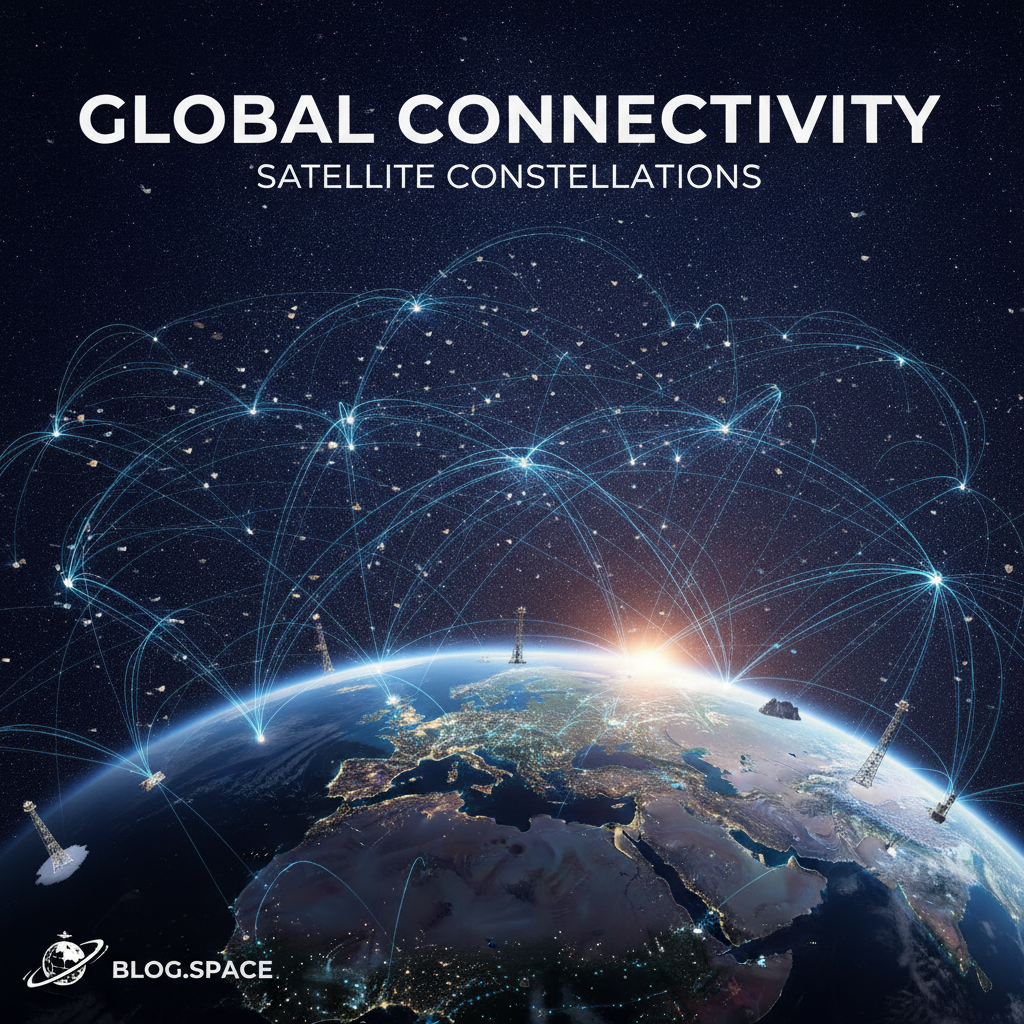
Connecting the Globe: Satellite Constellations
In our increasingly digital world, access to reliable internet isn’t just a luxury – it’s a necessity. Yet, billions worldwide remain unconnected or suffer from slow, unreliable service. Enter satellite constellations: a groundbreaking technology set to transform global connectivity.
What Exactly Are Satellite Constellations?
Forget the idea of a single, giant satellite in geostationary orbit. Satellite constellations are networks of hundreds, even thousands, of smaller satellites working together in harmony. These aren’t your grandfather’s communication satellites; many operate in Low Earth Orbit (LEO), much closer to our planet than traditional geostationary satellites.
This proximity is crucial. By being closer, LEO satellites significantly reduce signal latency – the annoying delay you might experience with traditional satellite internet. This means faster downloads, smoother video calls, and a much more responsive online experience for users on the ground, even in the most remote locations.
Bridging the Digital Divide, One Satellite at a Time
The most significant promise of satellite constellations is their ability to deliver high-speed internet to literally every corner of the globe. From remote rural communities to ships at sea, aircraft in flight, and even disaster-stricken areas, these networks can provide robust connectivity where traditional fiber or cellular infrastructure simply isn’t feasible or cost-effective.
Imagine students in remote villages accessing online education resources, farmers using precision agriculture tools, or small businesses in underserved regions connecting to global markets. This isn’t just about convenience; it’s about empowerment, economic growth, and truly bridging the digital divide that has long separated parts of our world.
Beyond Internet: Diverse Applications and Innovation
While global broadband is a primary driver, satellite constellations offer a wealth of other vital applications. They are essential for enabling the Internet of Things (IoT) in vast, remote areas, supporting scientific research, enhancing national security, and providing critical communication links during emergencies when ground infrastructure fails.
The competitive landscape is also heating up, fostering innovation and pushing the boundaries of what’s possible in space-based communication. Companies like Starlink, OneWeb, and Project Kuiper are rapidly deploying their constellations, bringing unprecedented choice and capability to the market and driving down costs for consumers.
Looking Up: Challenges and the Bright Future
Of course, this technological marvel isn’t without its considerations. Concerns about space debris, the visual impact on astronomy (often referred to as light pollution), and the sheer scale of deployment require careful management and international cooperation. Regulators worldwide are working to establish frameworks that ensure sustainable and responsible use of Earth’s valuable orbital real estate.
Despite these challenges, the future of satellite constellations for global connectivity looks incredibly bright. As technology advances and more satellites are launched, we can expect even faster speeds, lower costs, and broader availability. These orbital networks are not just connecting devices; they are weaving a tighter, more inclusive global community, proving that the sky is no longer the limit for human connection.
“`


Leave a Reply