
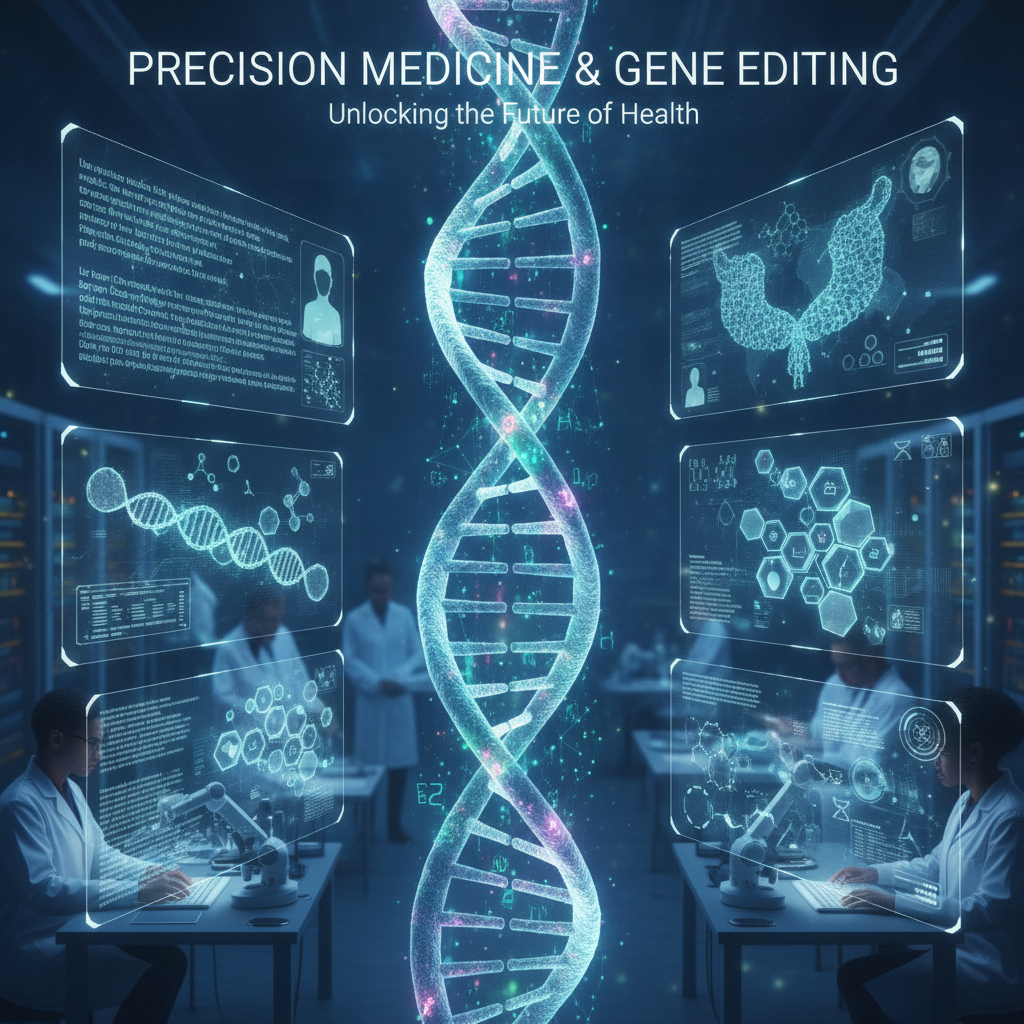
Tailoring Health: The Gene Editing Revolution
Imagine a future where medical treatments are not one-size-fits-all, but instead, precisely tailored to your unique genetic makeup. This isn’t science fiction anymore; it’s the exciting frontier of precision medicine, powerfully augmented by revolutionary gene editing technologies.
What is Precision Medicine?
Precision medicine, often referred to as personalized medicine, is an innovative approach to patient care that considers individual variability in genes, environment, and lifestyle for each person. Instead of a standard treatment protocol for everyone with a particular condition, precision medicine aims to deliver the “right treatment, for the right patient, at the right time.” It leverages advancements in genomics, proteomics, and sophisticated data analysis to understand disease at a molecular level, leading to more effective and targeted therapies.
The Power of Gene Editing Technologies
Enter gene editing, a game-changer in the world of biotechnology. Technologies like CRISPR-Cas9 have revolutionized our ability to make precise changes to DNA. Think of it as a highly sophisticated molecular scissor that can cut out, add, or replace specific segments of our genetic code. This incredible precision opens doors to correcting genetic mutations responsible for diseases like cystic fibrosis, sickle cell anemia, and Huntington’s disease, or even making cells more resistant to viral infections like HIV.
A Synergistic Future: Where They Meet
The true magic happens when precision medicine and gene editing intersect. Precision medicine helps identify the exact genetic abnormalities in an individual that are causing their disease. Once identified, gene editing can then be employed as a highly targeted tool to correct those specific errors. For instance, if genetic sequencing reveals a particular mutation causing a rare cancer, precision medicine guides the identification, and gene editing could potentially be used to fix or disable the mutated gene in the patient’s cells.
Navigating the Ethical Landscape
While the potential benefits are immense, it’s crucial to acknowledge the ethical considerations that come with such powerful technologies. Questions around germline editing (changes passed down to future generations), accessibility, and the definition of “enhancement” versus “therapy” are vital topics for ongoing public and scientific discussion. Responsible innovation, transparent dialogue, and robust regulatory frameworks are essential as we venture further into this brave new world.
The Promise Ahead
Precision medicine and gene editing technologies are not just buzzwords; they represent a fundamental shift in how we approach health and disease. They promise a future where diagnoses are more accurate, treatments are more effective, and preventative measures are more personalized than ever before. While challenges remain, the collaborative efforts of scientists, clinicians, and ethicists are paving the way for a healthier, more tailored future for us all.


Leave a Reply