
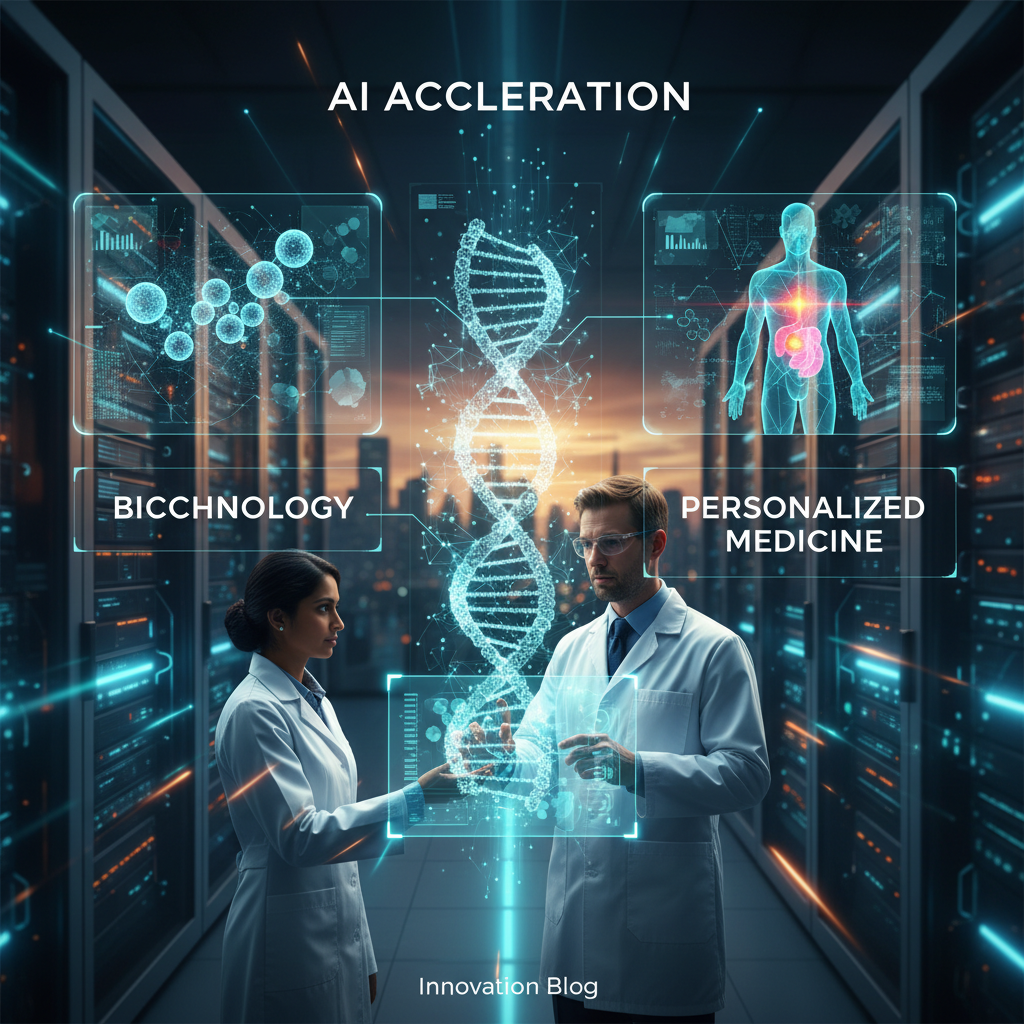
In a world rapidly advancing through technological innovation, few areas are experiencing as profound a transformation as biotechnology and medicine. At the heart of this revolution lies Artificial Intelligence (AI), acting as a powerful accelerator, pushing the boundaries of what’s possible in human health.
A New Era in Life Sciences
AI is no longer just a buzzword; it’s a fundamental tool reshaping how we understand diseases, discover treatments, and deliver personalized care. From crunching vast datasets to predicting molecular interactions, AI is dramatically speeding up processes that once took decades, ushering in an exciting new era for health and wellness.
Revolutionizing Drug Discovery
The journey from a promising compound to an approved drug is notoriously long, expensive, and fraught with failure. AI is changing this paradigm. By leveraging machine learning algorithms, researchers can now:
- Identify potential drug candidates with unprecedented speed by sifting through massive chemical libraries.
- Predict how molecules will interact with biological targets, minimizing costly late-stage failures.
- Optimize drug design and even repurpose existing medications for new uses.
This acceleration means life-saving therapies can potentially reach patients much faster than ever before.
Tailoring Treatments Just for You
The promise of personalized medicine—treatments designed for an individual’s unique biological makeup—is rapidly becoming a reality, thanks to AI. Imagine a future where:
- Your genomic data, medical history, and lifestyle factors are analyzed by AI to predict disease risk and recommend preventative measures.
- AI algorithms guide doctors in selecting the most effective drug and dosage for your specific condition, minimizing side effects and maximizing efficacy.
- Real-time patient monitoring combined with AI insights allows for dynamic adjustment of treatment plans, ensuring optimal care.
This shift from “one-size-fits-all” to highly individualized care holds immense potential for better patient outcomes.
Smarter Diagnostics, Brighter Futures
Early and accurate diagnosis is crucial for effective treatment, and AI is proving to be an invaluable asset in this domain. AI-powered tools are excelling in:
- Analyzing complex medical images (X-rays, MRIs, CT scans) to detect subtle anomalies that human eyes might miss, aiding in the early diagnosis of cancers and other conditions.
- Interpreting pathology slides with incredible precision, assisting pathologists in identifying disease markers.
- Predicting disease progression and patient responses to different therapies based on vast amounts of clinical data.
These capabilities lead to earlier interventions, potentially saving countless lives and improving quality of life.
The Road Ahead: Promise and Potential
While the integration of AI in biotechnology and personalized medicine is incredibly promising, it’s also a field with evolving challenges, including data privacy, ethical considerations, and the need for robust validation. However, the collaborative efforts between AI experts, biologists, clinicians, and data scientists are continually addressing these hurdles.
AI is not just a tool; it’s a transformative force that is fundamentally reshaping healthcare. It promises a future where diseases are understood more deeply, treatments are more effective and tailored, and human health and longevity are significantly enhanced. We are truly on the cusp of a medical revolution, powered by intelligence.
“`


Leave a Reply