
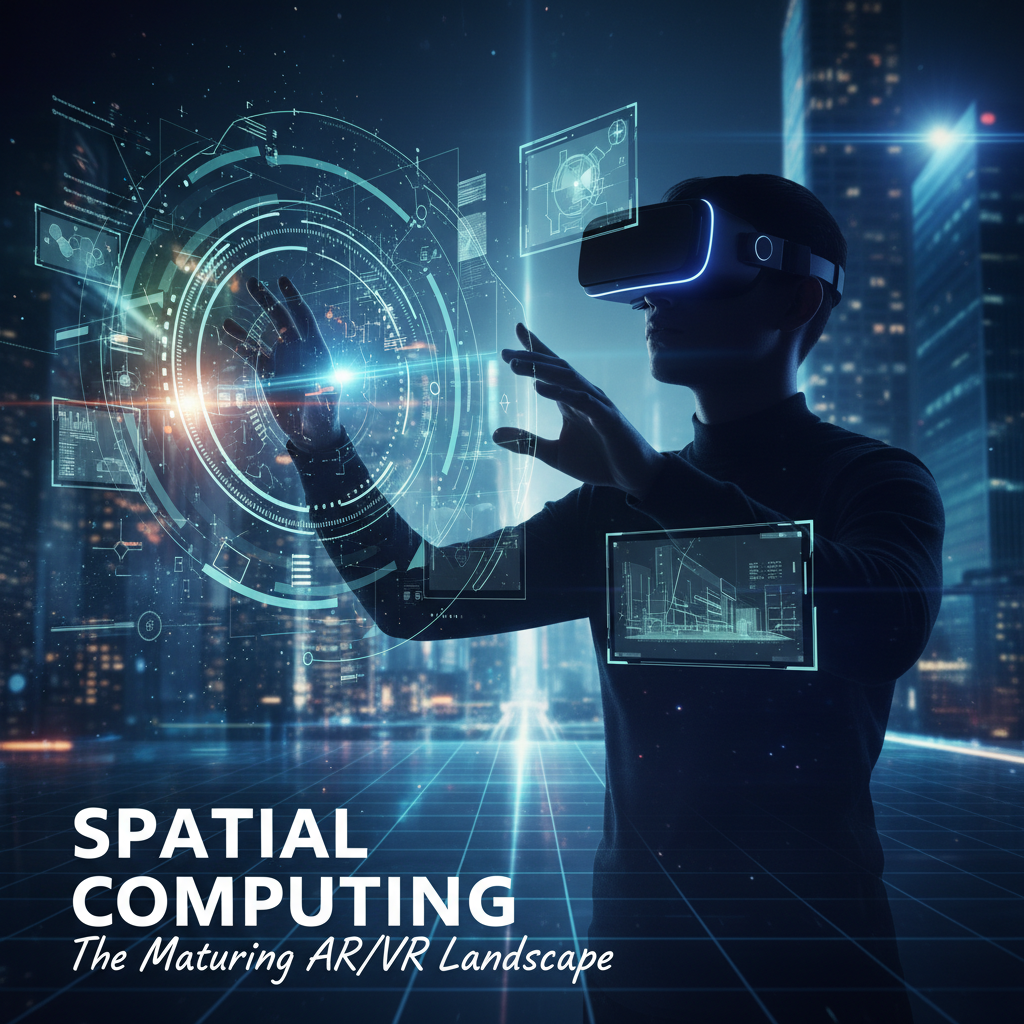
Remember when Augmented Reality (AR) and Virtual Reality (VR) felt like something out of a sci-fi movie? Clunky headsets, niche games, and a promise of a future that seemed perpetually just out of reach. Well, that future is no longer distant – it’s here, and it’s rapidly evolving into something even more profound: Spatial Computing.
What Exactly is Spatial Computing?
At its core, Spatial Computing is about enabling computers to understand and interact with our physical world in a 3D context. It’s not just about displaying digital images on a screen or inside a headset; it’s about the technology knowing *where* you are, *what* you’re looking at, and *how* digital information can blend seamlessly and intelligently into your real-world environment. Think of it as giving computers a spatial awareness, allowing them to anchor digital content to real objects, rooms, and even people, creating truly immersive and interactive experiences.
While AR/VR devices are the primary interfaces for experiencing spatial computing, the concept goes deeper. It’s the underlying infrastructure and intelligence that allows for these magical interactions – from navigating a complex factory floor with digital instructions overlaid on machinery to designing a new product collaboratively with colleagues across continents, all within a shared virtual space.
AR/VR’s Journey to Maturity
The journey from niche technology to mainstream contender has been remarkable. Several key factors indicate that the AR/VR landscape is truly maturing:
- Hardware Evolution: We’ve seen significant leaps in headset design. Devices are becoming lighter, more comfortable, and incredibly powerful. High-resolution displays, wider fields of view, and sophisticated tracking systems now deliver experiences that are truly captivating and minimize motion sickness.
- Beyond Gaming: While gaming remains a strong driver, AR/VR’s most compelling growth is happening in enterprise. Industries like healthcare, manufacturing, education, and retail are adopting these technologies for training, remote assistance, product design, and immersive customer experiences. This shift from entertainment to practical, value-driven applications is a major sign of maturity.
- Robust Software Ecosystems: Developer tools are becoming more accessible and powerful, fostering a vibrant ecosystem of applications. Platforms are maturing, offering better content creation pipelines and more intuitive user interfaces, making it easier for businesses and creators to build compelling spatial experiences.
- Mixed Reality (MR) Capabilities: The rise of “passthrough” video and advanced environmental sensing means devices can now seamlessly blend digital objects with your actual surroundings. This blurs the lines between AR and VR, offering a spectrum of experiences that are both immersive and connected to reality.
The Impact of Spatial Computing on Our World
The implications of a fully realized spatial computing era are vast and exciting. Imagine:
- Work Transformed: Collaborative meetings where holograms of colleagues join you in a virtual meeting room, or remote technicians get real-time visual assistance by overlaying schematics onto complex machinery.
- Enhanced Learning: Students exploring ancient civilizations in a virtual reconstruction or surgeons practicing delicate procedures on high-fidelity digital twins.
- Everyday Living: Navigating a new city with AR arrows guiding your way, trying on clothes virtually from your couch, or even just having personalized information overlays appear contextually as you go about your day.
This isn’t just about putting on a headset; it’s about a fundamental shift in how we interact with information and with each other. Spatial Computing promises a future where the digital world doesn’t just sit on a flat screen, but becomes an integral, intelligent, and interactive part of our physical reality.
Embrace the Spatial Future!
The maturing AR/VR landscape, fueled by the power of spatial computing, is ushering in a new era of human-computer interaction. It’s a transformative period, promising innovation across every sector. We’re moving beyond mere screens to truly interactive, immersive, and intelligent digital experiences that seamlessly merge with our physical world. Keep an eye on this space – the future is not just digital, it’s definitively spatial!
“`

Leave a Reply