
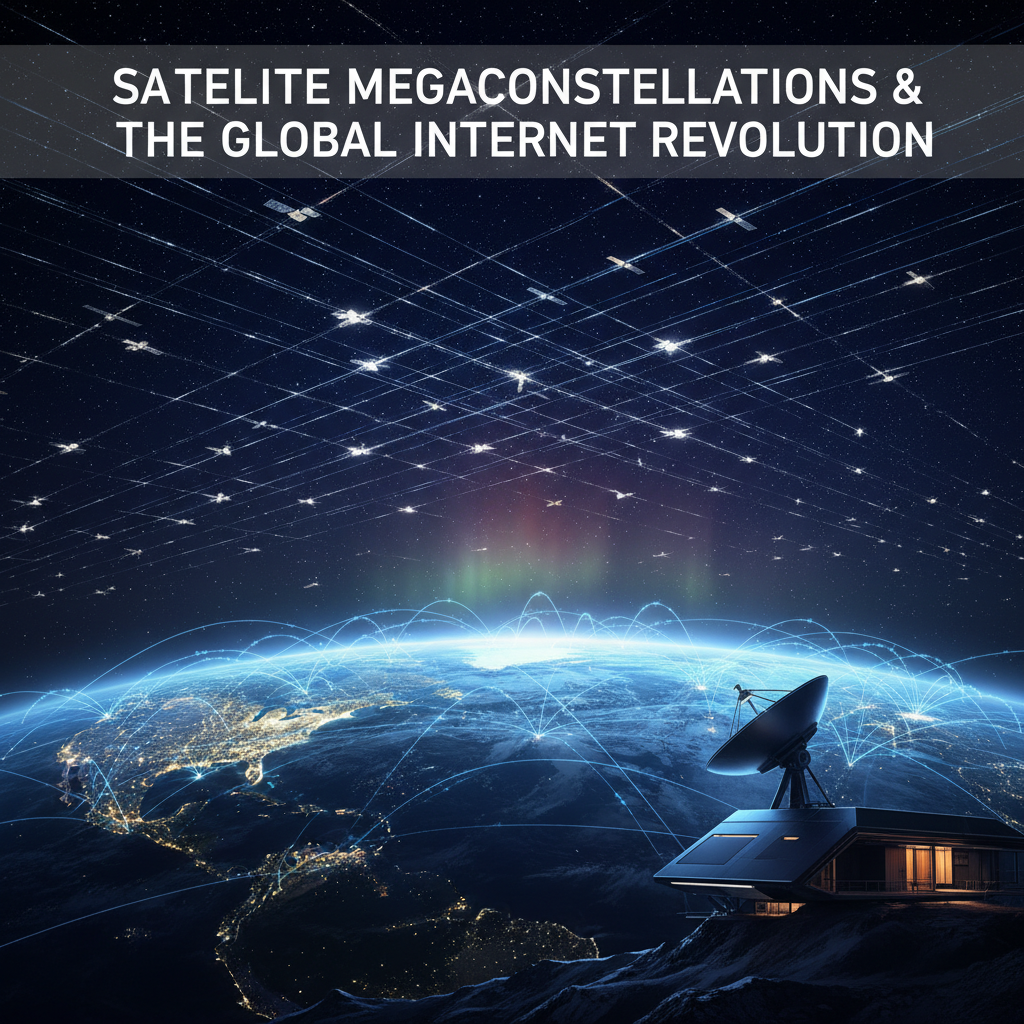
Space Internet: Connecting Our World from Above
Imagine a world where reliable, high-speed internet is available everywhere, from the busiest cities to the most remote corners of our planet. This vision is rapidly becoming a reality, thanks to the fascinating development of satellite megaconstellations and the expansion of space internet. Let’s dive into how these ambitious projects are reshaping our digital future!
What are Satellite Megaconstellations?
In simple terms, satellite megaconstellations are large groups of artificial satellites, often numbering in the hundreds or even thousands, that work together in Low Earth Orbit (LEO) to provide global services. Unlike traditional geostationary satellites that orbit much higher, LEO satellites are closer to Earth, which significantly reduces the signal delay (latency) and allows for faster internet speeds. Companies like Starlink (SpaceX), OneWeb, and Project Kuiper (Amazon) are leading this exciting charge, launching constellations to create a vast, interconnected network in space.
How Does Space Internet Work?
The magic happens as these numerous LEO satellites constantly orbit our planet. When you connect to space internet, your user terminal (a small dish) communicates with the nearest satellite passing overhead. This satellite then relays your data to a ground station connected to the traditional internet infrastructure, or sometimes directly to another satellite in the constellation. Because there are so many satellites, there’s always one available to provide a connection, ensuring continuous coverage and robust performance.
The Promise of Global Connectivity
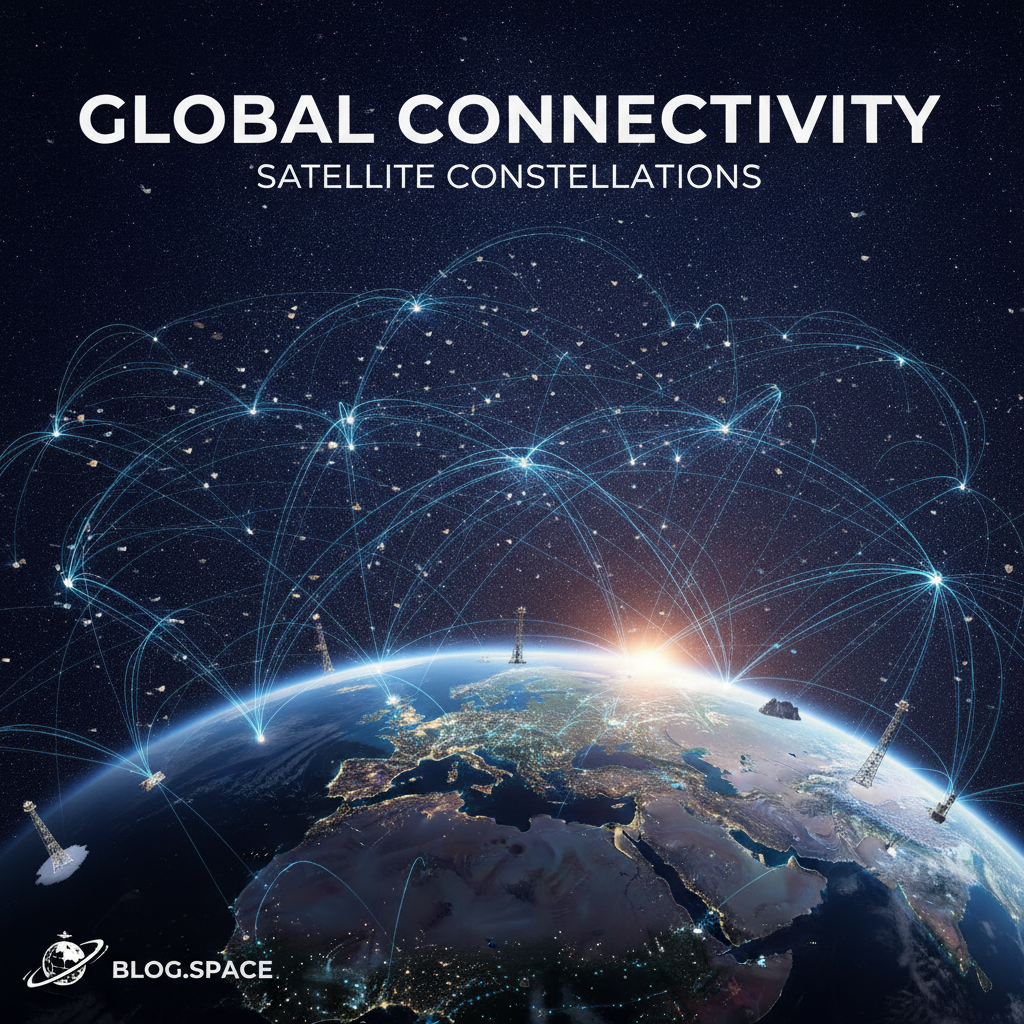
The implications of widespread space internet are profound. For billions globally who currently lack access to reliable internet, these megaconstellations offer a genuine solution to bridge the digital divide. Think of rural communities, disaster-stricken areas, or even ships at sea – all can gain access to crucial information, educational resources, and economic opportunities. Low latency means smoother video calls, faster downloads, and a more responsive online experience, rivaling traditional broadband in many areas.
Addressing the Challenges
Of course, such a massive undertaking isn’t without its considerations. A significant concern is space debris; with thousands of satellites, managing potential collisions and defunct spacecraft is paramount. There are also discussions around light pollution, as the reflective satellites can sometimes interfere with astronomical observations. Regulatory bodies worldwide are working to establish guidelines for these new space activities, ensuring a sustainable and responsible approach to space utilization.
A Glimpse into the Future
As more satellites are launched and technology advances, we can expect space internet to become even more integrated into our daily lives. It’s not just about getting online; it’s about enabling new innovations in remote sensing, IoT (Internet of Things), autonomous vehicles, and even future space exploration. The data collected and transmitted by these constellations will unlock unprecedented insights and opportunities across countless industries.
The era of satellite megaconstellations and space internet expansion is here, promising to redefine our connection to the world and each other. While challenges remain, the potential for a truly globally connected society is incredibly exciting, ushering in a new age of accessibility and innovation from above!


Leave a Reply