
Mind Over Machine: The Incredible Progress in Brain-Computer Interfaces
Welcome, tech enthusiasts and curious minds! Today, we’re diving into one of the most exciting and transformative fields in modern science: Brain-Computer Interfaces (BCIs). Imagine a world where your thoughts can directly control devices, restore lost senses, or even enhance human capabilities. While it sounds like something straight out of science fiction, BCI technology is rapidly turning these dreams into reality, making incredible strides every single day.
What Exactly Are BCIs?
At its core, a Brain-Computer Interface is a system that allows direct communication between the brain and an external device. It bypasses the body’s peripheral nerves and muscles, translating brain activity into commands that a computer can understand and act upon. From helping individuals with severe paralysis communicate to enabling sophisticated prosthetic limb control, BCIs represent a monumental leap in human-machine interaction.
From Lab Bench to Life-Changing Applications
For decades, BCIs were largely confined to research labs, showcasing promising but limited capabilities. However, recent years have witnessed an explosion of innovation. Early systems often required invasive surgery, implanting electrodes directly into the brain. While highly effective for certain applications, the invasiveness presented significant hurdles for widespread adoption.
The Rise of Non-Invasive and Minimally Invasive Solutions
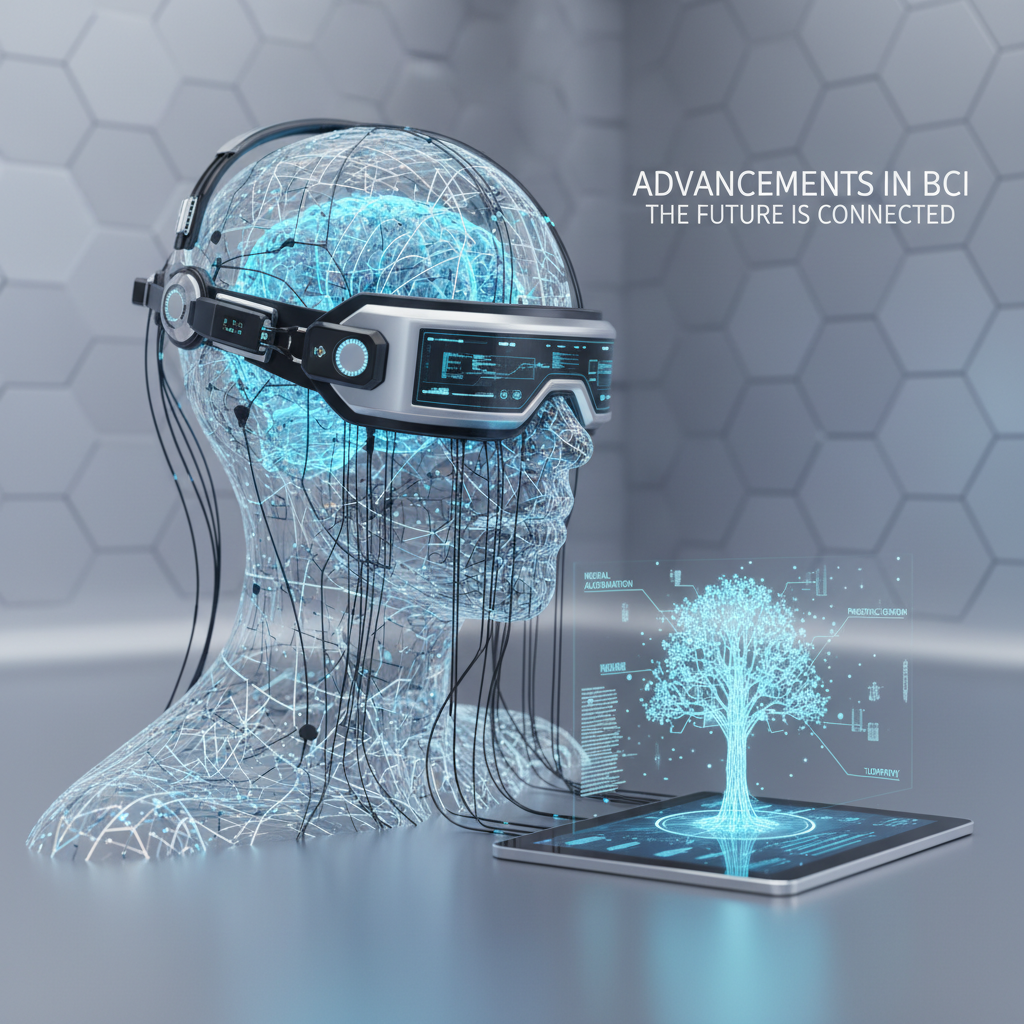
One of the most significant advancements has been the development and refinement of non-invasive BCI technologies. Devices like EEG (electroencephalography) headsets, which read brain waves from outside the scalp, are becoming more accurate and user-friendly. These are paving the way for consumer-grade applications in gaming, meditation, and cognitive enhancement.
Minimally invasive approaches, such as implantable devices that rest on the surface of the brain (epidural) or small electrode arrays that require less extensive surgery, are also gaining traction. These offer a balance between the high signal quality of invasive methods and the lower risks associated with non-invasive ones, broadening accessibility for medical applications.
Smarter Algorithms and AI Integration
The true power of modern BCIs isn’t just in the hardware; it’s also in the sophisticated software that deciphers our thoughts. Advanced machine learning algorithms and artificial intelligence are crucial for decoding complex brain signals, filtering out noise, and translating intentions into precise commands in real-time. This AI-driven signal processing is making BCIs faster, more reliable, and capable of understanding a wider range of thoughts and intentions than ever before.
Revolutionizing Healthcare and Beyond
The impact of these advancements is most profoundly felt in the medical field:
- Prosthetics Control: Individuals can now control advanced robotic limbs with their thoughts, regaining an incredible sense of agency and functionality.
- Communication: For those with “locked-in syndrome” or other severe motor impairments, BCIs offer a lifeline, enabling them to type, select options, and communicate with the outside world.
- Neurological Disorders: Research is exploring BCI applications for treating conditions like epilepsy, Parkinson’s disease, and even depression by modulating brain activity.
Beyond medicine, we’re seeing exciting developments in gaming, virtual reality, and even workplace productivity, where BCIs could offer new modes of interaction and immersion.
The Future is Bright (and Thought-Provoked!)
While the progress is astonishing, the journey is far from over. Challenges remain, including improving signal resolution, ensuring long-term stability of implants, and addressing complex ethical considerations around privacy, data security, and human enhancement.
However, the trajectory of BCI research is undeniably upward. As technology continues to evolve, we can anticipate a future where the line between human thought and digital action becomes increasingly blurred, opening up unprecedented possibilities for interaction, recovery, and human potential. The future, quite literally, is in our hands – and our minds!
What are your thoughts on the future of BCIs? Share them in the comments below!
“`


Leave a Reply