
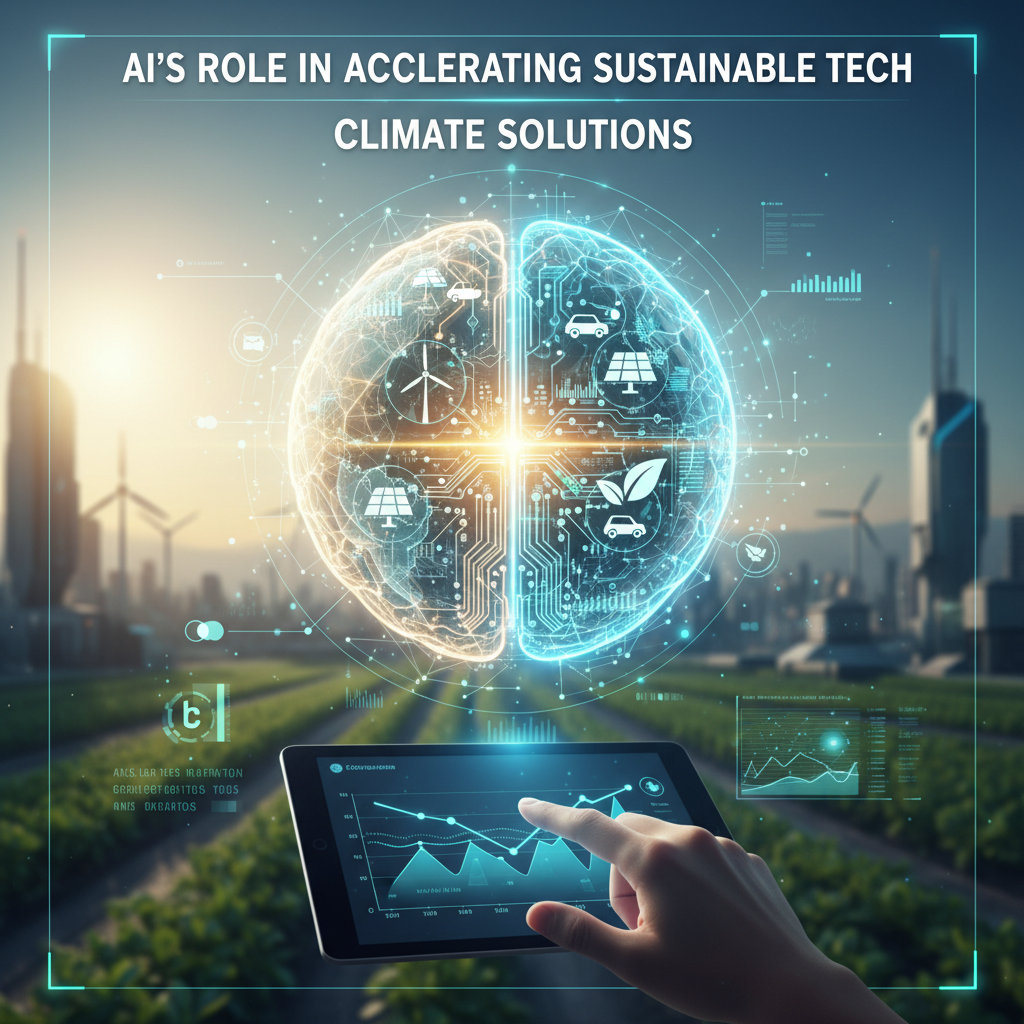
AI: Your Climate Ally for a Greener Tomorrow
The climate crisis demands urgent action and innovative solutions. As we race against time to build a sustainable future, a powerful new ally is emerging: Artificial Intelligence. Far from being just a tech buzzword, AI is proving to be an indispensable tool, accelerating the development and deployment of sustainable technologies and offering tangible pathways to tackle some of our planet’s biggest environmental challenges.
Unlocking Insights from Climate Data
One of AI’s most profound contributions is its ability to process and analyze vast quantities of data at speeds and scales impossible for humans. From satellite imagery and sensor networks to historical weather patterns and economic indicators, AI algorithms can sift through the noise to identify critical trends, predict future scenarios, and pinpoint areas of vulnerability. This allows scientists, policymakers, and conservationists to make more informed decisions, develop more effective strategies, and even create early warning systems for extreme weather events or deforestation hotbeds.
Optimizing Our Renewable Energy Future
The transition to renewable energy sources like solar and wind is crucial, but their intermittent nature can pose challenges for grid stability. This is where AI shines! AI-driven systems can accurately forecast energy demand and supply, optimize the placement and maintenance of renewable infrastructure, and intelligently manage smart grids. By predicting when and where energy will be needed most, and how much can be generated from fluctuating sources, AI helps integrate renewables more seamlessly, reduces waste, and makes our energy systems more resilient and efficient.
Revolutionizing Sustainable Agriculture
Feeding a growing global population while reducing environmental impact is a monumental task. AI is transforming agriculture through precision farming. Algorithms can analyze soil conditions, crop health, weather forecasts, and even pest infestations to advise farmers on optimal irrigation, fertilization, and planting strategies. This reduces the overuse of water, pesticides, and fertilizers, leading to healthier ecosystems, increased yields, and a more sustainable food supply chain, including efforts to minimize food waste.
Accelerating Green Innovation & Efficiency
Beyond data analysis and optimization, AI is a catalyst for groundbreaking innovation. In material science, AI is dramatically speeding up the discovery of new, eco-friendly materials – from more efficient battery components to biodegradable plastics and advanced carbon capture technologies. It’s also being used to optimize industrial processes, leading to reduced emissions, less waste, and more efficient resource utilization across various sectors. Furthermore, AI helps in designing more energy-efficient buildings and planning greener urban spaces, integrating sustainability from the ground up.
The Road Ahead: Challenges and Collaboration
While AI offers immense promise, it’s important to acknowledge that it’s not a silver bullet. The development and operation of AI models themselves require significant energy, highlighting the need for “green AI” – algorithms that are energy-efficient and ethically designed. Addressing data privacy, algorithmic bias, and ensuring equitable access to these technologies are also critical. Ultimately, AI’s full potential in climate solutions can only be realized through collaborative efforts between scientists, engineers, policymakers, industries, and communities worldwide.
AI is more than just a technological advancement; it’s a powerful partner in our collective journey towards a sustainable future. By harnessing its capabilities responsibly and strategically, we can accelerate the pace of innovation, make smarter decisions, and build a greener, more resilient world for generations to come. The future is bright, and with AI as our ally, we have a stronger chance than ever to achieve it.



Leave a Reply