
Step Into the Future: Spatial Computing & MR
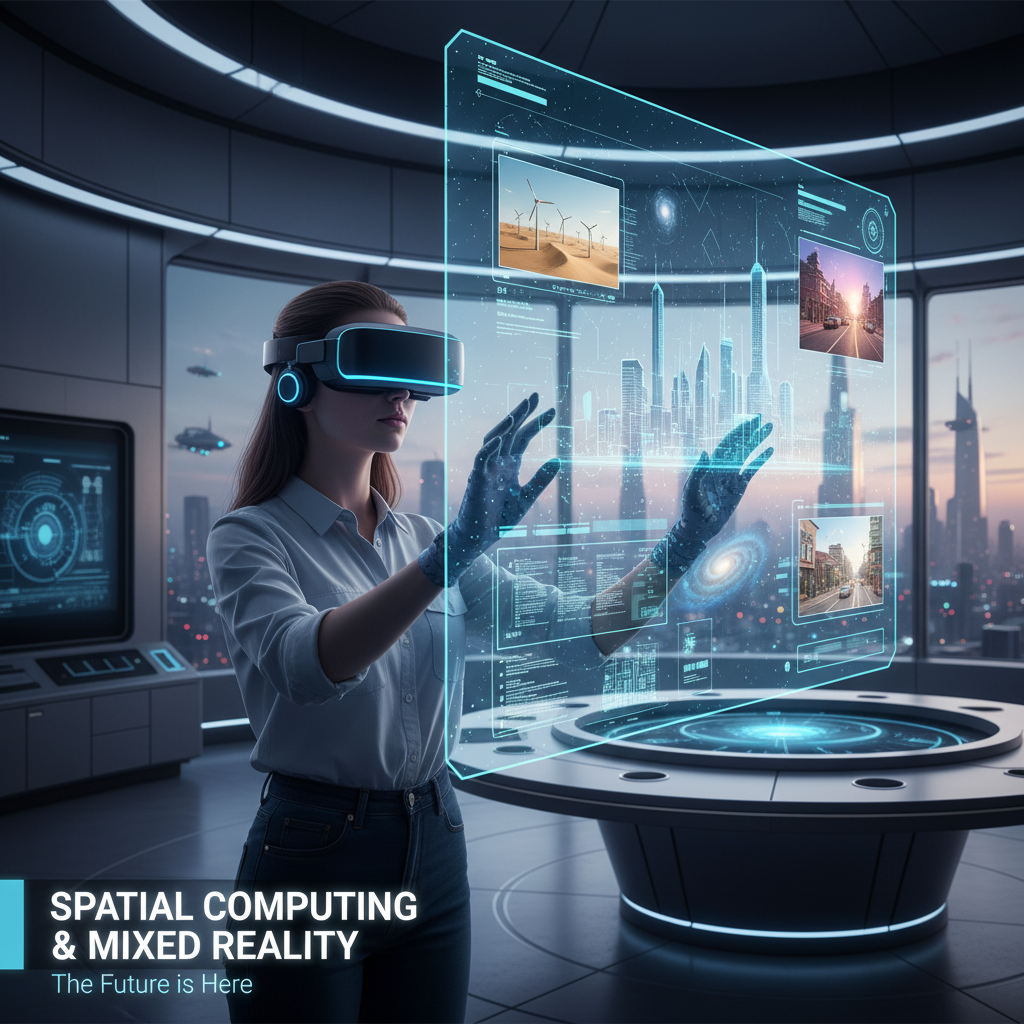
Ever felt like technology should just *understand* the world around you, not just sit on a screen? Welcome to the exciting frontier of Spatial Computing and Mixed Reality Platforms! This isn’t just about viewing digital content; it’s about interacting with it as if it were truly part of our physical environment. Get ready to explore how our digital and physical worlds are beautifully merging.
Understanding Spatial Computing
At its core, Spatial Computing is about giving computers the ability to “see,” “understand,” and “interact” with the real world. Think of it as a computer system that knows where it is in space, what objects are around it, and how people are moving within that space. It uses sensors, cameras, and advanced AI to map environments, track movements, and allow digital content to be anchored and interact meaningfully within the physical world. It’s the foundational technology that makes experiences like smart homes and autonomous vehicles possible, and it’s supercharging mixed reality!
Mixed Reality: Where Digital Meets Physical
Mixed Reality (MR) is a fascinating spectrum that bridges the gap between the purely physical (reality) and the purely virtual (Virtual Reality). Unlike Augmented Reality (AR) which overlays digital information onto the real world, MR goes a step further. It allows digital objects to not only appear in your physical space but also to interact with it and with you in a truly immersive way. Imagine a virtual character walking behind your real-world couch, or a digital design prototype responding to your physical gestures. Platforms like Microsoft HoloLens and Magic Leap are pioneers in bringing these rich, interactive blended realities to life.
Why Spatial Computing & MR Are Game-Changers
The convergence of spatial computing and mixed reality isn’t just a technological marvel; it’s a paradigm shift in how we interact with information and each other. We’re moving beyond flat screens and into a world where our digital tools and data are integrated directly into our physical environments. This promises more intuitive interfaces, enhanced collaboration, and experiences that are far more engaging and natural than ever before. It’s about presence, context, and a seamless flow between the physical and digital.
Applications: Beyond Gaming and Entertainment
While immersive gaming and entertainment are exciting, the true potential of spatial computing and mixed reality stretches far wider:
- Healthcare: Surgeons can visualize 3D anatomical models during operations, and medical students can practice procedures on realistic virtual patients.
- Manufacturing & Design: Engineers can collaborate on 3D prototypes in shared virtual spaces, making real-time adjustments and spotting flaws before physical production.
- Education & Training: Students can explore historical sites virtually, or employees can receive hands-on training for complex machinery without leaving the classroom.
- Retail: Customers can virtually “try on” clothes or visualize furniture in their homes before making a purchase, transforming the shopping experience.
The Road Ahead: A Spatial Future
While still in its nascent stages, the trajectory of spatial computing and mixed reality is clear. As hardware becomes more powerful and accessible, and as developers unlock new ways to create compelling content, we’ll see these technologies become increasingly integrated into our daily lives. From how we work and learn to how we connect with others and experience entertainment, a spatial future promises to redefine our relationship with technology and the world around us.
The journey into spatial computing and mixed reality is just beginning, and it’s filled with incredible potential. It invites us to imagine a world where technology augments our reality in profound and useful ways, making our interactions more natural, our data more contextual, and our experiences truly immersive. Get ready to step off the screen and into a world that computes spatially!

Leave a Reply