
Hello Tech Enthusiasts and Future Explorers!
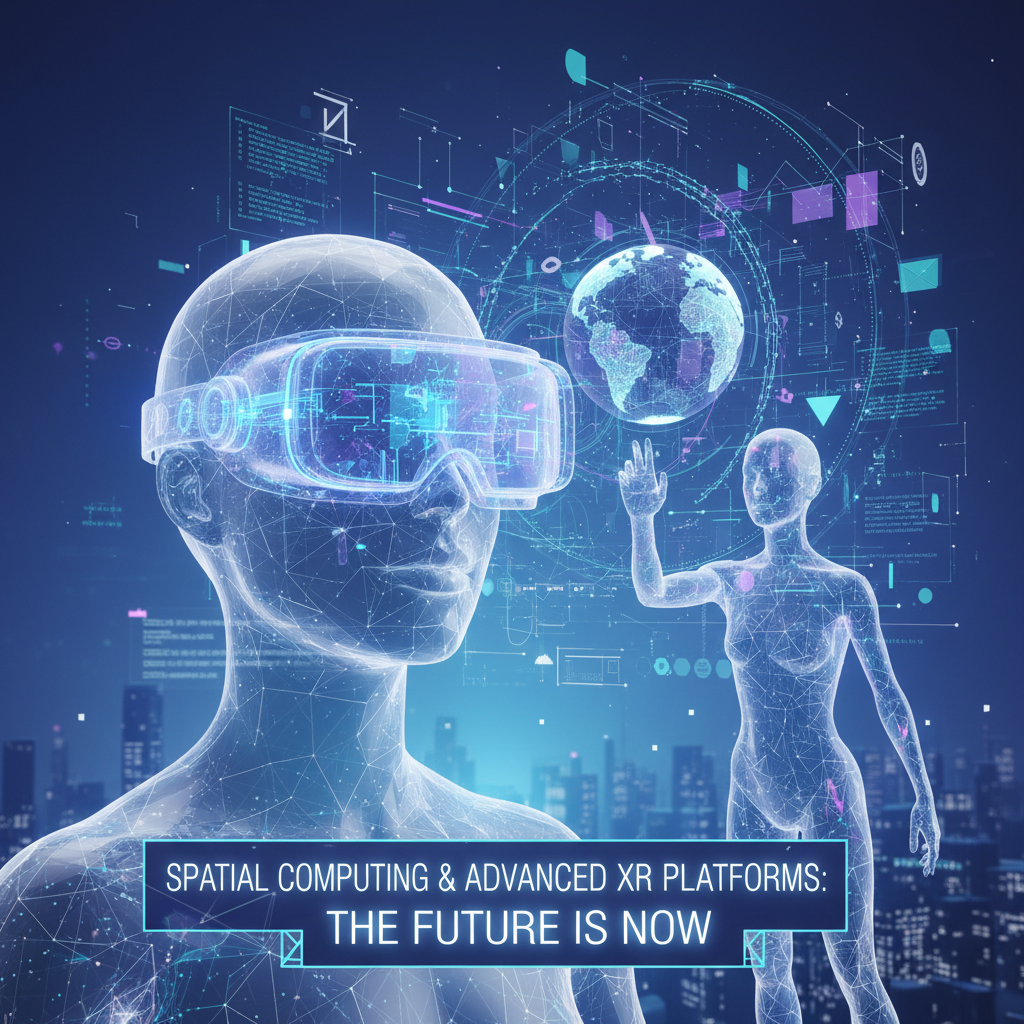
Get ready to embark on an exciting journey into a topic that’s quickly reshaping our interaction with technology and the world around us: Spatial Computing and Advanced XR Platforms. It might sound like something out of a sci-fi movie, but trust us, the future is already here, and it’s incredibly fascinating!
What Exactly is Spatial Computing?
At its heart, spatial computing is about giving computers the ability to understand and interact with the physical world in a way that goes far beyond simple 2D screens. Imagine your digital content not just floating on a tablet, but actually understanding its environment, anchoring itself to real-world objects, and interacting with them. This is the essence of spatial computing!
It’s about bridging the gap between our physical reality and the digital realm, allowing digital objects and information to exist and persist in our actual space. Think of it as your computer gaining spatial awareness – it knows where it is, what’s around it, and can place digital elements precisely and intelligently within that context.
Beyond Basic XR: The “Advanced” Difference
You’ve probably heard of Virtual Reality (VR) and Augmented Reality (AR) – collectively known as Extended Reality (XR). While these technologies have given us incredible glimpses into immersive experiences, “Advanced XR Platforms” take things to a whole new level. It’s not just about wearing a headset; it’s about seamless, intelligent, and deeply integrated experiences.
What makes it “advanced”? It includes:
- Contextual Intelligence: The system doesn’t just display; it understands your intent and the environment, adapting experiences dynamically.
- Persistence: Digital objects can stay in the real world over time, visible to multiple users, creating a shared digital layer on top of our physical world.
- High Fidelity & Low Latency: Ultra-realistic graphics and virtually no lag make experiences feel natural and indistinguishable from reality.
- Advanced Sensing: Utilizing sophisticated sensors to track eyes, hands, body, and even emotions, leading to truly intuitive interactions.
- Edge & Cloud Computing Integration: Harnessing distributed processing to render complex environments and AI-driven insights in real-time.
Where Are We Seeing the Impact?
The applications for spatial computing and advanced XR are boundless and are already making waves across various sectors:
Transforming Industry & Enterprise
From architects designing buildings with virtual models superimposed on actual construction sites, to engineers performing remote repairs with augmented instructions, these technologies are revolutionizing workflows. Think of digital twins, where a virtual replica of a factory or city allows for real-time monitoring, simulation, and predictive maintenance – all within a spatial context.
Revolutionizing Healthcare
Surgeons can plan complex operations with 3D holographic models of organs. Medical students can practice procedures in incredibly realistic virtual environments. Patients could even benefit from advanced AR for therapy and rehabilitation, making exercises more engaging and effective.
Enhancing Education & Training
Imagine dissecting a virtual frog in biology class, exploring ancient Rome in an immersive history lesson, or training for complex machinery operation without any physical risk. Advanced XR makes learning experiential, engaging, and highly effective.
Unlocking New Entertainment & Social Experiences
While gaming is an obvious beneficiary, spatial computing opens doors for truly shared digital experiences. Friends can meet as avatars in a persistent virtual park, collaborate on virtual projects, or enjoy interactive storytelling that spills from their screens into their living rooms.
The Road Ahead: Challenges and Opportunities
Of course, this exciting frontier isn’t without its challenges. We’re still working on making devices lighter, more comfortable, and more affordable. Data privacy, ethical considerations around digital persistence, and establishing universal standards are all crucial areas of focus.
However, the opportunities are immense. Spatial computing and advanced XR platforms promise to fundamentally change how we interact with information, each other, and the world. They offer a future where technology doesn’t just live on a screen, but intelligently integrates into our lives, enhancing our perceptions and capabilities in ways we’re just beginning to imagine.
So, as you go about your day, take a moment to consider the spaces around you. Soon, they might not just be physical, but intelligently augmented with layers of digital information, collaboration, and wonder. The future of interaction is spatial, and it’s arriving faster than you think!
Stay curious!
“`



Leave a Reply