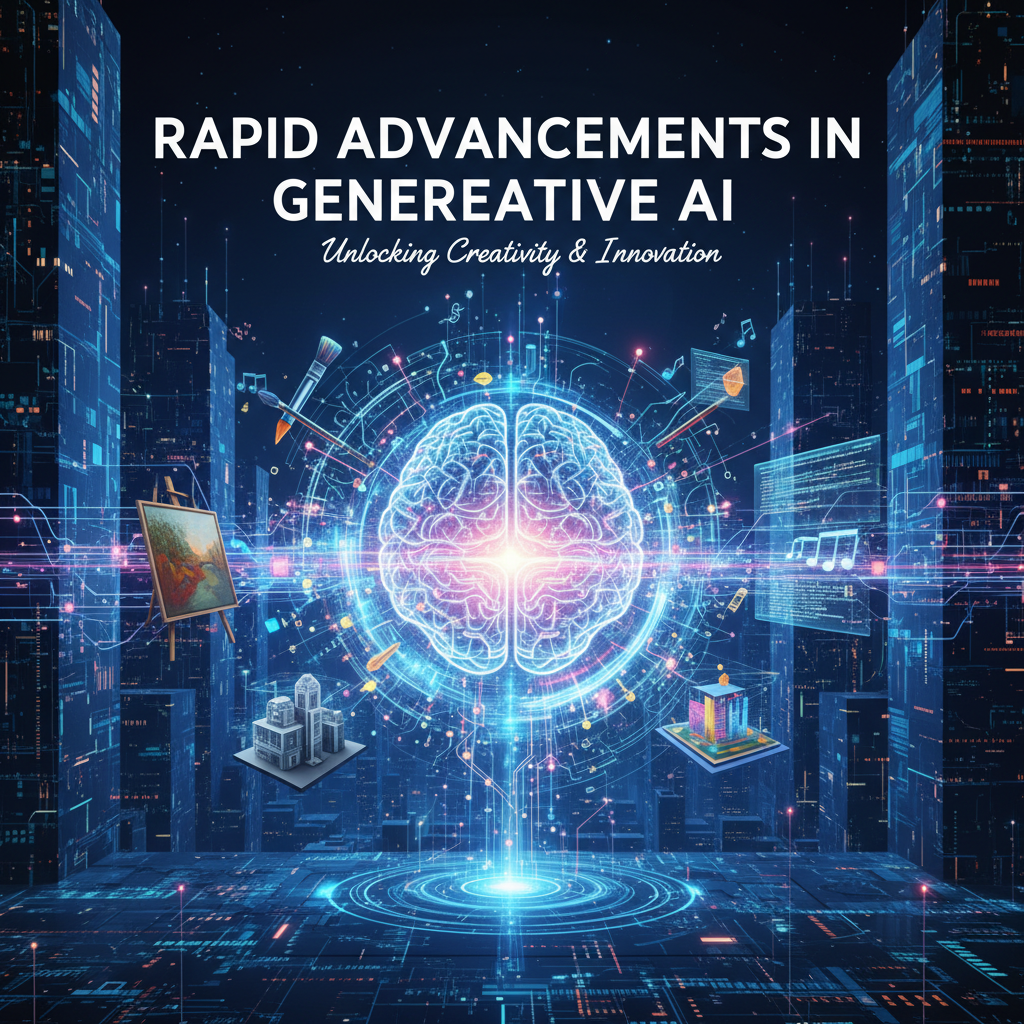
Generative AI: The Future Unfolds Rapidly
Welcome to the era of creation! Generative Artificial Intelligence (AI) isn’t just a buzzword; it’s a rapidly evolving field that’s reshaping how we think about creativity, productivity, and innovation. From stunning artwork to compelling prose, and even realistic video, generative AI is no longer science fiction – it’s here, and it’s advancing at an astonishing pace. Let’s dive into the incredible progress and what it means for our world.
What Exactly is Generative AI?
At its core, Generative AI refers to algorithms and models capable of producing new, original content that hasn’t existed before. Unlike traditional AI that might analyze data or make predictions, generative models learn patterns, styles, and structures from vast datasets, then use that knowledge to create novel outputs. Imagine an AI that can not only understand language but also write a poem, or one that can process millions of images and then design a unique piece of art. That’s the magic of generative AI.
Key Milestones & Breakthroughs
The past few years have seen an explosion of breakthroughs that have brought generative AI into the mainstream. Large Language Models (LLMs) like OpenAI’s GPT series (including ChatGPT) have redefined human-computer interaction, capable of generating coherent, contextually relevant text, summarizing information, and even writing code.
Simultaneously, text-to-image models such as DALL-E, Midjourney, and Stable Diffusion have democratized digital art, allowing anyone to create intricate and imaginative visuals from simple text prompts. More recently, the advent of text-to-video models like Sora promises to revolutionize film, advertising, and content creation, generating realistic and complex scenes with unprecedented fidelity. These advancements are not just incremental; they represent fundamental shifts in AI’s creative capabilities.
Impact Across Industries
The ripple effects of generative AI are being felt across virtually every sector. In creative industries, artists and designers are leveraging these tools to prototype ideas faster, experiment with new styles, and overcome creative blocks. Marketers are generating personalized ad copy and campaign visuals at scale. Software developers are using AI to write code, debug programs, and accelerate development cycles.
Beyond that, we’re seeing applications emerge in medicine (e.g., designing new proteins, accelerating drug discovery), education (creating personalized learning materials), and even architecture and engineering (generating design concepts). The potential for increased efficiency and entirely new products and services is immense.
Looking Ahead: Challenges & Opportunities
While the opportunities are vast, the rapid advancements in generative AI also bring important considerations. Ethical concerns around data privacy, bias in generated content, intellectual property, and the potential impact on employment are crucial discussions that need to happen concurrently with technological progress.
However, the trajectory of generative AI points towards an even more integrated and powerful future. We can expect more sophisticated models that understand multimodal inputs (text, image, audio, video) and generate equally diverse outputs. The focus will likely shift towards making these powerful tools more accessible, controllable, and beneficial for everyone, fostering a new era of human-AI collaboration.
Generative AI is not just a passing trend; it’s a foundational technology that is rapidly redefining the boundaries of what machines can create. Staying informed, understanding its capabilities, and participating in the conversation around its responsible development will be key as we navigate this exciting, fast-moving landscape. The future of creativity is being written, painted, and composed by code, and it’s truly thrilling to witness its unfolding.
“`
Leave a Reply