AI & Precision Medicine: Shaping Tomorrow’s Health
Imagine a world where medical treatments are designed specifically for you, taking into account your unique genetic makeup, lifestyle, and environment. This isn’t science fiction anymore; it’s the promise of Precision Medicine, and with the incredible power of Artificial Intelligence (AI), this future is rapidly becoming our present. Get ready to dive into how AI is revolutionizing biotechnology and bringing personalized healthcare closer than ever!
What Exactly is Precision Medicine?
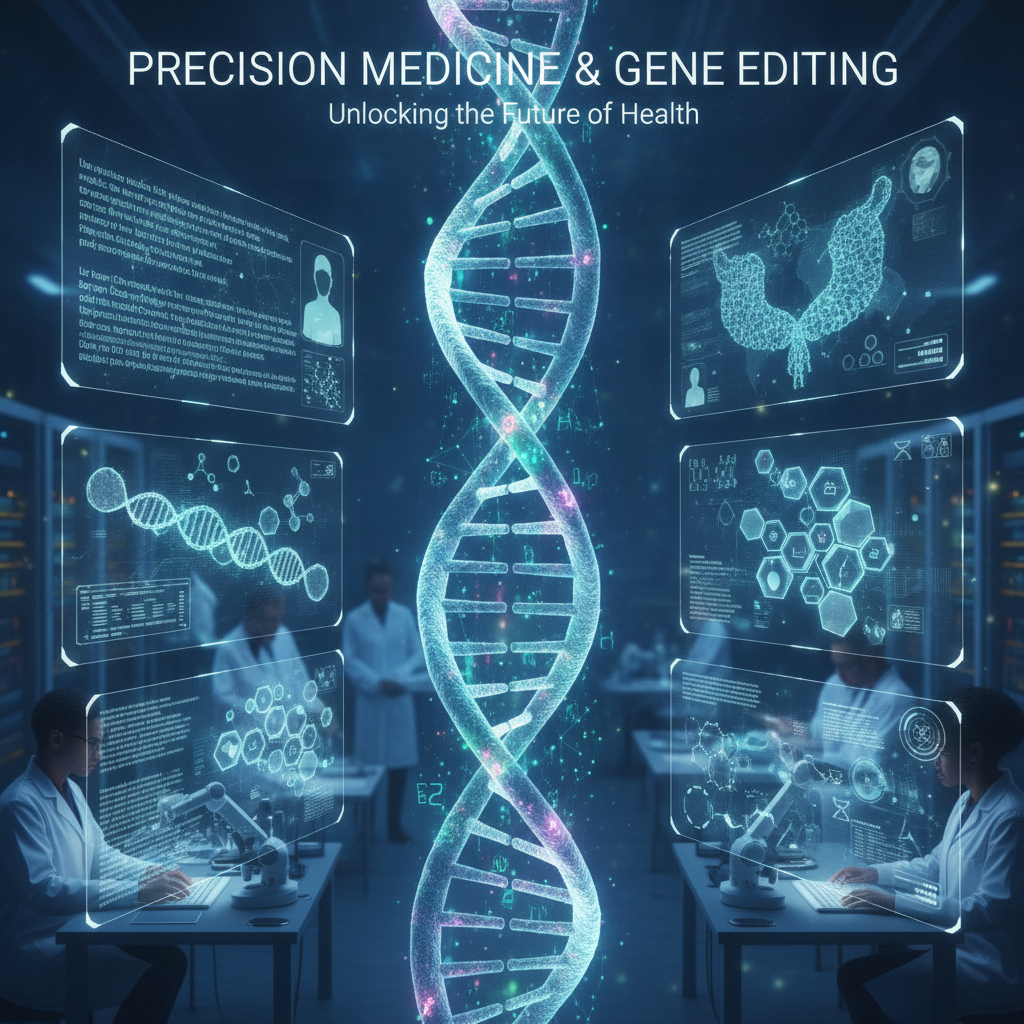
At its core, Precision Medicine is an innovative approach to disease treatment and prevention that considers individual variability. Unlike the traditional “one-size-fits-all” model, which often means trial-and-error for patients, precision medicine aims to tailor therapies to each person. This customization is based on understanding factors like our genes, the proteins in our cells, our environment, and even our gut microbiome. The goal? To deliver the right treatment to the right patient at the right time.
AI: The Supercharger for Biotech Breakthroughs
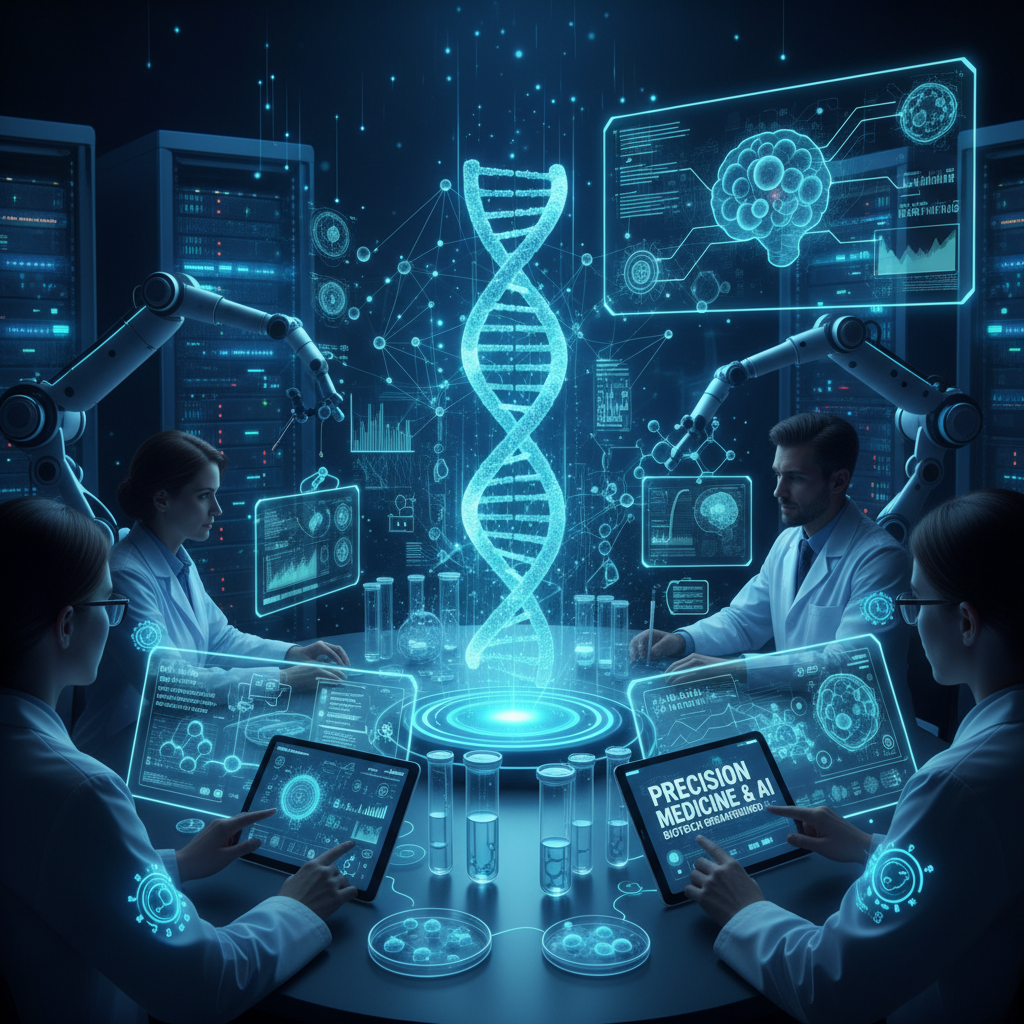
So, where does AI fit into all this? Think of AI as the ultimate supercomputer, capable of processing and analyzing vast amounts of complex data far beyond human capacity. This ability is absolutely critical for precision medicine. Here’s how AI is accelerating breakthroughs:
- Deciphering Genomic Data: Our DNA holds billions of data points. AI algorithms can swiftly identify patterns, mutations, and genetic predispositions that are linked to diseases, making sense of what was once an overwhelming amount of information.
- Accelerating Drug Discovery: Developing new drugs is a notoriously long and expensive process. AI can predict how different molecules will interact with biological targets, identify potential drug candidates, and even optimize existing drugs for new uses, dramatically speeding up development timelines.
- Precision Diagnostics & Risk Prediction: AI-powered tools can analyze medical images, patient records, and even wearable device data to detect diseases earlier, predict a patient’s risk for certain conditions, and monitor treatment responses with incredible accuracy.
- Personalized Treatment Plans: By integrating all available data – from genomics to lifestyle factors – AI can help clinicians recommend the most effective therapies, predict adverse drug reactions, and optimize dosages tailored to an individual patient.
Real-World Impact and Exciting Horizons
The impact of AI-driven precision medicine is already being felt, particularly in areas like cancer treatment, where targeted therapies are showing remarkable success by attacking specific genetic vulnerabilities in tumors. We’re also seeing AI aid in diagnosing rare diseases much faster, reducing years of uncertainty for patients and their families. Looking ahead, imagine AI helping to prevent chronic diseases by identifying risk factors early and recommending personalized interventions, or even designing vaccines that are hyper-tailored to fight emerging pathogens.
Navigating the Future: Challenges and Opportunities
While the future is incredibly bright, integrating AI into healthcare isn’t without its challenges. Issues around data privacy, the ethical implications of AI algorithms (like potential biases), and ensuring equitable access to these advanced treatments are crucial considerations. However, the opportunities to transform healthcare, extend healthy lifespans, and alleviate suffering are immense. Collaboration between scientists, clinicians, ethicists, and policymakers will be key to harnessing this powerful synergy responsibly.
The convergence of Precision Medicine and AI isn’t just an incremental improvement; it’s a paradigm shift. It promises a future where healthcare is truly personal, proactive, and exceptionally effective. This is an exhilarating time in biotechnology, and we’re just at the beginning of realizing its full potential to shape a healthier tomorrow for everyone.


Leave a Reply