Generative AI: The Multimodal Revolution
Remember when Generative AI was mostly about amazing text? Think chatbots that could write poetry or translate languages. While text generation continues to evolve, the world of AI is now buzzing with an even more exciting development: multimodality. This isn’t just a minor upgrade; it’s a fundamental shift that’s transforming how AI understands and interacts with our world. Get ready to explore how Generative AI is learning to see, hear, and create in ways we once only dreamed of!
What Exactly is Multimodality in Generative AI?
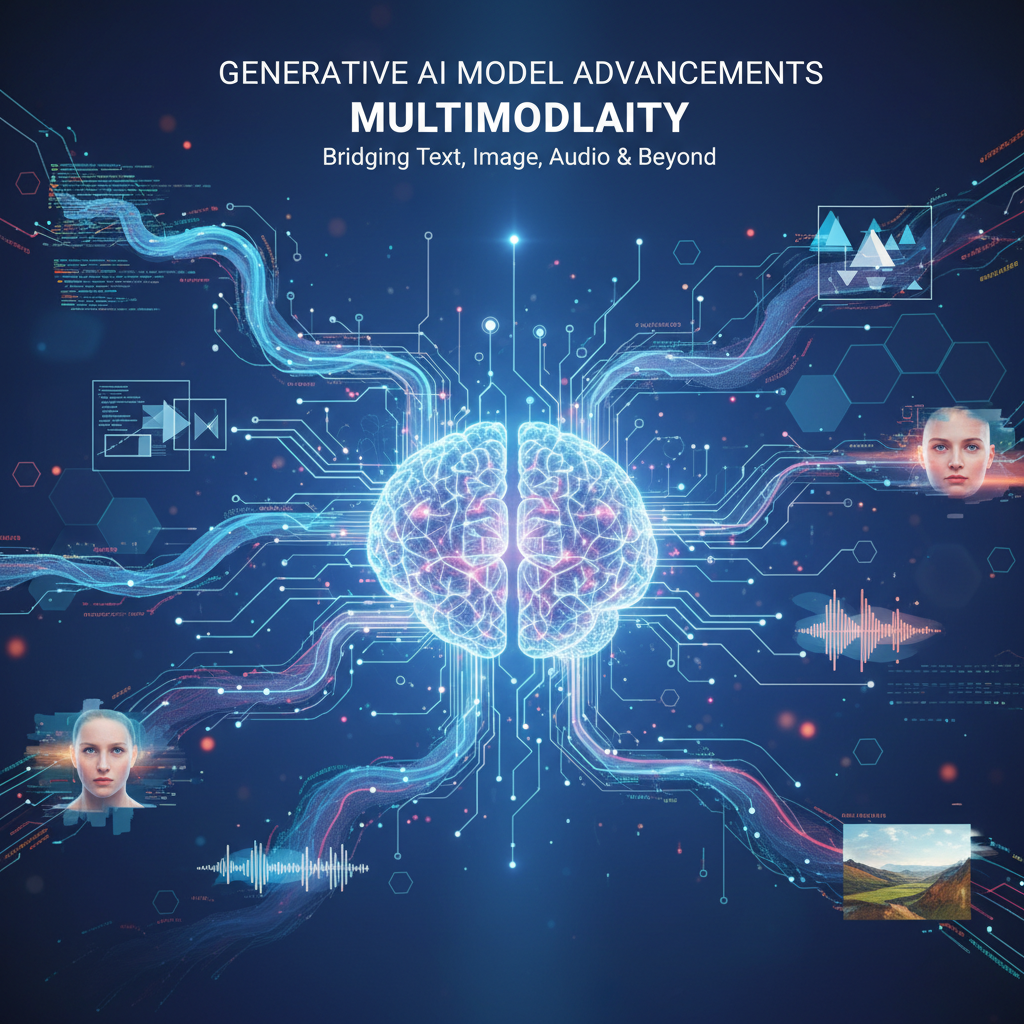
Simply put, multimodality refers to an AI model’s ability to process, understand, and generate content across different types of data, or “modalities.” Instead of being limited to just text, a multimodal AI can skillfully work with a combination of text, images, audio, video, 3D models, and even sensor data. Imagine an AI that can take a text prompt like “a futuristic city at sunset,” generate a stunning image, then describe that image in detail, and even compose a fitting musical score – all from a single query. That’s the power of multimodal AI!
Key Advancements Fueling This Leap
This incredible progress isn’t happening in a vacuum. Several key breakthroughs are propelling Generative AI into the multimodal era:
- Larger, More Sophisticated Foundation Models: The backbone of these advancements are massive models trained on vast and diverse datasets. These models learn intricate relationships between different modalities.
- Cross-Modal Understanding: New architectural designs and training techniques allow models to build a shared understanding across various data types. This means they can “connect the dots” between a written description and its visual representation, or an audio clip and its corresponding action.
- Improved Data and Computational Power: Access to gargantuan, well-annotated multimodal datasets, coupled with significant increases in computational resources (like powerful GPUs), has made training these complex models feasible.
Real-World Impact: Where Multimodal AI Shines
The implications of multimodal generative AI are vast and already transforming numerous sectors:
- Creative Content Generation: From generating breathtaking images and videos from text prompts (like DALL-E, Midjourney, Stable Diffusion) to composing music and even designing 3D objects, multimodal AI is revolutionizing creative industries.
- Enhanced User Experiences: Imagine AI assistants that not only hear your voice commands but also understand the context from what they see through your device’s camera, leading to more intuitive and helpful interactions.
- Education and Accessibility: Multimodal AI can create dynamic learning materials, convert complex scientific papers into engaging visual explanations, or generate detailed audio descriptions for visual content, making information more accessible.
- Robotics and Autonomous Systems: By integrating visual, auditory, and sensor data, robots can better perceive and interact with their environment, leading to more intelligent and adaptable autonomous agents.
Looking Ahead: The Multimodal Future
The journey into multimodality is just beginning. We can anticipate even more seamless integration of different data types, leading to AI systems that can reason, learn, and create with a comprehensiveness that mirrors human perception. However, as with any powerful technology, addressing ethical considerations – such as bias in training data, responsible deployment, and the potential for misuse – will be paramount.
The ability of Generative AI to truly understand and generate across modalities brings us closer to artificial intelligence that can interpret our world in a holistic, interconnected way. It’s an exciting frontier, promising innovations that will undoubtedly reshape industries, enhance our daily lives, and perhaps even redefine our understanding of creativity itself.
What aspects of multimodal AI are you most excited about? Share your thoughts in the comments below!
“`


Leave a Reply