
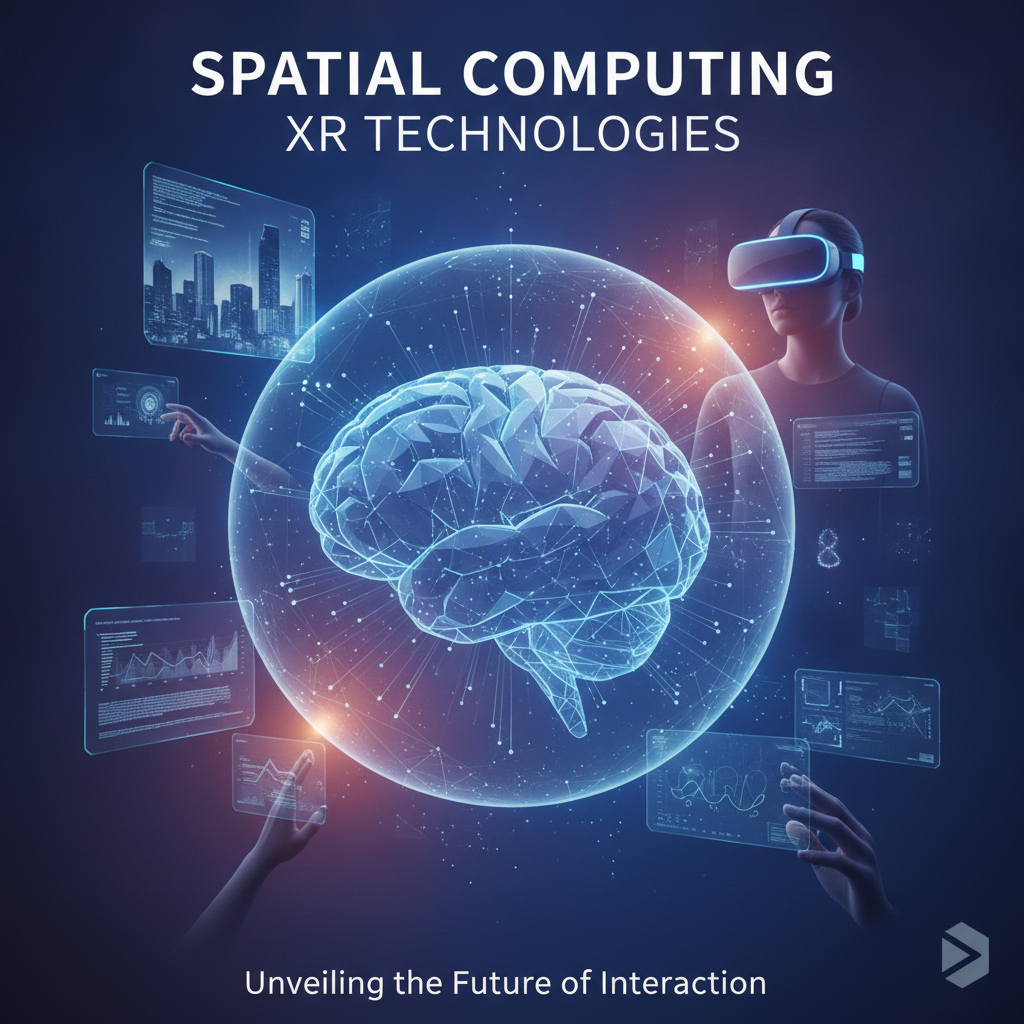
Spatial Computing & XR: Redefining Reality
Welcome to the cusp of a technological revolution! Spatial computing and XR technologies are no longer just concepts from science fiction; they are rapidly becoming the tools that will reshape how we interact with information, environments, and each other. Get ready to explore a future where the digital world seamlessly blends with our physical reality.
What is Spatial Computing?
At its heart, spatial computing is about creating systems that understand and interact with the physical world around them. Imagine a computer that doesn’t just process data on a screen, but comprehends the objects, spaces, and context of your actual environment. It’s about blending digital content with physical reality in a way that feels natural and intuitive, allowing us to interact with information as if it were truly part of our surroundings.
This isn’t just about viewing digital content; it’s about enabling computers to sense, process, and manipulate real-world objects and spaces, providing a deeper level of engagement and utility than traditional computing ever could.
The XR Technologies Driving the Vision
Spatial computing’s power is unlocked and experienced through a suite of technologies collectively known as Extended Reality (XR). This umbrella term encompasses:
- Virtual Reality (VR): Completely immerses users in a simulated digital environment, blocking out the physical world. Think advanced gaming, training simulations, or virtual tourism.
- Augmented Reality (AR): Overlays digital information onto the real world, enhancing our view of reality without replacing it. Smartphone AR apps are common examples, as are AR glasses that display navigation directions or product information in your line of sight.
- Mixed Reality (MR): A more advanced form of AR where digital objects are not just overlaid but anchored to and interact with the physical environment in real-time. MR allows for true interaction between physical and digital elements, such as a virtual pet walking around your real living room.
These technologies are the interfaces through which we will engage with spatial computing, offering increasingly sophisticated ways to blend the digital and physical.
Real-World Applications and Impact
The potential applications of spatial computing and XR are vast and transformative, touching nearly every sector:
- Healthcare: Surgeons can practice complex procedures in VR, medical students can explore human anatomy in 3D, and therapists can use AR for rehabilitation exercises.
- Manufacturing & Design: Engineers can collaborate on 3D models in a shared virtual space, designers can prototype products in MR, and factory workers can receive AR-guided instructions for assembly and maintenance.
- Education & Training: Immersive lessons transport students to historical sites or inside the human body, while employees can undergo realistic safety training without physical risk.
- Retail & E-commerce: Customers can virtually try on clothes, place furniture in their homes using AR, or explore products in a 3D showroom.
- Entertainment & Gaming: Beyond traditional gaming, XR offers entirely new forms of interactive storytelling, concerts, and social experiences.
These are just a few glimpses into how these technologies are set to revolutionize our daily lives and professional workflows.
The Road Ahead: Challenges and Opportunities
While the promise of spatial computing and XR is immense, there are still challenges to address. Hardware needs to become lighter, more powerful, and more affordable. Content creation tools must evolve to meet the demand for rich, interactive experiences. User interfaces need to become even more intuitive, and ethical considerations around data privacy and digital well-being must be carefully navigated.
However, the opportunities for innovation are even greater. As these technologies mature, we can expect truly seamless integrations, new forms of human-computer interaction, and the development of entirely new industries and job roles. The future promises a world where our digital tools are no longer confined to screens but are truly embedded within our physical reality.
Step Into the Spatial Future
Spatial computing and XR technologies are more than just a passing trend; they represent a fundamental shift in how we perceive and interact with our world. From augmenting our daily tasks to creating entirely new realities, they invite us to step into a future that is more immersive, intuitive, and interconnected than ever before. The journey is just beginning, and it promises to be nothing short of extraordinary.
“`



Leave a Reply