
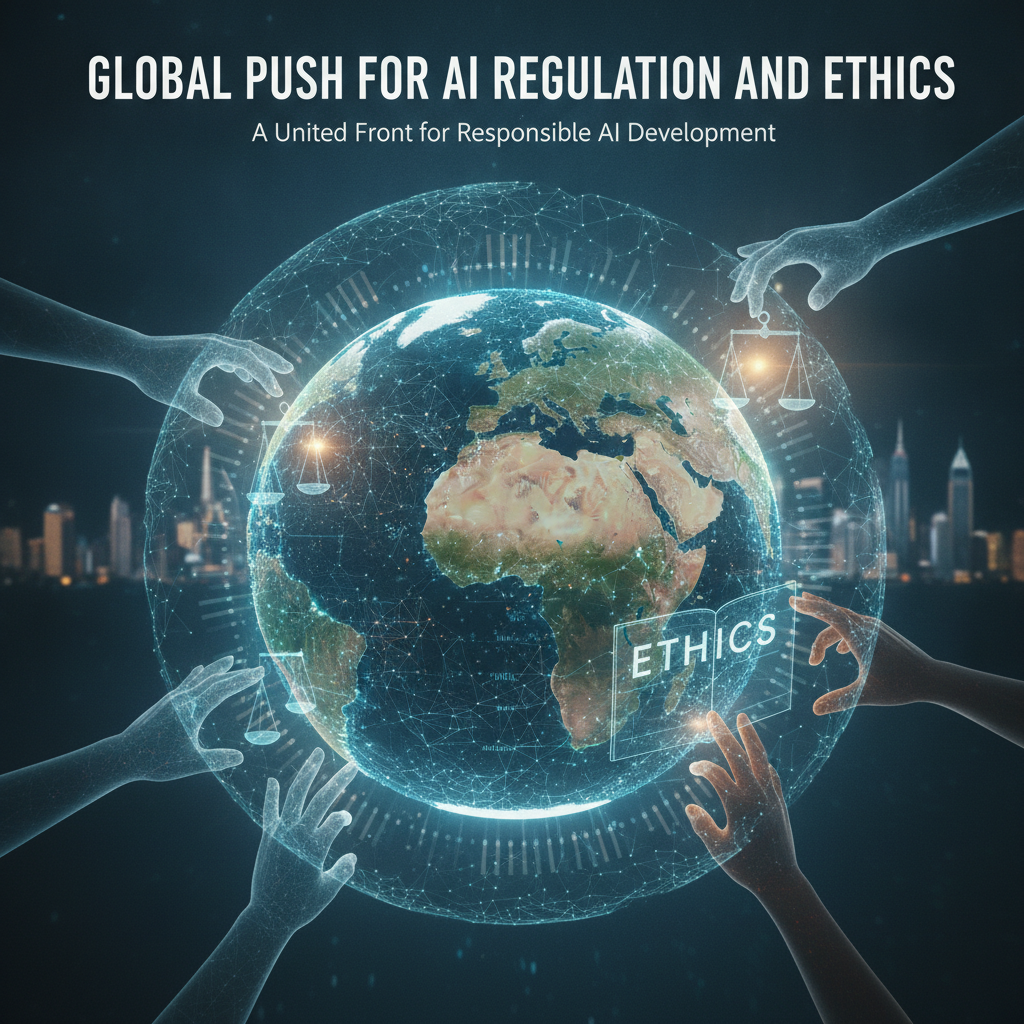
AI’s Future: Global Push for Ethics & Rules
Artificial intelligence is rapidly transforming our world, from how we work and communicate to how we solve complex problems. As AI’s capabilities grow, so does the global conversation around ensuring its development and deployment are responsible, ethical, and beneficial for all. Across continents, governments, organizations, and experts are uniting to shape the future of AI through regulation and ethical guidelines.
Why the Urgent Call for AI Regulation?
The enthusiasm for AI’s potential is immense, promising breakthroughs in healthcare, climate change, and economic growth. However, alongside these opportunities come significant concerns. Issues like algorithmic bias, privacy invasion, job displacement, and the potential for misuse demand careful consideration. Proactive regulation aims to mitigate these risks, protect fundamental rights, and build public trust in AI technologies.
By establishing clear boundaries and accountability frameworks, we can foster innovation responsibly, preventing harmful outcomes while still allowing AI to flourish and deliver on its promise.
A Global Chorus: Who’s Leading the Way?
The push for AI governance isn’t confined to a single country; it’s a truly global effort. Here are some key players and initiatives:
- European Union: The groundbreaking EU AI Act is designed to be the world’s first comprehensive legal framework for AI, categorizing systems by risk level and imposing strict requirements on high-risk AI.
- United States: While perhaps more sector-specific, the US has seen Executive Orders, NIST frameworks, and legislative proposals aimed at guiding responsible AI development and addressing federal use.
- United Nations: The UN is actively promoting international cooperation and dialogue on AI governance, recognizing its potential global impact and the need for inclusive frameworks.
- G7 and G20: These economic powerhouses are increasingly discussing common principles and approaches to AI, aiming for harmonization in critical areas.
- China: Has introduced its own set of comprehensive regulations targeting specific AI applications, particularly those involving data and content generation.
This diverse landscape highlights a shared recognition that AI’s impact transcends borders, requiring a collaborative approach to governance.
Navigating the Complexities: Challenges Ahead
Crafting effective AI regulation is no small feat. The challenges are numerous:
- Pace of Innovation: AI technology evolves at an incredible speed, often outpacing the traditional legislative process. Regulations must be agile enough to adapt.
- Global Harmonization: Different countries have varying legal traditions, values, and economic priorities. Achieving a degree of global coherence is crucial to avoid fragmented markets and regulatory arbitrage.
- Defining “Ethical”: What constitutes ethical AI can be subjective and culturally nuanced. Building consensus on universal principles while respecting local contexts is a delicate balance.
- Enforcement: Ensuring compliance and effectively enforcing regulations across a rapidly innovating, global industry presents significant operational challenges.
The Road Ahead: Building a Future of Trustworthy AI
Despite the challenges, the global momentum for responsible AI development is undeniable and encouraging. The ongoing discussions and initiatives are laying the groundwork for a future where AI serves humanity’s best interests.
This journey will require continuous dialogue among policymakers, technologists, ethicists, businesses, and the public. It’s about striking the right balance: fostering innovation while embedding robust safeguards. By working together, we can ensure that AI remains a tool for progress, empowering us to solve critical problems and build a more equitable and sustainable world.
The global push for AI regulation and ethics is not just about rules; it’s about shaping the kind of future we want to live in. It’s an exciting, complex, and crucial endeavor that will define our relationship with one of the most transformative technologies of our time. Stay informed, engage in the conversation, and let’s build that future responsibly!



Leave a Reply