
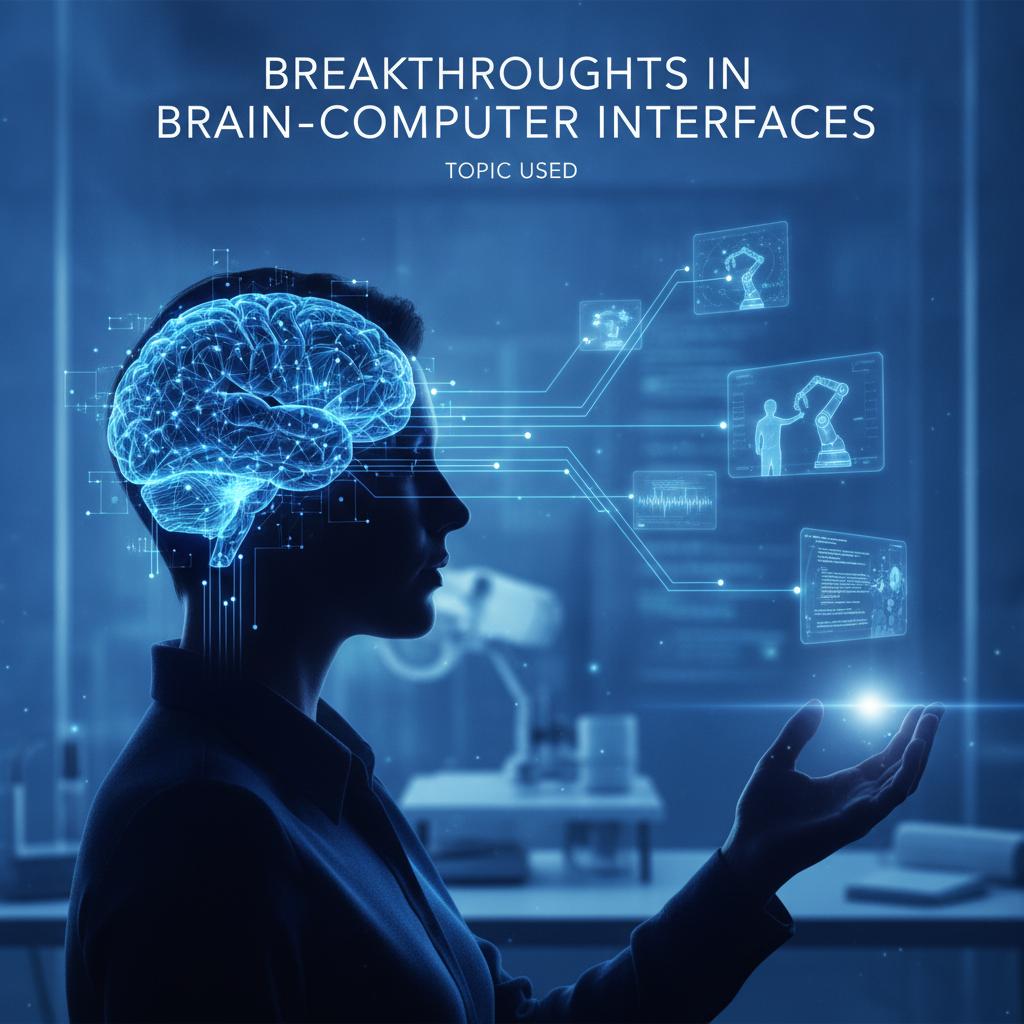
Mind Over Machine: BCI’s Next Leap
Imagine a world where thought alone can control a computer, move a prosthetic limb with natural precision, or even restore lost senses. This isn’t science fiction anymore; it’s the rapidly unfolding reality of Brain-Computer Interfaces (BCIs). Recent breakthroughs are pushing the boundaries of what we thought possible, offering incredible hope and transforming lives.
What Exactly Are Brain-Computer Interfaces?
At its core, a BCI is a direct communication pathway between an enhanced or wired brain and an external device. It bypasses traditional motor pathways, allowing signals from the brain to be translated into commands that operate technology. From reading brainwaves with external sensors to intricate implants that tap directly into neural activity, BCIs are becoming increasingly sophisticated.
Recent Game-Changing Breakthroughs
The past few years have seen remarkable advancements. We’re moving beyond simple cursor control to much more nuanced and powerful applications:
Restoring Communication: Patients with severe paralysis, unable to speak or move, are now using BCIs to type on screens simply by thinking about the letters. This offers an unprecedented pathway for them to express themselves and connect with the world.
Advanced Prosthetic Control: Modern BCIs allow individuals to control robotic arms and hands with fluid, intuitive movements, mimicking natural limb function more closely than ever before. Some systems even provide sensory feedback, allowing users to “feel” what the prosthetic touches.
Neural Implants for Mobility: Pioneering work is demonstrating that implants can bypass damaged spinal cords, allowing paralyzed individuals to regain some voluntary movement or even stand and walk using external exoskeletons controlled by their thoughts.
Vision Restoration: While still in early stages, some BCIs are exploring ways to restore a sense of sight to the blind by directly stimulating the visual cortex, creating basic perceptions of light and shape.
Beyond Healthcare: The Future is Expansive
While the immediate and most profound impacts of BCIs are in healthcare and assistive technology, the future applications are vast. Imagine:
Enhanced Productivity: Controlling complex software or creating art purely with thought.
Immersive Entertainment: Next-generation gaming and virtual reality experiences that respond directly to your mental commands.
Learning and Cognition: Potential for cognitive enhancement or accelerated learning, though this area raises more significant ethical questions.
The Road Ahead: Challenges and Ethics
Despite the excitement, the BCI field faces challenges. Miniaturization, long-term stability of implants, data security, and the sheer complexity of brain signals are ongoing research areas. Furthermore, as BCIs become more powerful, ethical considerations around privacy, autonomy, and equitable access become paramount. Ensuring these transformative technologies are developed responsibly and for the benefit of all humanity is crucial.
A Glimpse into Tomorrow
The breakthroughs in Brain-Computer Interfaces are not just technological marvels; they are beacons of hope, promising to redefine human potential and alleviate suffering. As researchers continue to unlock the secrets of the brain, we stand on the cusp of a future where the power of thought can truly change the world.


Leave a Reply