
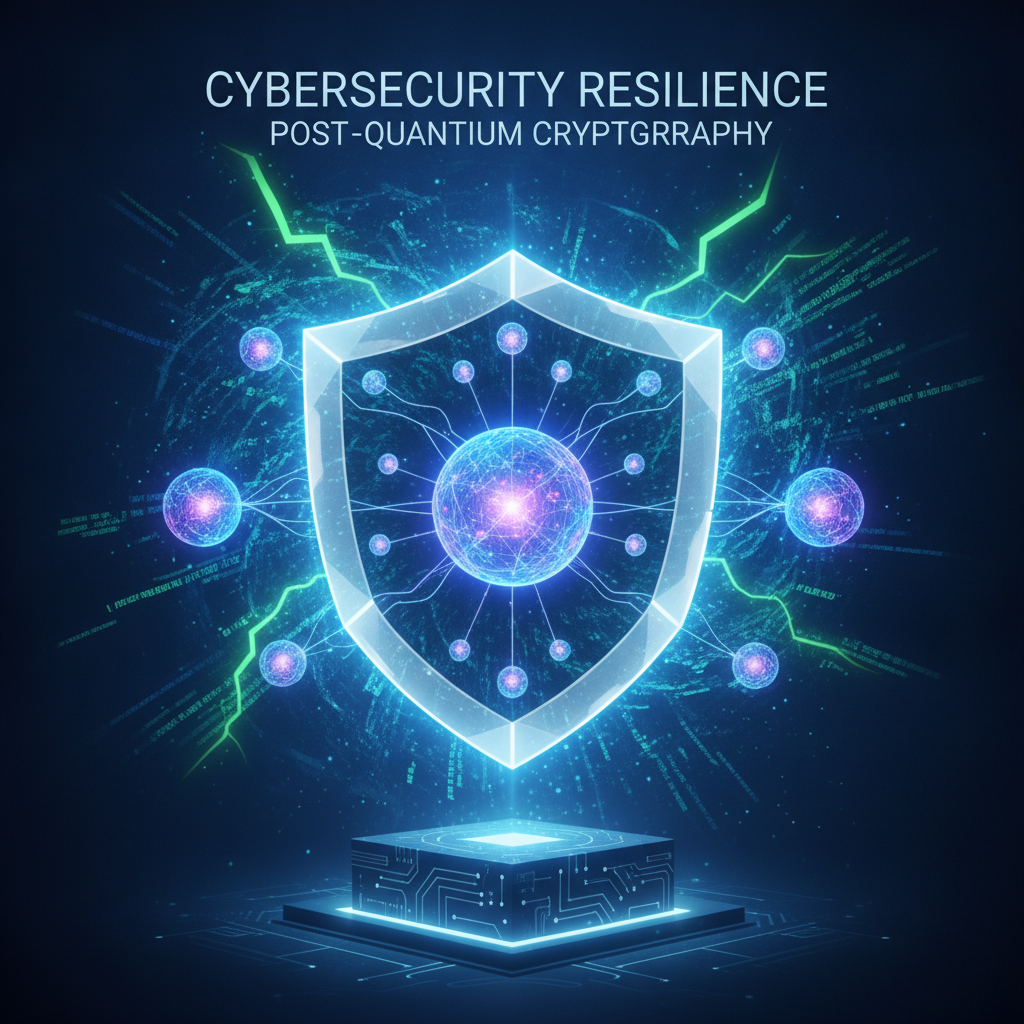
Future-Proofing Cyber Defenses: The Quantum Era
Why Cybersecurity Resilience Matters More Than Ever
In today’s interconnected world, cyber threats are not just a possibility; they’re a constant reality. Organizations face a barrage of attacks, from sophisticated ransomware to state-sponsored espionage. True cybersecurity isn’t just about preventing breaches; it’s about resilience—the ability to anticipate, withstand, recover from, and adapt to adverse conditions, stresses, attacks, or compromises on systems that use or are enabled by cyber resources. It’s about ensuring business continuity and maintaining trust, no matter what comes your way.
The Looming Quantum Threat to Our Digital World
Just as we’re getting a handle on current threats, a revolutionary technology is on the horizon: quantum computing. While still in its early stages, quantum computers promise incredible processing power. Unfortunately, this power could also break many of the cryptographic algorithms that secure our internet communications, financial transactions, and sensitive data today, such as RSA and Elliptic Curve Cryptography (ECC). Imagine a future where your encrypted emails, banking information, or even national secrets, stored today, could be decrypted by a sufficiently powerful quantum computer tomorrow. This is not science fiction; it’s a potential reality that demands our attention.
Enter Post-Quantum Cryptography (PQC)
The good news is that brilliant minds are already working on solutions. Post-Quantum Cryptography (PQC) refers to a new generation of cryptographic algorithms designed to be secure against attacks from both classical and quantum computers. These algorithms are based on different mathematical problems that are believed to be hard for quantum computers to solve efficiently. Think lattice-based cryptography, code-based cryptography, multivariate polynomial cryptography, and hash-based cryptography. International efforts, like those by NIST (National Institute of Standards and Technology), are well underway to standardize these quantum-resistant algorithms, making them ready for widespread adoption.
PQC: A Cornerstone of Future Cybersecurity Resilience
Integrating PQC isn’t just about replacing old algorithms; it’s a critical component of building robust cybersecurity resilience for the future. Proactively migrating to PQC ensures that your data, even if captured and stored today, remains protected against future quantum attacks. It minimizes the risk of catastrophic data breaches, upholds the integrity of your systems, and safeguards long-term digital assets. This forward-thinking approach dramatically strengthens your organization’s ability to withstand future technological shifts and maintain operational continuity in a post-quantum world.
Preparing for Tomorrow, Today
The transition to PQC will be a complex, multi-year endeavor. It requires inventorying all cryptographic assets, understanding dependencies, testing new algorithms, and carefully planning the migration. While a large-scale, fault-tolerant quantum computer isn’t here yet, the time to start planning is now. Why? Because of the “harvest now, decrypt later” threat, where encrypted data is stolen today with the intention of decrypting it once quantum computers are mature. Organizations must begin assessing their cryptographic posture, educating their teams, and formulating a PQC migration strategy to ensure they are resilient against the quantum threat.


Leave a Reply