
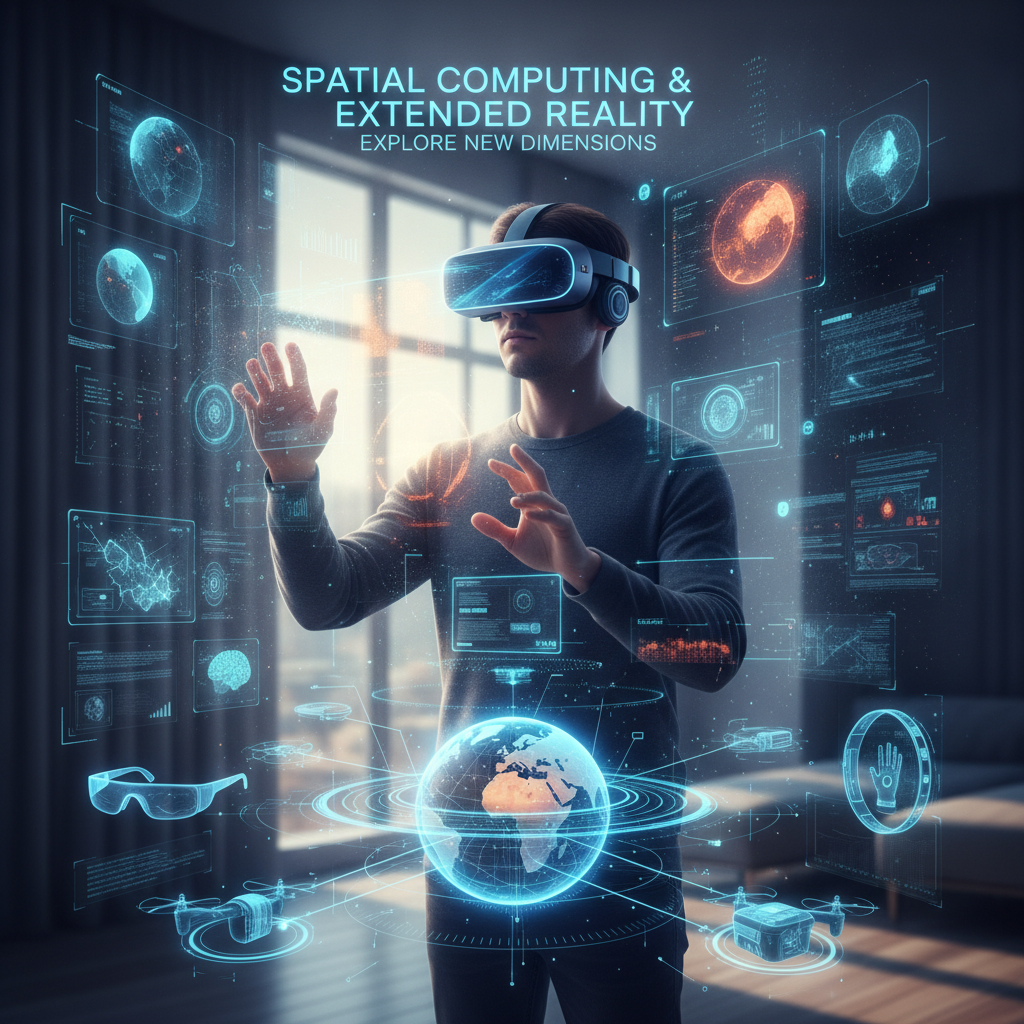
Unlock New Dimensions: Spatial Computing & XR
The lines between our physical world and digital experiences are blurring at an unprecedented pace. At the heart of this exciting revolution are two closely related, yet distinct, concepts: Spatial Computing and Extended Reality (XR). These technologies are not just about wearing fancy goggles; they represent a fundamental shift in how we interact with information, each other, and the world around us. Let’s dive in and explore this fascinating frontier!
What is Spatial Computing?
Imagine your digital tools, applications, and data existing not just on a flat screen, but within the three-dimensional space of your living room, office, or even a park. That’s the essence of Spatial Computing. It’s about giving computers an understanding of our physical environment – its geometry, objects, and even the context of our actions within it. This allows digital content to be seamlessly integrated, manipulated, and persisted in real-world spaces, making interactions feel natural and intuitive.
Unlike traditional computing where you navigate a digital interface, spatial computing brings the interface to your space. Think about placing a virtual monitor on your wall, resizing it with a gesture, and having it stay there even when you leave the room and come back. It’s about context, persistence, and the computer becoming aware of the world you inhabit.
Demystifying Extended Reality (XR)
Extended Reality (XR) is the umbrella term that encompasses a spectrum of immersive technologies that blend the real and virtual worlds. It’s often broken down into three main categories:
- Virtual Reality (VR): Fully immerses users in a simulated digital environment, often blocking out the real world entirely. Think deeply engaging games, virtual travel, or training simulations.
- Augmented Reality (AR): Overlays digital information onto the real world, typically viewed through a smartphone, tablet, or smart glasses. Pokémon GO is a classic example, as are AR filters on social media.
- Mixed Reality (MR): Takes AR a step further by allowing digital objects to not just be overlaid, but to interact with and respond to the physical environment in real-time. This creates a highly believable blend where virtual items can be “placed” on a real table or appear “behind” a physical object.
While XR provides the technological canvas, Spatial Computing provides the intelligent understanding and interaction model that makes these immersive experiences truly powerful and practical.
The Devices Bringing it to Life
The magic of spatial computing and XR is delivered through a growing array of innovative devices. These range from the ubiquitous smartphones that enable simple AR experiences to sophisticated headsets designed for deep immersion or mixed reality interaction:
- VR Headsets: Devices like the Meta Quest series, HTC Vive, and PlayStation VR transport users to entirely virtual worlds for gaming, social experiences, and creative work.
- AR Glasses/Headsets: While still evolving, devices like the Microsoft HoloLens and the forthcoming generation of lightweight smart glasses aim to seamlessly overlay digital content onto our daily view.
- Spatial Computers: Products like Apple’s Vision Pro are explicitly branded as “spatial computers,” emphasizing their ability to blend digital content with your physical space, allowing for multi-window computing, immersive entertainment, and 3D collaboration directly within your environment.
Beyond headsets, haptic feedback devices, motion trackers, and advanced sensors all play crucial roles in creating a more tactile and responsive spatial computing experience.
Applications and Impact
The potential applications of Spatial Computing and XR are vast and transformative, touching nearly every industry:
- Entertainment & Gaming: Hyper-realistic games, interactive storytelling, and virtual concerts.
- Education & Training: Immersive historical tours, surgical simulations, hands-on mechanical training, and virtual classrooms.
- Healthcare: Remote assistance for surgeries, therapeutic treatments for phobias, and anatomical visualization for medical students.
- Enterprise & Design: Collaborative 3D design reviews, remote assistance for field technicians, virtual product prototyping, and enhanced data visualization.
- Retail & Real Estate: Virtual try-on for clothes, interactive home staging, and virtual showrooms.
These technologies promise to make work more collaborative, learning more engaging, and entertainment more immersive than ever before.
Challenges and the Road Ahead
While the future looks incredibly bright, the path to mainstream adoption of spatial computing and XR devices comes with its share of challenges. These include the cost and bulk of current hardware, the need for more robust content ecosystems, powerful processing capabilities, and ensuring user comfort and intuitive interaction.
However, with rapid advancements in display technology, sensor fusion, AI, and computing power, these hurdles are steadily being overcome. The industry is continuously pushing towards lighter, more powerful, and more affordable devices that will seamlessly integrate into our daily lives, making spatial computing as common as using a smartphone today.
Spatial Computing and XR are more than just buzzwords; they represent a paradigm shift in how we interact with technology. By blending the digital and physical, these innovations are opening up new dimensions of possibility, promising a future that is more immersive, intuitive, and interconnected. Get ready to experience the world in entirely new ways!



Leave a Reply