
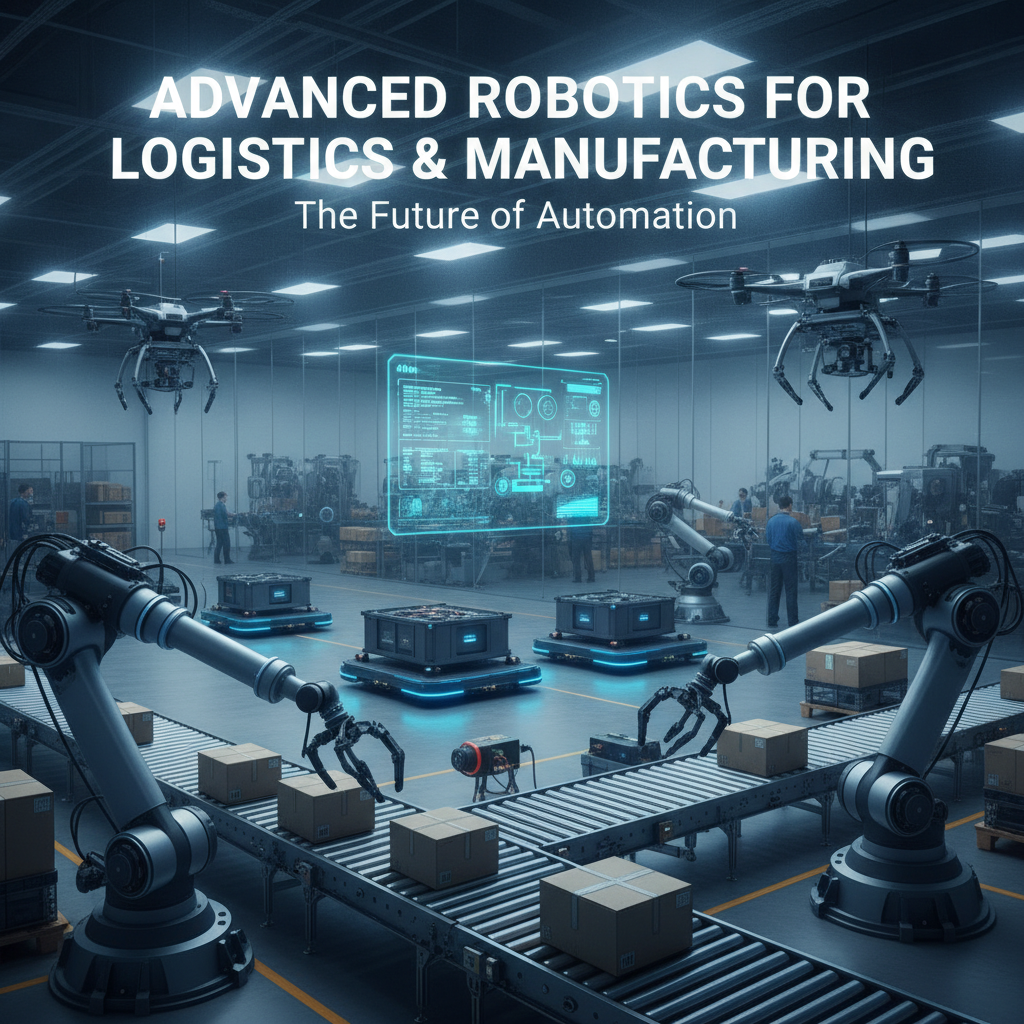
Robots Revolutionize: Logistics & Mfg’s Smart Future
The worlds of logistics and manufacturing are experiencing a profound transformation, driven by the relentless advancement of robotics. Gone are the days of simple, repetitive automation; today’s advanced robots are intelligent, adaptable, and increasingly collaborative, fundamentally reshaping how goods are moved, stored, and produced. This isn’t just about efficiency; it’s about creating smarter, safer, and more resilient industrial ecosystems.
Enhanced Efficiency and Productivity
One of the most immediate impacts of advanced robotics is the dramatic boost in operational efficiency and productivity. From autonomous mobile robots (AMRs) navigating vast warehouses to sophisticated robotic arms performing precise assembly tasks, these machines operate with unparalleled speed and accuracy. They eliminate bottlenecks, reduce human error, and enable continuous 24/7 operations, all while optimizing resource utilization. This leads to faster throughput, reduced lead times, and ultimately, a more competitive edge.
Overcoming Challenges with Advanced Capabilities
Modern robotics are equipped with capabilities far beyond their predecessors. Thanks to integration with artificial intelligence, machine learning, and advanced sensor technology (like 3D vision systems), robots can now perform complex tasks that were once exclusively human domains. They can pick delicate items, handle irregularly shaped objects, navigate dynamic environments, and even make autonomous decisions on the fly. This intelligence allows them to adapt to changing demands, manage unexpected variations, and work effectively in highly unstructured environments, moving beyond rigid, programmed pathways.
Safety and Workforce Transformation
Beyond efficiency, advanced robotics significantly enhance safety within industrial settings. By undertaking hazardous, repetitive, or ergonomically challenging tasks, robots remove human workers from dangerous environments, drastically reducing workplace injuries. This shift doesn’t mean job displacement; rather, it often leads to a redefinition of human roles. Workers transition to supervisory, maintenance, programming, and strategic planning positions, demanding new skills and fostering a more engaging, value-added workforce. Collaborative robots (cobots) further blur the lines, working alongside humans to augment capabilities rather than replace them entirely.
The Future is Now: Key Technologies Driving Progress
Several cutting-edge technologies are propelling advanced robotics forward:
- Artificial Intelligence (AI) & Machine Learning (ML): Enabling robots to learn, adapt, and make intelligent decisions.
- Machine Vision Systems: Allowing robots to “see” and interpret their surroundings for precise manipulation and navigation.
- Haptic Feedback: Providing robots with a sense of touch for delicate handling and finer control.
- Swarm Robotics: Multiple robots working cooperatively to achieve complex goals, often seen in large-scale sorting or transport.
- Digital Twins: Virtual models of physical robotic systems that allow for simulation, optimization, and predictive maintenance.
These innovations are creating a new generation of robots that are not just tools, but intelligent partners in industrial operations.
In conclusion, advanced robotics are no longer a futuristic concept but a present-day reality profoundly shaping logistics and manufacturing. Their capacity to enhance efficiency, overcome complex challenges, improve safety, and transform the workforce is undeniable. As technology continues to evolve, we can expect even more sophisticated and integrated robotic solutions, paving the way for unprecedented levels of productivity, innovation, and human-machine collaboration in industries worldwide.



Leave a Reply