
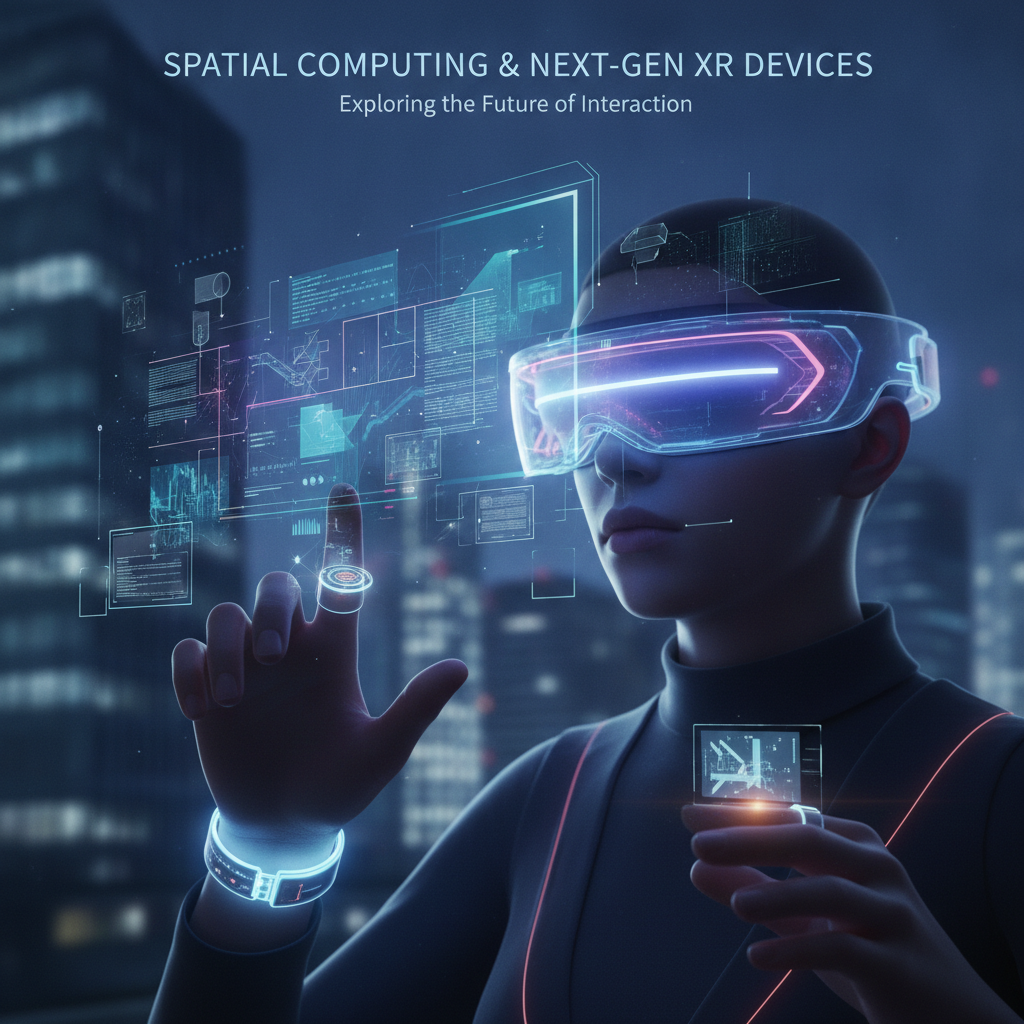
Beyond Screens: Spatial Computing & Next-Gen XR Devices
Remember when your phone was just for calls? And now it’s a window to the world. Get ready for an even bigger leap! We’re on the cusp of a technological revolution that promises to blend our digital lives seamlessly with our physical surroundings. Welcome to the exciting world of Spatial Computing and next-generation XR devices!
What Exactly is Spatial Computing?
Spatial Computing isn’t just a fancy term for VR or AR, though it encompasses them. Think of it as the ability for computers to understand and interact with the physical world around us in three dimensions. It’s about breaking free from flat screens and interacting with digital content that exists within our actual space, just like physical objects do. Your digital information, apps, and collaborators can become part of your environment, not confined to a device in your hand.
This involves a complex interplay of technologies: advanced sensors that map your surroundings, sophisticated AI to understand context, and powerful processors to render immersive experiences in real-time. It’s about creating a digital twin of our world, where digital objects have persistent locations and interactions.
The Rise of Next-Gen XR Devices
For Spatial Computing to truly take off, we need the right hardware – and that’s where Next-Gen Extended Reality (XR) devices come in. XR is an umbrella term covering Virtual Reality (VR), Augmented Reality (AR), and Mixed Reality (MR). While current devices have shown us glimpses of the future, the next generation is set to be a game-changer.
Key Advancements We Can Expect:
- Sleeker Form Factors: Moving beyond bulky headsets to lighter, more comfortable designs, eventually resembling regular eyeglasses.
- Higher Resolution & Wider Field of View: More immersive and realistic visuals that reduce eye strain and motion sickness.
- Advanced Sensors & Tracking: Precise hand, eye, and body tracking, plus environmental understanding that maps your space with incredible accuracy.
- Powerful, Efficient Processors: Enabling complex digital overlays and persistent virtual objects without lag.
- Improved Haptics & Audio: Making digital interactions feel more real and sound more integrated into your environment.
- Longer Battery Life: Essential for all-day use and practical applications.
Transforming Our World: Applications and Impact
The potential applications of Spatial Computing powered by advanced XR devices are truly mind-boggling. This isn’t just about gaming and entertainment, though those will certainly be incredible. Think about:
- Work & Productivity: Collaborating with colleagues on 3D models from different continents, displaying multiple virtual monitors around you, or receiving real-time instructions overlaid on a machine you’re repairing.
- Education & Training: Immersive historical field trips, dissecting virtual organs in medical school, or practicing complex procedures in a safe, digital environment.
- Healthcare: Surgeons planning operations with 3D models, therapists using AR for rehabilitation, or doctors visualizing patient data in context.
- Retail & Design: Virtually trying on clothes, previewing furniture in your living room, or architects walking through digital building designs.
- Daily Life: Navigating cities with intuitive AR directions, enhancing social interactions, or even turning your entire home into an interactive digital canvas.
Looking Ahead: Challenges and Excitement
Of course, there are challenges to overcome, including privacy concerns, ethical considerations for data collection, and ensuring accessibility for everyone. But the trajectory is clear: Spatial Computing and next-gen XR devices are poised to redefine our relationship with technology and the world around us.
It’s a future where digital and physical realities intertwine, creating richer, more intuitive, and deeply personalized experiences. Get ready to step off the screen and into the space!
“`



Leave a Reply