
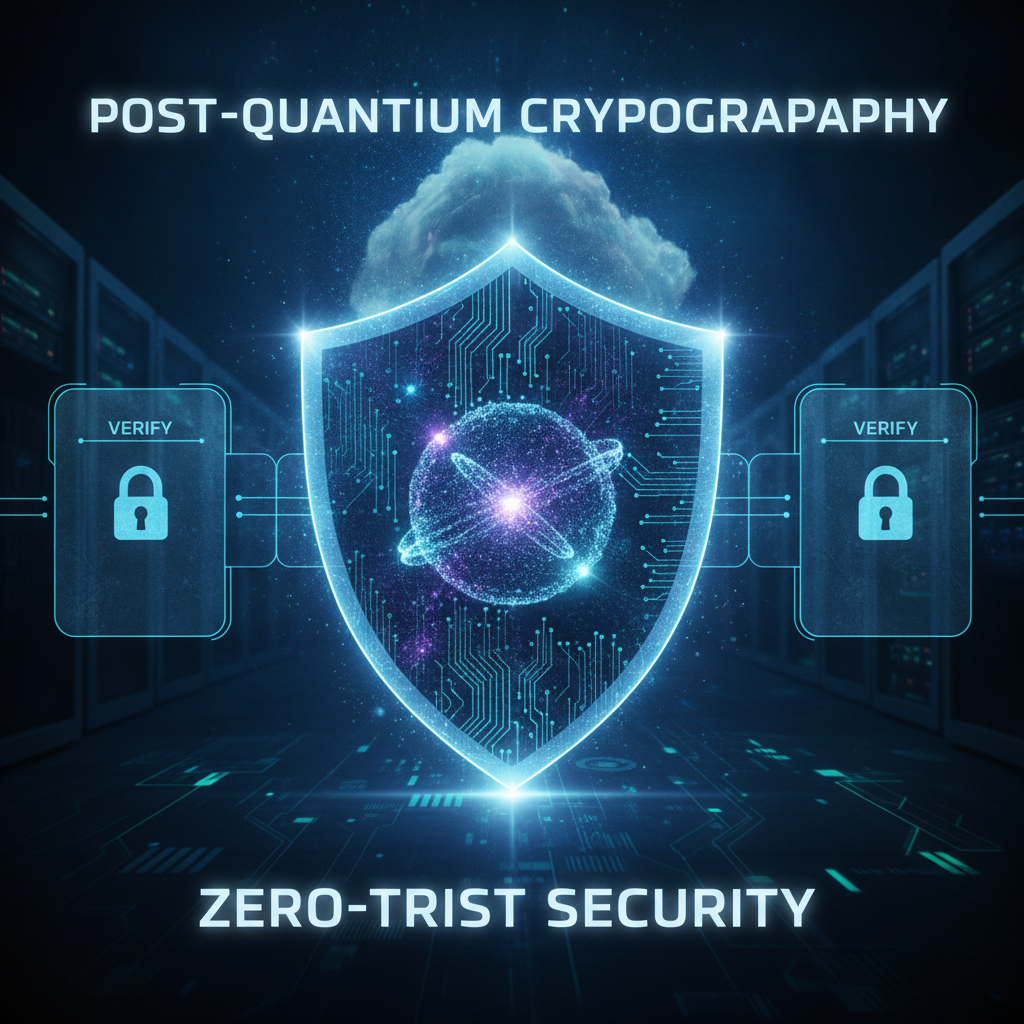
Quantum-Ready & Zero-Trust: Your Future Security
The digital landscape is constantly evolving, bringing incredible innovation but also new and complex threats. Two powerful concepts are emerging as cornerstones for future-proof security: Post-Quantum Cryptography (PQC) and Zero-Trust Security. Individually, they’re game-changers; together, they form a formidable defense against both current and future cyber challenges.
What is Post-Quantum Cryptography (PQC)?
You might have heard whispers about quantum computers and their potential to break today’s strongest encryption. It’s not science fiction; it’s a future reality we need to prepare for. Most of our current digital security, from online banking to secure communications, relies on cryptographic algorithms that are incredibly difficult for conventional computers to crack. However, quantum computers, with their unique computational power, could render these algorithms obsolete, exposing vast amounts of sensitive data.
This is where PQC comes in. It’s an active field of research and development focused on creating new cryptographic algorithms that are resistant to attacks from both classical and quantum computers. Think of it as upgrading our digital locks before the master key to all our current locks is invented. Organizations like NIST (National Institute of Standards and Technology) are already working on standardizing these new quantum-resistant algorithms, making PQC a critical part of our future security strategy.
Understanding Zero-Trust Security
While PQC tackles a future threat, Zero-Trust security addresses a fundamental flaw in traditional security models. The old perimeter-based approach (trusting everything inside the network and suspecting everything outside) is no longer sufficient. Today, threats can originate from anywhere – inside or outside your organization.
Zero-Trust operates on a simple, yet profound principle: “Never trust, always verify.” This means that no user, device, application, or network connection is inherently trusted, regardless of its location or previous authentication. Every access request must be authenticated, authorized, and continuously verified. It involves:
- Micro-segmentation: Breaking down networks into smaller, isolated segments.
- Least Privilege: Granting users only the minimum access necessary to perform their job.
- Multi-Factor Authentication (MFA): Requiring multiple forms of verification for identity.
- Continuous Monitoring: Constantly analyzing network traffic and user behavior for anomalies.
Zero-Trust significantly reduces the “blast radius” of a breach, making it much harder for attackers to move laterally through a system once they gain initial access.
A Match Made in Cyber Heaven: PQC and Zero-Trust
So, how do these two powerful concepts work together? They’re not mutually exclusive; they’re complementary, creating a multi-layered defense that is robust against both present and future threats:
- Protecting the Core: Zero-Trust relies heavily on strong encryption and secure authentication for its “verify” mechanisms. If current cryptography is broken by quantum computers, the foundational security of Zero-Trust components would be undermined. PQC ensures these cryptographic underpinnings remain secure, even in a quantum era.
- Limiting the Impact: Even with the strongest PQC, no system is entirely impenetrable. Zero-Trust acts as a critical failsafe. If, for instance, a future quantum attack somehow compromises a PQC implementation or if a non-cryptographic vulnerability is exploited, Zero-Trust’s principles of least privilege and micro-segmentation can prevent that initial breach from escalating into a full-scale catastrophe.
- Holistic Security: PQC protects the confidentiality and integrity of data against a specific, albeit massive, future threat. Zero-Trust provides a comprehensive framework for managing access and reducing risk across the entire enterprise, regardless of the attack vector. Together, they create a truly proactive and resilient security posture.
Getting Started: Your Path to a Quantum-Resilient, Zero-Trust Future
Embracing PQC and Zero-Trust isn’t an overnight task, but the journey starts with strategic planning:
- Assess Your Crypto Estate: Understand where and how cryptography is used throughout your organization.
- Identify Critical Assets: Pinpoint your most valuable data and systems that require the highest level of protection.
- Develop a PQC Migration Roadmap: Plan for the eventual transition to quantum-resistant algorithms.
- Adopt Zero-Trust Principles: Begin implementing Zero-Trust policies incrementally, starting with critical areas.
- Educate and Train: Ensure your teams understand the importance and implications of these new security paradigms.
- Stay Informed: The PQC landscape is still evolving; keep abreast of new standards and best practices.
The convergence of Post-Quantum Cryptography and Zero-Trust Security represents a monumental leap forward in cybersecurity. By integrating these strategies, organizations can build resilient, future-proof defenses that protect against the known threats of today and the anticipated challenges of tomorrow. The time to act and secure your digital future is now!
“`

Leave a Reply