
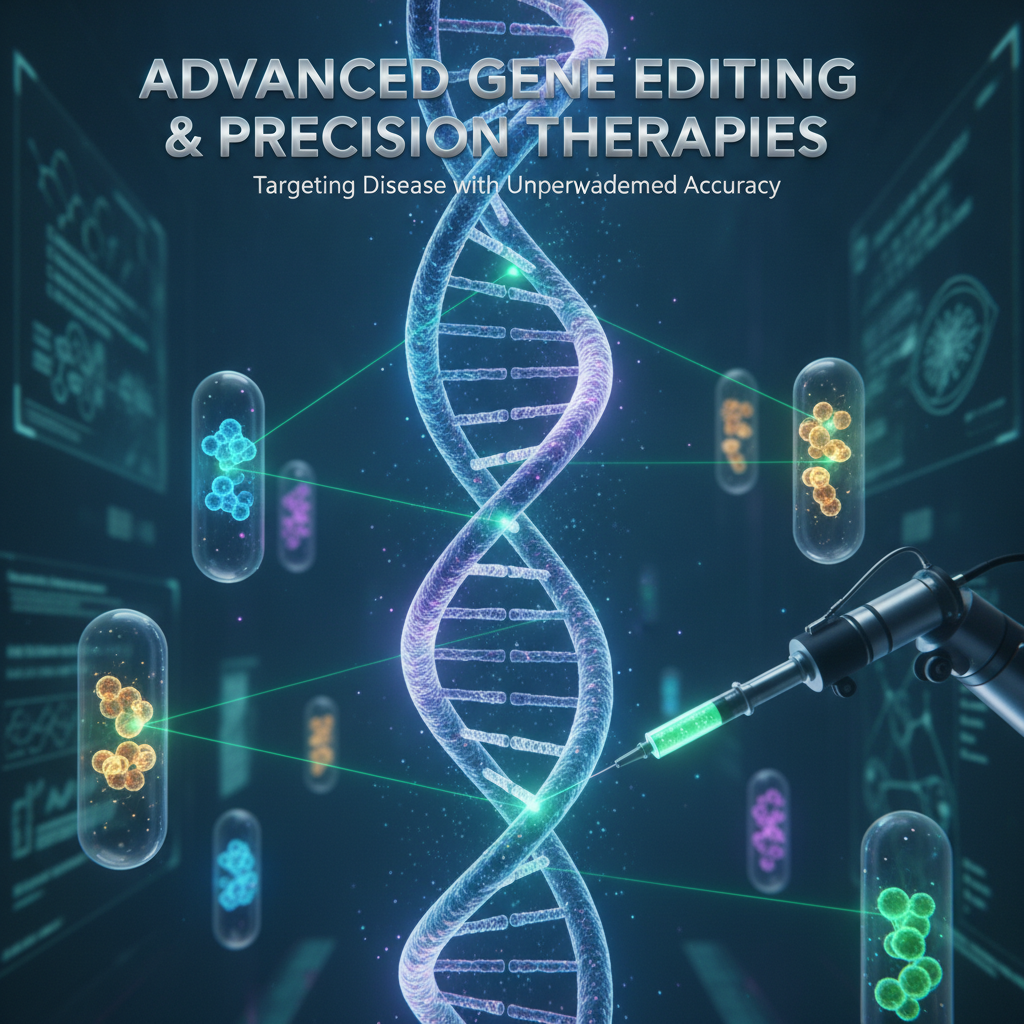
Advanced Gene Editing and Precision Therapies: Charting the Future of Health
Imagine a world where genetic diseases can be corrected with surgical precision, or where treatments are tailor-made for your unique biological makeup. This isn’t science fiction anymore. We’re on the cusp of a medical revolution, driven by advanced gene editing and precision therapies!
What Exactly is Gene Editing?
At its heart, gene editing is about making precise changes to an organism’s DNA. Think of our DNA as the instruction manual for our bodies. Sometimes, there are typos or missing pages, leading to disease. Gene editing tools allow scientists to “proofread” and “edit” these manuals, correcting errors or adding new instructions.
While CRISPR-Cas9 has become a household name, representing a huge leap forward, the field is rapidly evolving. We’re now moving beyond just cutting and pasting DNA, exploring even more refined and versatile techniques.
Beyond CRISPR: The Rise of Precision Therapies
The beauty of advanced gene editing lies in its journey towards truly “precision” therapies. This means treatments that are incredibly specific, targeting the exact genetic fault responsible for a disease, often with minimal impact on healthy cells.
- Base Editing: Imagine changing a single letter in the DNA code without cutting the double helix. Base editors can do just that, swapping one DNA base for another with remarkable accuracy, opening doors for treating diseases caused by single-letter mutations.
- Prime Editing: This exciting new technology has been likened to a “word processor for DNA.” It allows for more complex edits, like inserting, deleting, or substituting longer stretches of DNA, all in one go, offering even greater versatility and precision for a wider range of genetic errors.
- Epigenetic Editing: Moving beyond changing the DNA sequence itself, epigenetic editing aims to control how genes are expressed – turning them on or off – without altering the underlying code. This offers another layer of therapeutic potential, especially for diseases influenced by gene regulation.
Real-World Impact and Future Promise
These sophisticated tools are not just theoretical; they are already making incredible strides. Clinical trials are underway for conditions like sickle cell disease, beta-thalassemia, and certain types of cancer, showing promising results. For many patients battling previously untreatable genetic disorders, these therapies represent a beacon of hope.
Imagine a future where:
- Inherited diseases like cystic fibrosis or Huntington’s can be corrected before symptoms even appear.
- Precision oncology treatments can disarm cancer cells by targeting their specific genetic vulnerabilities.
- Neurological disorders might be mitigated by correcting faulty genes in brain cells.
Addressing the Ethical Landscape
As with any powerful technology, advanced gene editing comes with important ethical considerations. Scientists, ethicists, and policymakers are actively engaged in discussions to ensure these tools are developed and used responsibly. Key areas include ensuring equitable access, addressing potential off-target effects, and carefully considering germline editing (changes that could be inherited).
The goal is to harness the immense potential of these technologies to alleviate suffering, while upholding our ethical duties and societal values.
The Road Ahead is Bright
Advanced gene editing and precision therapies are rapidly transforming the landscape of medicine. While challenges remain, the pace of innovation is breathtaking. We are truly entering an era where medicine can be personalized, precise, and potentially curative for a vast array of diseases. It’s an exciting time to witness the dawn of a new age in human health!
“`


Leave a Reply