
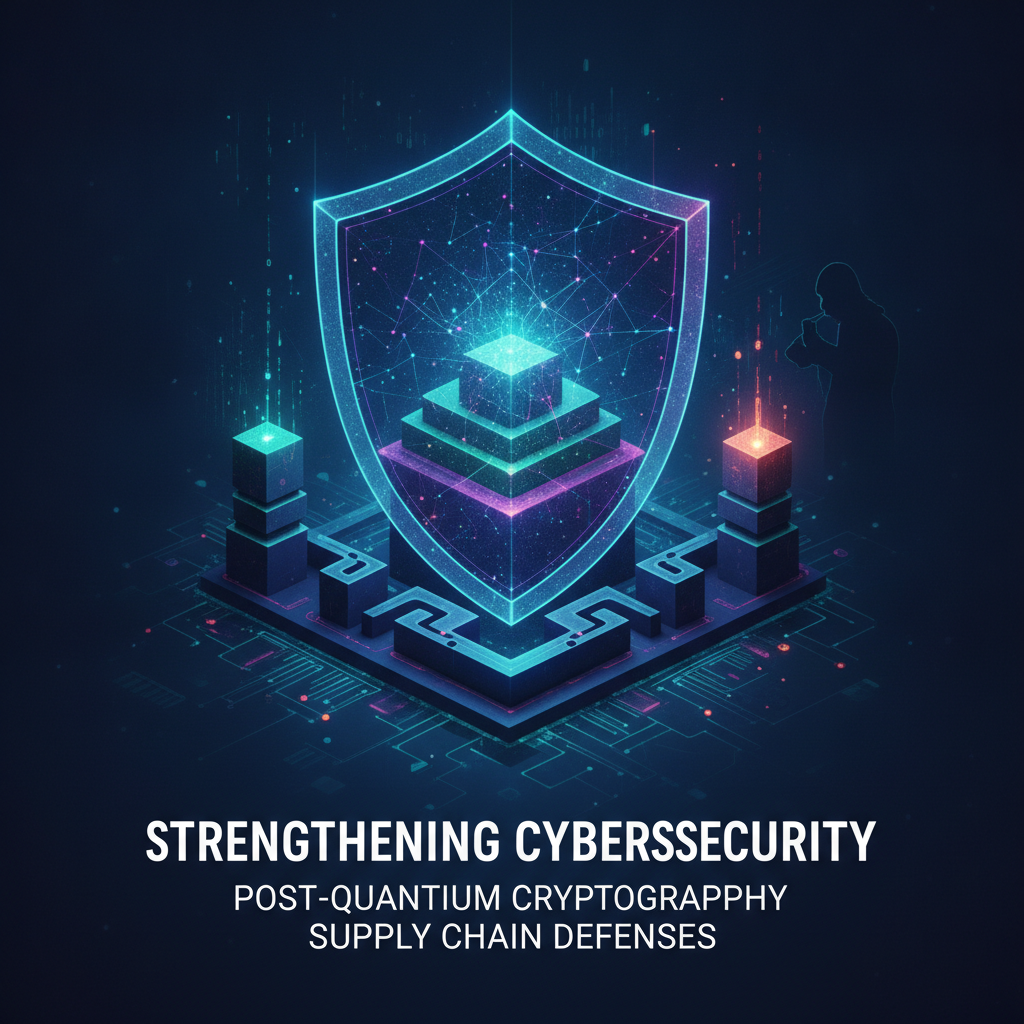
Securing Tomorrow: Post-Quantum Cryptography & Supply Chain Defenses
In our increasingly interconnected world, cybersecurity threats are evolving at an unprecedented pace. From sophisticated nation-state actors to complex ransomware gangs, the landscape is fraught with challenges. Two particularly significant areas demanding our immediate attention are the impending threat from quantum computing and the growing vulnerabilities within our digital supply chains. Addressing these isn’t just about patching current systems; it’s about proactively building a resilient future.
The Quantum Threat: A Cryptographic Ticking Time Bomb
For decades, our digital security has relied on public-key cryptography (like RSA and ECC) to secure everything from online banking to encrypted communications. These algorithms are based on mathematical problems that are currently intractable for classical computers to solve. However, the rise of powerful quantum computers promises to change this entirely. Algorithms like Shor’s algorithm could efficiently break these foundational cryptographic systems, rendering much of our current encryption useless.
While fully capable quantum computers are still some years away, the time to prepare is now. Data encrypted today could be harvested (“store now, decrypt later”) and become vulnerable once quantum computers mature. This “quantum threat” isn’t science fiction; it’s a looming reality that requires a strategic and timely response.
Enter Post-Quantum Cryptography (PQC)
Post-Quantum Cryptography, or PQC, refers to cryptographic algorithms that are resistant to attacks by both classical and quantum computers. These new algorithms are designed to secure our digital world against the quantum threat, ensuring the long-term confidentiality and integrity of our data. Organizations like the U.S. National Institute of Standards and Technology (NIST) have been leading a global effort to standardize a suite of PQC algorithms, with several candidates already selected for future deployment.
Migrating to PQC isn’t a simple “flip the switch” operation. It requires a comprehensive understanding of an organization’s cryptographic footprint, careful planning, extensive testing, and significant infrastructure updates. Proactive assessment and the development of a PQC migration roadmap are critical steps every organization should be taking today.
Fortifying the Digital Supply Chain
Beyond the quantum horizon, our digital supply chains present an immediate and persistent vulnerability. A “supply chain attack” occurs when an attacker compromises a less secure element within a larger network or software ecosystem to gain access to a target. Recent high-profile incidents, such as the SolarWinds breach or the Log4j vulnerability, have highlighted just how devastating these attacks can be, impacting thousands of organizations simultaneously through a single point of entry.
The complexity of modern software development, with its reliance on open-source components, third-party libraries, and cloud services, means that traditional perimeter defenses are no longer sufficient. Securing the supply chain requires a holistic approach, focusing on everything from the integrity of source code and build environments to the authentication of software updates and the trustworthiness of hardware components.
A Synergistic Approach: PQC and Supply Chain Defense
While PQC and supply chain defense might seem like distinct challenges, they are deeply interconnected and mutually reinforcing. A robust cybersecurity strategy requires that they be addressed in concert:
- PQC Secures the Supply Chain: PQC algorithms will be vital for signing software updates, authenticating hardware components, and securing communication channels within the supply chain itself. This ensures that the components and updates we trust are genuinely from their intended sources and haven’t been tampered with.
- Supply Chain Defenses Protect PQC Deployments: Conversely, strong supply chain security practices are essential to ensure that PQC implementations are not compromised. If an attacker can inject malicious code into a PQC library or compromise a build server, even the most robust PQC algorithm becomes ineffective.
- Crypto-Agility is Key: The ability to quickly and seamlessly swap out cryptographic algorithms (a concept known as “crypto-agility”) is crucial for both PQC migration and responding to future cryptographic breakthroughs or vulnerabilities discovered in the supply chain.
Preparing for a Quantum-Safe and Resilient Future
Strengthening cybersecurity in the face of quantum computing and intricate supply chain vulnerabilities demands a forward-thinking, proactive, and integrated strategy. Organizations must begin assessing their cryptographic dependencies, developing PQC migration plans, and simultaneously enhancing their supply chain security protocols.
By investing in these critical areas today, we can not only protect ourselves from current threats but also build a more secure, resilient, and trustworthy digital future for everyone. The time to act is now – let’s secure tomorrow, together!



Leave a Reply